


An equipment sign out sheet records who took which tool or machine, when, for which job, what shape it was in, and when it came back. Contractors use one at the shop, the tool crib or the yard, so the question "who had the rotary hammer last?" has an answer that isn't a shrug.
Tools that walk off a job site are rarely stolen by strangers. They get left in the wrong truck, lent to another crew, or returned with a cracked case and no one to ask about it. A signed sheet at hand-off fixes most of that.
What is an equipment sign out sheet?
An equipment sign out sheet is a written record of equipment leaving and returning to your control, signed by the person taking it and the person issuing it. At minimum it shows the item, the borrower, the dates out and back, and the condition both times. The condition record matters most: it's what settles the argument when something comes back broken.
Sign-out sheet, checkout form or log?
The names overlap, and people search for all three. In practice:
- A sign-out sheet is often one page with a row per checkout, kept on a clipboard by the door.
- An equipment checkout form is one form per checkout, with room for condition notes, photos, supervisor approval and two signatures.
- A log is the running list you build from either one, used to see what's out right now.
For cheap hand tools, a sheet with rows works. For anything with a serial number, a battery platform or a rental bill attached, use the full form.
What's on this equipment checkout form template
The equipment checkout form template follows the item from the moment it leaves to the moment someone checks it back in.
| Section | What it records |
|---|---|
| Borrower and checkout information | Expected return date, work location or site, supervisor name and supervisor approval (approved, not required or denied) |
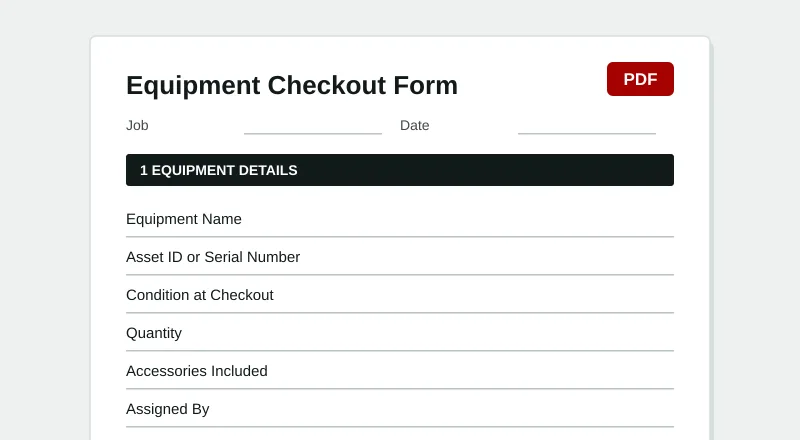
| Equipment details | One entry per item: equipment name, asset ID or serial number, condition at checkout, quantity, accessories included and who assigned it |
| Equipment use notes | Job or task description, location of use and any special instructions |
| Equipment return | Date returned, condition at return, damage or missing items, received by, with signature |
| Attachments | Photos of the equipment or other files |
| Final sign-off | Borrower name, date of checkout, borrower signature and date, the staff member issuing the equipment and their signature |
Accessories deserve their own line. A drill that comes back without its batteries, charger or case isn't a complete return, and the form should say so.
How to fill out an equipment checkout form
- Describe each item. Name, asset tag or serial number, quantity and every accessory going with it (batteries, blades, bits, hoses, cords).
- Record the condition and take a photo. Note any existing scratches, cracks or wear before it leaves. A photo beats a description.
- Fill in the job and dates. Where it's going, what it's for and when it's due back.
- Get approval if your policy needs it. Expensive or specialized equipment may need a supervisor's okay.
- Sign at hand-off. The borrower and the person issuing it both sign.
- Check it back in. On return, the person receiving it records the date, the condition and anything damaged or missing, then signs.
A filled-in example
- Equipment: laser level, asset tag LL-07, serial on file, quantity 1. Accessories: tripod, receiver, two batteries, hard case.
- Condition at checkout: good, small scuff on the case lid (photo attached).
- Job: Maple Street foundation, setting form elevations. Due back Friday.
- Supervisor approval: not required.
- Signed out by: the foreman; issued by the shop lead.
- Return: Friday afternoon, one battery missing, noted under Damage or Missing Items and signed by the shop lead.
That last line is the point of the form. The missing battery has a date, a job and a name attached, so it gets found on Monday instead of forgotten.
Tracking tools and heavy equipment between jobs
Job site equipment moves more than office gear does: shop to site, site to site, rental yard to site and back. A few habits keep the paper trail intact:
- Moving between jobs. If a crew takes equipment straight from one job to the next, record it on an equipment transfer form rather than letting the first checkout quietly cover both.
- Requests ahead of time. For equipment you need to book or rent, an equipment request form gets it on the schedule before the checkout.
- Rentals. Note the rental company's ticket number in Special Instructions and set the expected return date to the end of the rental, so nobody pays for an extra week.
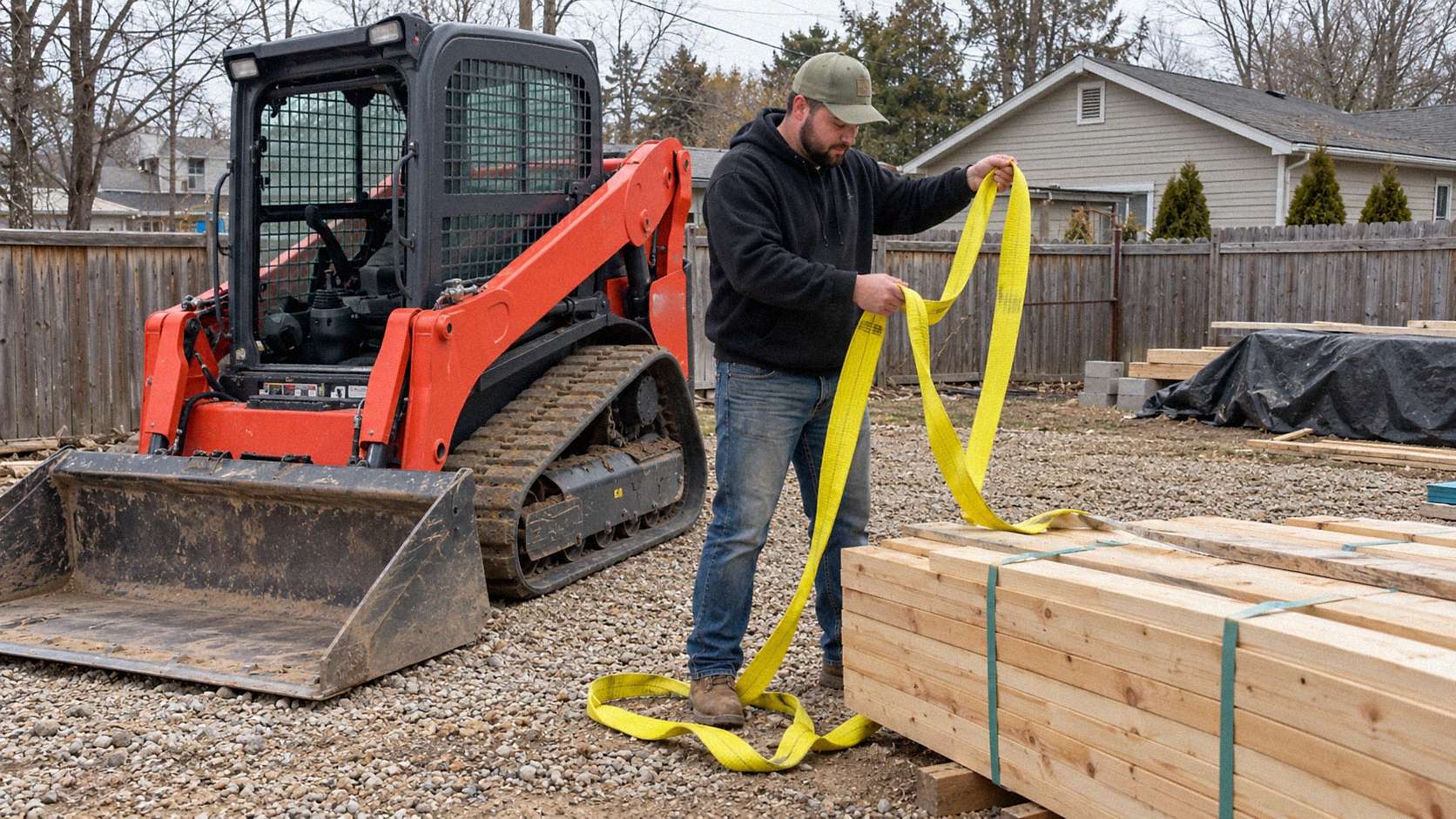
- Heavy equipment. A checkout records who has a machine. It isn't a safety check; operators still run a heavy equipment daily inspection before each shift.
Sign-out sheet mistakes that cost you tools
- Skipping the return check. If nobody records condition at return, damage shows up on the next checkout and the wrong person gets blamed.
- No expected return date. Equipment with no due date is never late, so it's never chased.
- Leaving out accessories. Batteries and chargers go missing more often than the tools themselves.
- Sheets nobody updates. A clipboard that's filled in some days and not others is worse than none, because people trust it.
- No photos. "It was like that when I got it" is hard to argue with when there's no picture.
- A cluttered layout. If the form takes five minutes, crews skip it. Keep it to what you'll actually check.
Equipment checkouts on crews' phones in Workyard
In Workyard, the equipment checkout form runs on the crew's phones as a digital form. The foreman fills it in when equipment leaves, takes the condition photos in the form, and both people sign on the screen. Each submission comes back to the office tied to the job and the person who filled it in. For machines, equipment tracking shows who is running each one and the site where it was last used.
Get the free equipment sign out sheet
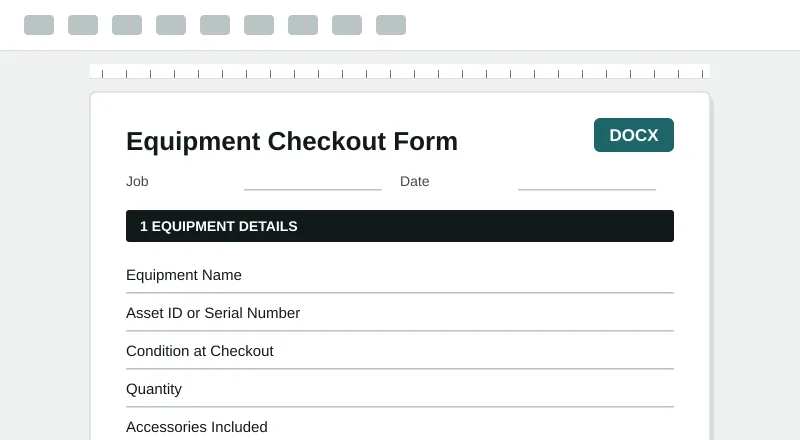
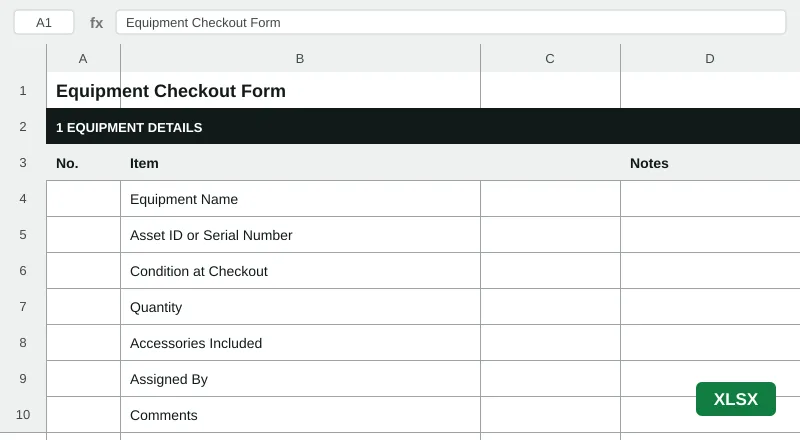
Download the equipment checkout form as a PDF, Word document or Excel sheet. It's free and there's no sign-up. Print a stack for the tool crib, or use the Excel version as your running log. More forms for knowing where your equipment is are in equipment tracking templates.


