


 (650) 332-8623
Roof Inspections: Everything You Need to Know as a Roofing Business
Want to get more roofing business? This guide to roof inspections can help you book more jobs and ensure more satisfied clients.


As the first line of defense against the elements, roofs play a crucial role in building integrity. It impacts overall aesthetics as well as property value. For these reasons, conducting regular roof inspections is essential for effective building maintenance and strong construction operations management.
A roofing inspection checklist helps identify potential issues before they escalate. These assessments also reinforce customer trust in roofing services. To properly conduct roof inspections, roofing professionals need to be equipped with the right knowledge and tools.
In this article, we’ll discuss the different types of roofing inspections and provide you with checklists for both exterior and interior roof checks. We’ll also delve into roofing inspection cost and pricing. Lastly, we’ll cover best practices for conducting roof inspections for insurance purposes.
Whether you’re an experienced contractor or just starting from the ground up, understanding the different aspects of roof inspections will help you deliver satisfactory service to your clients and maintain a competitive edge in the market.
Let’s start by discussing why we need to conduct roof inspections at all. If you’re new to this process, it helps to understand what a construction site inspection involves before focusing specifically on roofing systems.
Benefits of roof inspections
A pound of cure is better than an ounce of prevention—said no doctor ever. It’s the same thing with conducting timely and comprehensive roof inspections— early prevention is indeed better than a wholesale fix. Here are three important reasons for regular roof checks:
Identifying early issues
➡️ Detects leaks, damaged shingles, and structural weaknesses. Thorough inspections also help prevent larger construction defects that can surface months later.
➡️ Prevents minor issues from escalating into major repairs.
Regular roof inspections are necessary to identify potential problems before they escalate into costly repairs. Over time, roofs can develop issues such as leaks, damaged shingles, or structural weaknesses, which may go unnoticed by the untrained eye.
By conducting thorough roofing inspections, professionals can catch these early warning signs and perform timely intervention. This proactive approach not only saves property owners from expensive damage and repair costs, but also minimizes safety hazards and risks associated with roof failure.
Extending roof lifespan through proactive maintenance
➡️ Addresses small issues promptly to avoid larger repairs
➡️ Ensures all roof components (flashing, gutters, ventilation) are functioning properly
Proactive roof inspections help extend roof lifespan by preventing minor issues from developing into major ones which may necessitate a complete roof replacement. Regular maintenance helps ensure all roof components such as flashing, gutters, and ventilation are doing their job.
Consistent documentation also supports long-term construction photo documentation records for property owners.
Enhancing customer relationships
➡️ Demonstrates commitment to thorough inspections and honest assessments.
➡️ Results in repeat business and referrals, strengthening reputation in the industry.
Roof inspections help build client trust and loyalty. When roofing professionals conduct thorough inspections and communicate concerns about the condition of a roof, clients are empowered to take proactive steps to secure their roofing investment.
This improves client satisfaction and loyalty, which in turn benefits roofing contractors and establishes their reputation as a trustworthy service provider.
Types of roof inspections
Roof inspections are conducted for different reasons and serve a variety of purposes. While routine checks are done for maintenance, emergency inspections and insurance-related inspections are meant to address special concerns such as immediate repairs or financial considerations.
Routine roof inspections
Routine roof inspections are standard evaluations that occur annually or biannually for maintenance. Key aspects of routine inspections include:
- Frequency: Conducted every year or every two years.
- Focus areas:
- Condition of shingles and tiles
- Integrity of flashing and seals
- Gutter and drainage system performance
- Ventilation systems and insulation
- Benefits:
- Early detection of potential issues
- Extension of roof lifespan
- Cost savings on future repairs
Emergency roof inspections
Emergency roof inspections are often conducted after severe weather events or unexpected incidents. These inspections are critical for prioritizing safety and prompt assessment of roof damage.
Key aspects of emergency inspections include:
- Situations requiring emergency inspections:
- Severe storms, hail, or high winds. In some cases, inspections may reveal hidden latent defects that only become visible after weather damage.
- Heavy snowfall or ice buildup
- Fallen trees or debris
- Key inspection steps:
- Immediate assessment of visible damage
- Evaluation of leaks and structural integrity
- Recommendations for temporary repairs to mitigate further damage
- Importance:
- Prevents escalation of damage
- Ensures the safety of occupants
- Facilitates timely repairs and restoration
Roof inspections for insurance claims
When filing claims for roof damage, a thorough inspection is often required to validate clients’ claims. Here are the key elements to consider when conducting roof inspection for insurance:
- What to expect:
- Detailed documentation of the damage, similar to what’s included in comprehensive construction daily reports
- Photographic evidence of affected areas
- Analysis of potential causes, such as weather-related incidents or aging
- Importance:
- Helps streamline the claims process
- Provides necessary evidence for insurance adjusters
- Increases the likelihood of a successful claim outcome
Roof inspections often work alongside other property evaluations, such as home inspection, foundation inspection, or chimney inspection, depending on the structure.
- Tips for roofing contractors:
- Communicate with clients about their insurance requirements.
- Ensure that all findings are recorded comprehensively.
Roof inspection template + report
Below is a sample roofing inspection template, along with examples for home, property, and other types of inspections you can use as a reference. Many contractors now use digital inspection forms to standardize documentation and avoid missing critical details.
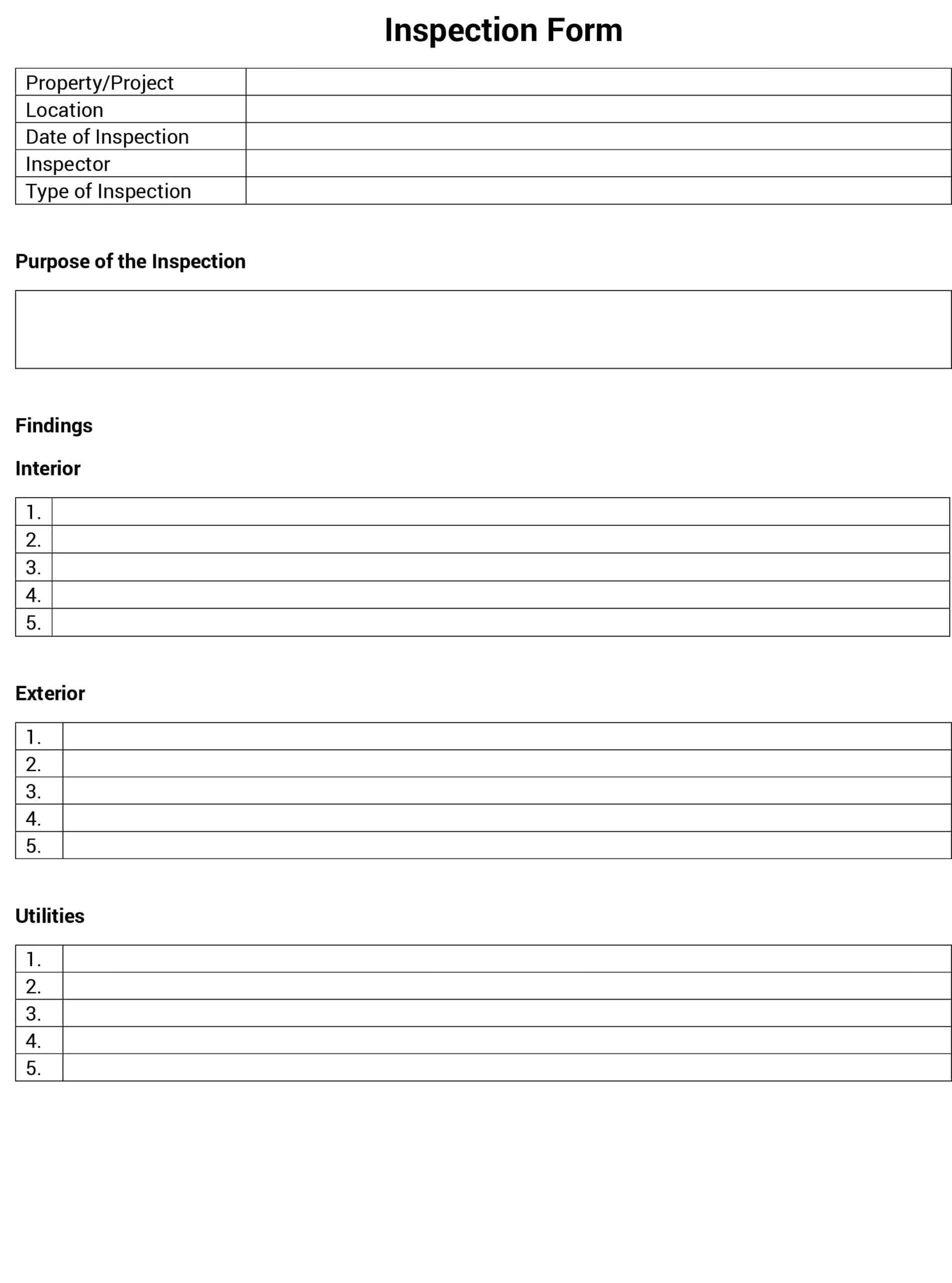
Here’s a couple of roofing inspection checklists for roofing professionals:
a. Checklist for exterior inspections
A thorough exterior roof inspection helps roofers spot potential issues before they develop into major problems.
- Shingles:
- Check for missing, cracked, or curled shingles.
- Look for signs of granule loss or discoloration.
- Assess for any loose or improperly installed shingles.
- Check for missing, cracked, or curled shingles.
- Flashing:
- Inspect the flashing around chimneys, vents, and skylights for rust or damage.
- Ensure that flashing is properly sealed to prevent leaks.
- Inspect the flashing around chimneys, vents, and skylights for rust or damage.
- Gutters:
- Examine gutters for clogs or debris buildup.
- Check for rust, holes, or separation from the roofline.
- Assess downspouts for proper drainage away from the foundation.
- Examine gutters for clogs or debris buildup.
- Roof edges:
- Inspect the drip edge for damage or deterioration.
- Ensure that there are no gaps or loose materials along the edges.
- Inspect the drip edge for damage or deterioration.
b. Checklist for interior inspections
Conducting an interior inspection helps roofers diagnose hidden issues.
- Signs of water damage:
- Look for water stains on the underside of the roof deck. These findings should be incorporated into broader field reports to maintain consistent project records.
- Inspect for mold or mildew growth, which can indicate prolonged moisture exposure.
- Look for water stains on the underside of the roof deck. These findings should be incorporated into broader field reports to maintain consistent project records.
- Insulation:
- Assess the condition and thickness of insulation.
- Check for any wet or compressed insulation, which can affect energy efficiency.
- Assess the condition and thickness of insulation.
- Structural integrity:
- Examine rafters and trusses for cracks, sagging, or signs of insect infestation.
- Ensure that all structural components are secure and free from rot.
- Examine rafters and trusses for cracks, sagging, or signs of insect infestation.
Common red flags
Look for these common roofing problems in your regular roof inspection.
- Leaks and water damage:
- Look for signs of water intrusion in both the interior and exterior.
- Address leaks promptly to prevent further damage and mold growth.
- Look for signs of water intrusion in both the interior and exterior.
- Ponding water:
- Inspect flat roofs for areas where water collects, indicating inadequate drainage.
- Recommend repairs to ensure proper slope and drainage.
- Inspect flat roofs for areas where water collects, indicating inadequate drainage.
- Missing or damaged flashing:
- Inspect areas around chimneys and vents for compromised flashing.
- Replace or repair damaged flashing to prevent leaks.
- Inspect areas around chimneys and vents for compromised flashing.
- Deteriorated gutters:
- Check for rust or sagging gutters, which can lead to overflow and foundation issues.
- Recommend cleaning or replacement to ensure effective water diversion.
- Check for rust or sagging gutters, which can lead to overflow and foundation issues.
These are general guides to conducting roof inspections. Make sure to adapt and expand your checklist to account for specific issues unique to particular roofing materials and individual projects.
Here’s what a roofing inspection report might look like:


Roofing inspection cost / pricing
The cost of a roof inspection depends on a variety of factors. Larger roofs generally take longer to inspect and involve more manpower for comprehensive evaluation. If you’re inspecting complex roofs with multiple slopes, skylights, or other unique features, you’ll likely need more resources and/or specialized equipment to conduct a thorough inspection. Roof accessibility, geographical location, and local labor rates (urban vs. rural) all play a role in determining roof inspection cost.
Make sure you communicate these roofing inspection cost factors to clients clearly. Use detailed estimates to outline service and item prices. Educate clients on how specific factors—such as roof size and complexity—impact overall cost.
Answer questions about common roofing issues and how inspections improve their roofing investment’s long-term value. Finally, secure clients’ agreement in a written document before starting your inspection. This document should cover the scope of work, estimated costs, and other additional charges. Formalizing scope changes properly can prevent disputes that later require a change order.
Roofing inspection costs are typically structured using one of the following pricing models:
- Flat Rates: Standard flat fee for inspections offer customers a clear, upfront cost for services provided.
- Hourly Rates: An hourly rate is more flexible and can be more appropriate for complex inspections requiring additional time, manpower, or equipment.
- Tiered Packages: Offering tiered packages caters to different customer needs and budgets. For example, a basic inspection can cover essential checks while a premium package includes detailed reporting and follow-up recommendations.
Roof inspection for insurance
Proper documentation is essential during roofing inspection and ensures a smooth insurance claim process. Follow these tips for effective reporting:
- Detailed inspection reports: Clearly describe the roof’s condition in your report, outlining findings and including photographs of damage. Detailed documentation helps substantiate claims and streamline inspectors’ assessments. Contractors like TR3 Group have seen firsthand how standardized documentation improves claim approvals and reduces disputes.
- Use of standardized forms: Utilize standardized inspection forms to cover all critical areas of the roof. Many roofing businesses now rely on structured field data collection systems to reduce paperwork errors. You can use templates and include checklists for easy reference.
- Highlight urgent issues: Emphasize any urgent issues requiring immediate attention to align insurance claim priorities.
Working with insurance adjusters
Here are best practices for working with insurance adjusters and ensuring efficient claims processing:
- Clear communication: Maintain open lines of communication with insurance adjusters and be prepared to discuss inspection findings.
- Timely reporting: Submit inspection reports on time to prevent delays in the claims process. Tardy reporting delays processing and can hurt beneficiaries’ claims.
- Providing additional evidence: Prepare supplementary evidence in case they are needed. Use photographs and detailed explanations to support findings in your inspection report. Clarify technical terms and jargon to aid insurance adjusters in their assessment.
- Follow-up: It’s best practice to follow up with an insurance adjuster after you submit your report. Ask if they have all the information they need and offer assistance in case of clarifications or questions.
By following these best practices, roofing professionals can improve their business relationship with insurance adjusters, benefiting their clients and improving satisfaction with the claims process.
Roof inspections technology
Drones are modern, powerful tools that are fast becoming a game-changer in the roofing industry. From surveying to project documentation to taking before-and-after footage, drones offer unprecedented advantages for modern roofers. Use drones to enhance roofing inspections in the following ways:
- Reach hard-to-access areas: Use drones to navigate steep roofs and high elevations. This reduces the need for ladders or scaffolding and minimizes risks of falling.
- Take high-res images: Capture detailed images and videos of the roof’s condition using high-definition cameras mounted on drones. Document findings of cracks, missing shingles, or signs of wear without accessing unsafe roof areas.
- Save time: Complete inspections faster to increase productivity and serve more clients. Faster inspections also facilitate timely reports and appropriate interventions.
- Collect more data: Gather more information through drone inspection than using traditional methods. Digital data can be further processed and analyzed to derive insights into roof health over time. These insights can support long-term construction production tracking across multiple projects.
By using drones, roofing businesses can enhance the quality and efficiency of their roofing inspections.
For more information, check out these resources:
- Roofing Tools and Equipment: 33 Things Your Business Needs in 2025
- Roofing Terms: A Glossary of Industry Lingo + Detailed Definitions
Conclusion
Conducting roof inspections is not just best practice, but a non-negotiable in building maintenance. Roofing inspections also ensure occupant and property safety before and after crises such as adverse weather events. Emergency and insurance-related inspections help facilitate timely interventions and satisfy legal requirements for insurance claims.
To ensure successful roofing inspections, industry professionals need to know how to communicate costs clearly to clients and secure written agreements. They should also know to properly document findings for insurance claims. Roofing professionals should employ high-tech tools such as drones when they can to gather high-level data about a roof’s condition and long-term health.
For a successful roofing inspection, roofers need to clearly communicate inspection processes and costs to customers. Roofers must be prepared to educate clients about the significance of inspections and the long-term savings they provide.
Lastly, roofers can enhance the efficiency and accuracy of inspections by embracing technology. Tools like drones and inspection software improve data collection and reporting, enabling roofers to complete jobs faster and with better accuracy. As the roofing landscape continues to evolve, those who leverage high-tech tools will be well-positioned to maintain a competitive edge.
By understanding its different aspects and processes, professionals can conduct high-quality inspections that serve their designated purpose, build customer trust, and improve business’ reputation among clients.
Ready to take your roofing business to the next level? Check out how our time-tracking tool integrates with payroll systems like ADP Workforce Now time clock to help eliminate time theft and increase your bottom line in 2026
Try Workyard free for 14 days now!


