6.5 Out of 10

ClockShark review:
What 166 real conversations revealed

Kyo Zapanta By Kyo Zapanta · Reviewed by Rouselle Isla · Published 26 June 2026 • Last updated 26 June 2026

The verdict: 6.5/10

ClockShark dominates simplicity and ease of use for small construction crews. Onboarding is genuinely fast, the QuickBooks integration works without friction, and the mobile app's clock-in is dead simple for field workers. These strengths are real and well-documented across 166 calls.

Where it falls short is the depth contractors need as they scale. GPS detail, prevailing wage, reporting customisation, break compliance, and crew-based scheduling are all gaps. If you're a small QuickBooks-first shop running straightforward shifts, ClockShark may be a strong fit. If your operation has any complexity in compliance, payroll precision, or crew workflows, you may find the friction compounds as you grow.

Top wins

  • Mobile time tracking 9.5
  • QuickBooks sync 9.0
  • Pricing model (at small scale) 8.0

Top gaps

  • Prevailing wage 2.0
  • Break compliance 3.0
  • Reporting depth 4.5
Best for
Simple clock-in/out for small crews
QuickBooks as your accounting backbone
Easy onboarding with minimal training
Not ideal for
Accurate GPS trails for payroll verification
Crew-based scheduling
Reports for real job costing

How we reviewed ClockShark

Most software review sites rely on ratings from their own user base. We take a broader view. Our review combines hands-on product testing, customer review data, research call insights, and feedback from contractors actively evaluating ClockShark, so we can understand where the platform performs well and where it falls short in real-world use.

166
Research Calls
314
G2 Reviews
1,911
Capterra Reviews
268
App Store Reviews
986
Google Play Reviews
89
Reddit Threads

We conducted hands-on testing of ClockShark using the Standard plan on May 3, 2024.

Disclaimer: Workyard competes directly with ClockShark. This review reflects our honest assessment of the product based on our first-hand testing, third-party review data, and discovery conversations with contractors. We've aimed to make it as balanced and data-driven as possible. Software products change frequently, so ClockShark’s features, pricing, user experience, or plan inclusions may have changed since our hands-on review. Check out our full review methodology.

How we scored across 7 categories

Our overall ClockShark score (6.5/10) is computed from seven weighted categories. Here's the breakdown:

Category Weight Score Tier
Usability & Onboarding 20% 8.5 Strong
Core Features & Functionality 20% 5.5 Underdeveloped
Workflow & Task Management 15% 6.0 Adequate
Reporting, Analytics & Data 15% 5.0 Underdeveloped
Customer Support 15% 6.5 Adequate
Integrations 10% 7.5 Strong
Vendor Reliability & Value 5% 5.5 Underdeveloped
OVERALL 100% 6.5 Adequate

What matters for contractors

Our scoring is built around one core belief: contractors should evaluate software by how well it holds up in the real world. That means accurate GPS records, reliable payroll data, useful job-costing reports, strong compliance controls, and workflows crews can actually use. The 10 considerations below reflect the areas we believe make the biggest difference when choosing a time-tracking and workforce management platform.

Can you trust the GPS trail for payroll and disputes?
5/10
Does it handle prevailing wage without spreadsheets?
2/10
Can you schedule and manage crews as units?
5/10
Can you pull the reports you actually need for job costing?
4.5/10
How quickly can your crew start using it without training?
9.5/10
Does time data flow into your accounting system automatically?
9/10
When something breaks, can you get help before payroll is due?
5.5/10
Will the pricing still make sense as your team grows?
4.5/10
Does it enforce break and labor law compliance proactively?
3/10
Will the system hold up when you go from 20 people to 200?
4.5/10

What contractors are telling us

Across 166 real research calls, we noticed clear patterns: what contractors love about ClockShark, and the risk areas we'd recommend pressure-testing during a trial. Here's what they're telling us.

Pros 268 mentions
STRENGTH Ease of use & onboarding

Took us about 10 minutes to get the whole crew clocking in. No training required.

— Painting company

Test This Yourself

During your trial, time how long it takes a new crew member to clock in for the first time without training. See if the onboarding speed lives up to the feedback.

STRENGTH QuickBooks sync

The QuickBooks integration just works — hours flow directly into payroll without manual cleanup.

— General contractor

Test This Yourself

Run a full weekly payroll cycle during your trial. Check whether hours sync cleanly from ClockShark to QuickBooks without manual reconciliation.

STRENGTH Mobile clock-in speed

The app's so simple, even my crew members who hate technology can clock in without a problem.

— Roofing contractor

Test This Yourself

Hand the mobile app to a crew member during your trial without explaining anything. See how fast they can clock in and out across a couple of job sites.

Cons 166 mentions
CRITICAL Unreliable GPS tracking with insufficient detail

The breadcrumb trail on the GPS is not in detail as we would like to see it.

— Painting contractor

Test This Yourself

During your trial, ask a crew member to clock in from a job site with weak cell signal and check whether the GPS breadcrumb trail gives you the detail your payroll requires.

CRITICAL System crashes and sync glitches

Our guys, sometimes, they try to clock out and they can't, or they try to clock in and they can't.

— Construction contractor

Test This Yourself

Before committing, have several crew members use the app for a full week across different devices. Track how many times the app freezes, force-closes, or fails to sync.

HIGH Limited reporting depth and customization

ClockShark does not automatically tally deliveries or material usage — I have to create another spreadsheet.

— General contractor

Test This Yourself

Run a full weekly payroll export during your trial. Check whether the reports give you the cost code breakdowns and custom fields your job costing requires.

HIGH Unreliable geofencing

The geo-fence did not prevent employees from clocking in before reaching the location.

— Construction contractor

Test This Yourself

Set up a geofence around a real job site during your trial. Test whether it actually prevents early clock-ins and auto-triggers on arrival.

HIGH Customer support quality is inconsistent

When it's good, it's great. But we had one issue that took six months to get resolved — and it was affecting our payroll every cycle the whole time.

— Specialty contractor

Test This Yourself

During your trial, open a non-trivial support ticket — something that requires more than a one-line fix. Track response times and whether the resolution actually holds before you commit.

ClockShark overview

ClockShark was founded in 2014 by Cliff and Joe Mitchell in Chico, California, originally to solve field service time tracking. The product is owned by Diversis Capital (acquired 2021) and serves around 9,000 small businesses, primarily in construction and field service.

Their stated focus: "time tracking and scheduling software built for construction and field service." In practice, the product is positioned at the simpler end of the category: easy onboarding, QuickBooks-first accounting, basic GPS, no native prevailing wage support. Capterra ratings skew admin-positive, with field-worker app reviews telling a more mixed story.

ClockShark hands-on testing

Sign-up & onboarding

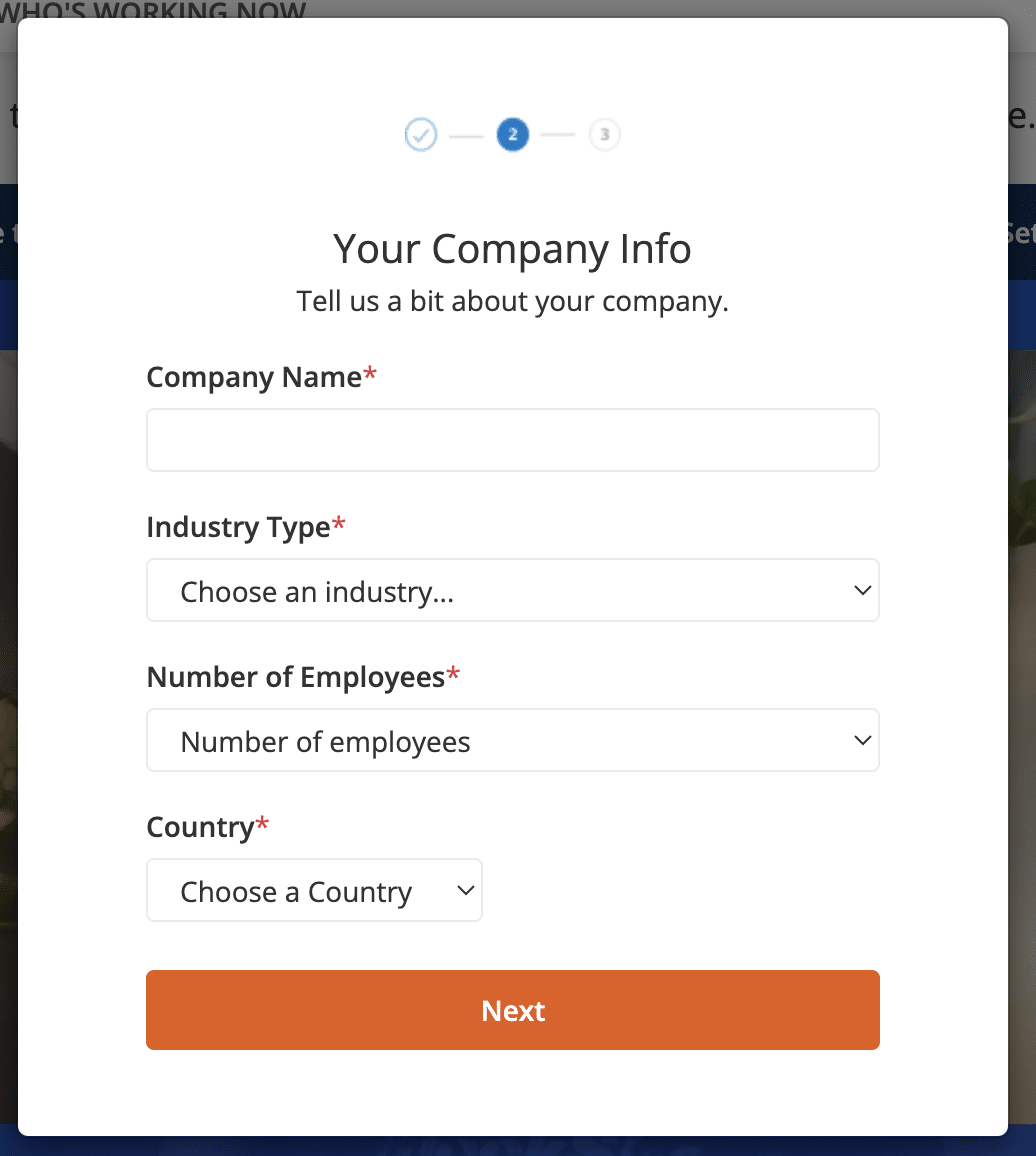
Setting up ClockShark was very straightforward. It's free to create an account and you don't need to put a credit card down for the 14-day free trial. You add some basic info about yourself, then company details including your industry and company size. You're also immediately prompted to download the mobile app, though you can skip that and come back to it later. After entering a mobile number, you land on the ClockShark home page.

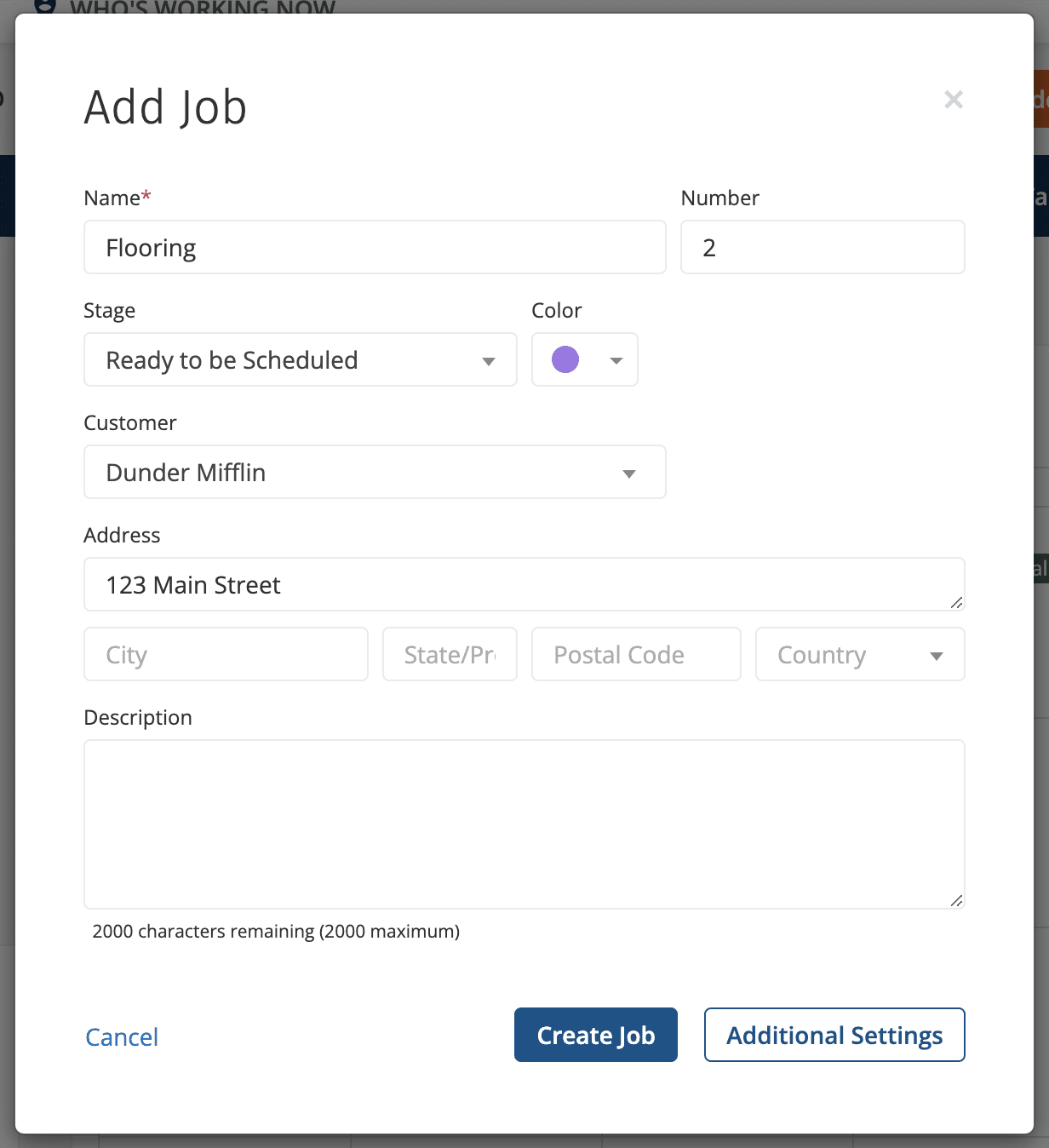
ClockShark doesn't have a step-by-step tutorial walking you through its tools. We liked that — it let us jump right in and start exploring. The app does embed pop-up videos on certain parts of the site explaining how to perform specific tasks. The first thing we did was add a few different kinds of jobs (roofing installation, plumbing, flooring, and so on). It would be nice if some of this were pre-populated, but it only took a moment to add.

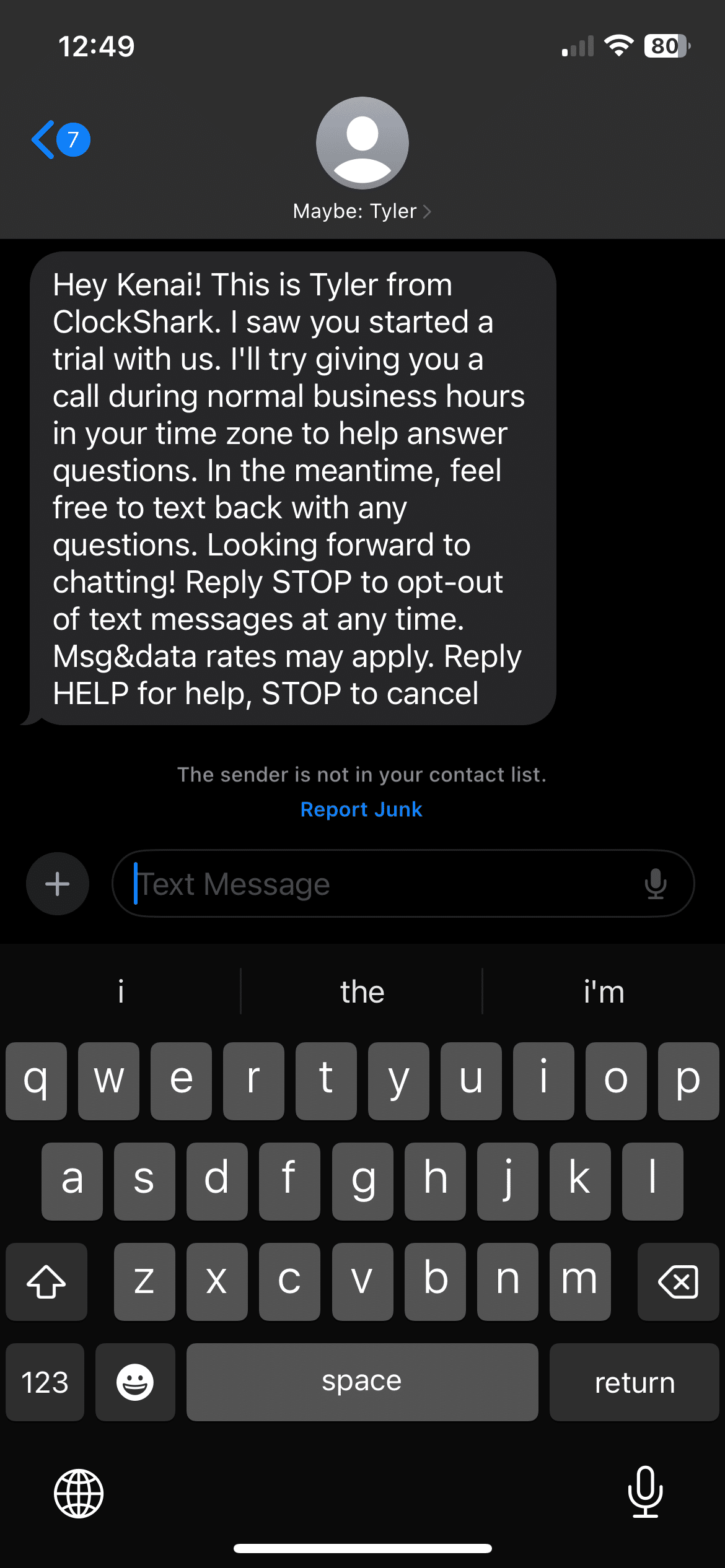
For support, there's a prominent 'Chat with an Expert' button in the bottom-right of the web dashboard. If live chat can't help, they follow up by phone — they texted to say they'd call within the next business day, and they actually called (twice). A same-day call during onboarding would have been more helpful, but the follow-up was still useful for working through issues.

Overall, onboarding was easy. It's not incredibly robust, but it lets you learn by doing and reach out for help when you need it.

The web app experience

The first thing you notice about ClockShark's website is that it's clean and simple. The most important features — timesheet, schedule, and the clock-in/out button — sit on the main page. The rest are separated into tabs: Time (Schedules, Timesheets, Time Off), Work (Customers, Jobs, Tasks, Quotes, Invoices), Reports (with CSV export), and Admin (People, Settings).

The effectiveness of this interface depends on the user. If you don't mind clicking around a bit to get where you need to go, you'll probably appreciate ClockShark's simplicity.

The mobile app experience

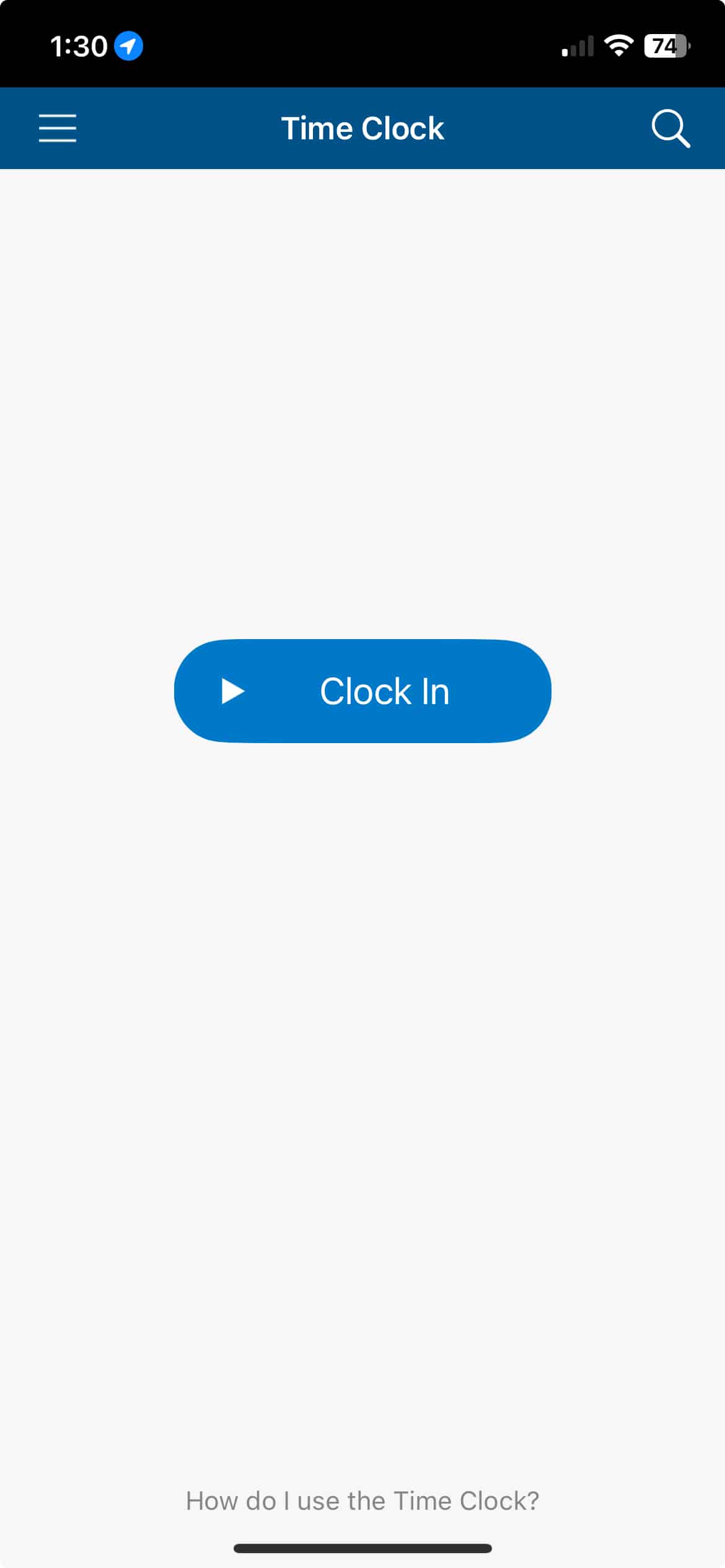
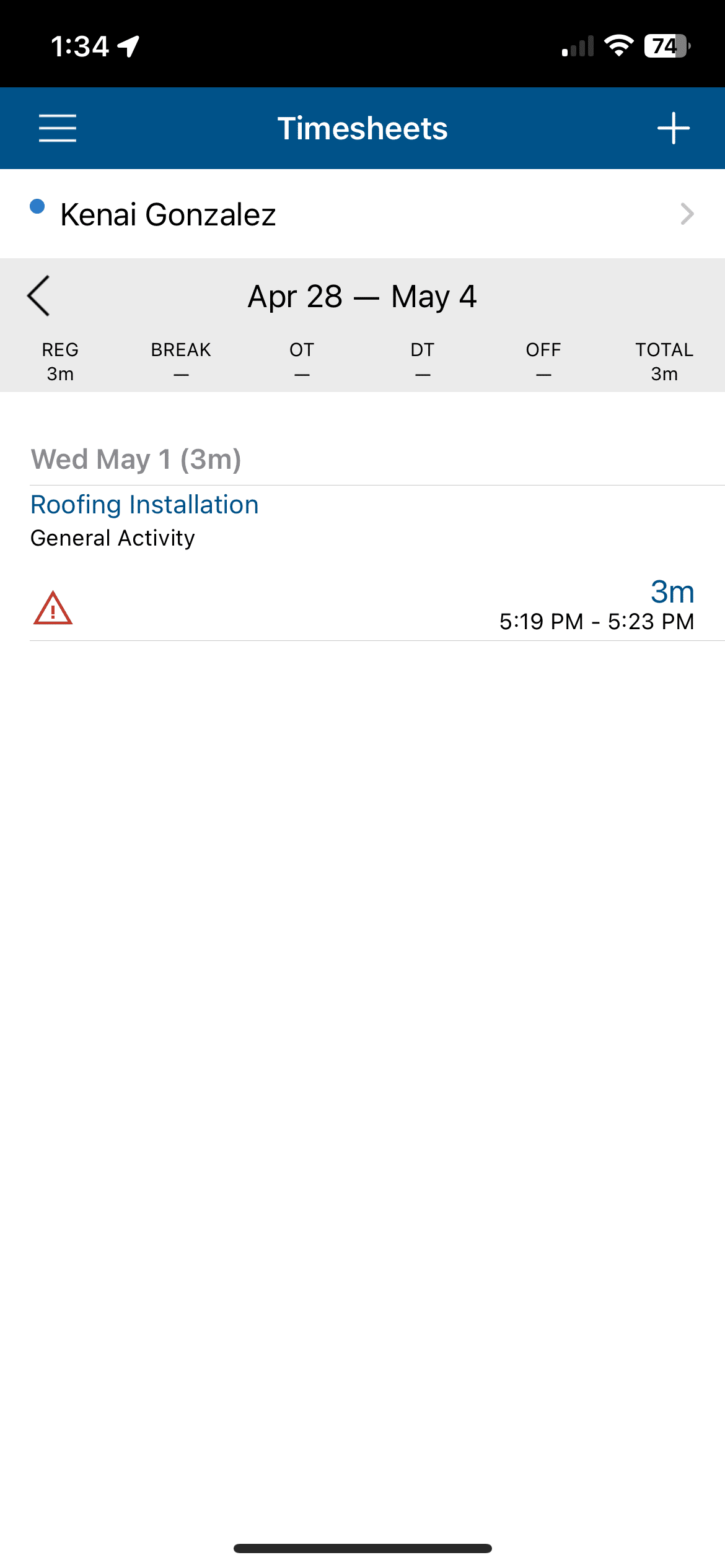
You can download the mobile app early in onboarding, which matters because ClockShark caters to construction and field-service businesses. But it takes the simplicity of the desktop UI one step further — when you first log in, a single clock-in button is essentially all you see. That's great for punching in quickly, but the app otherwise feels bare bones.

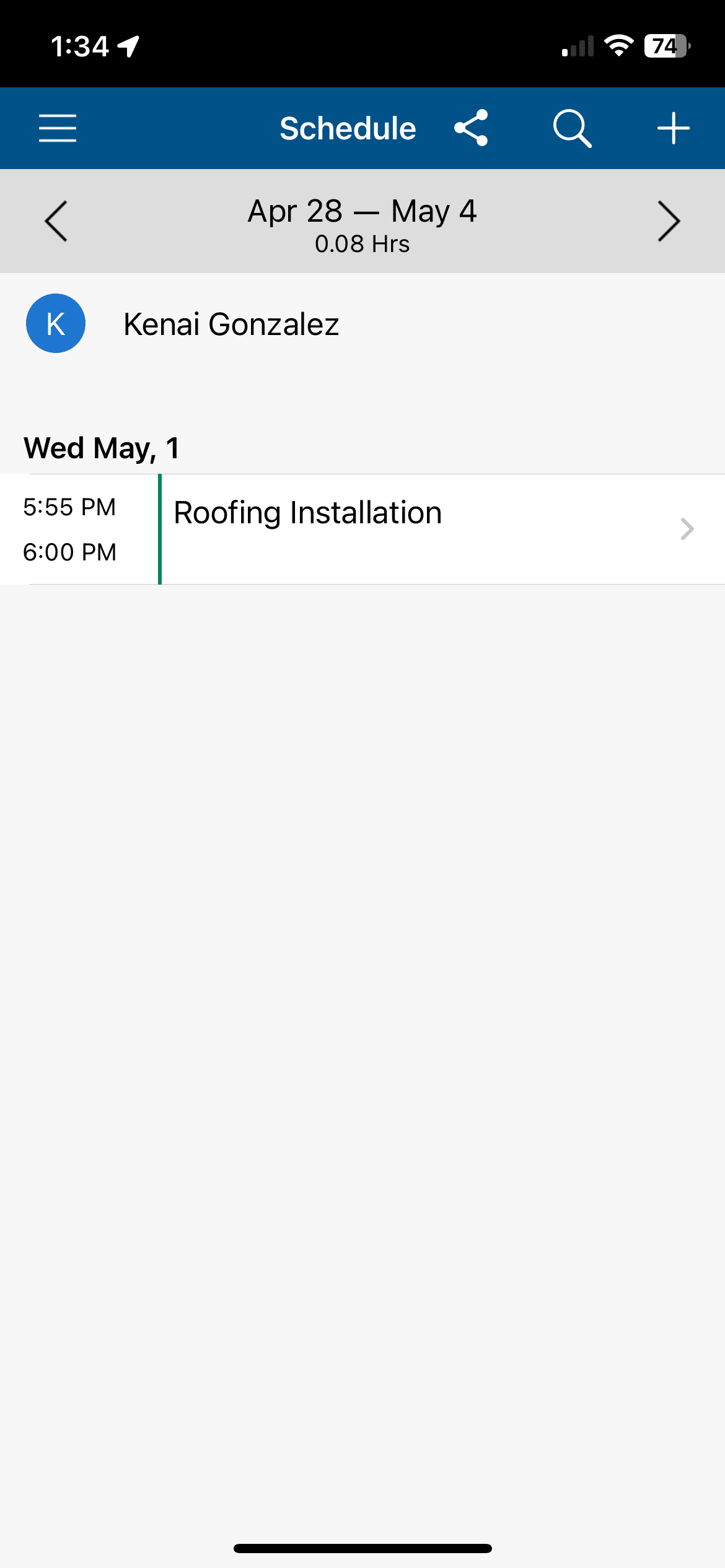
It does have useful features: you can view employee timesheets, schedules, and an employee map, and add quotes (but not invoices) to customers. When you assign shifts you can attach job type, tasks, notes, date, and time; any further detail has to be added on the desktop dashboard, and employees get notified when their shift begins.

Reporting is reserved for the desktop version, which is expected. The one thing materially missing is the ability to input time-off requests — there's no PTO tab in the app, which seemed an odd omission. You'll need to access the website to submit, view, and approve PTO.

How ClockShark tracks time

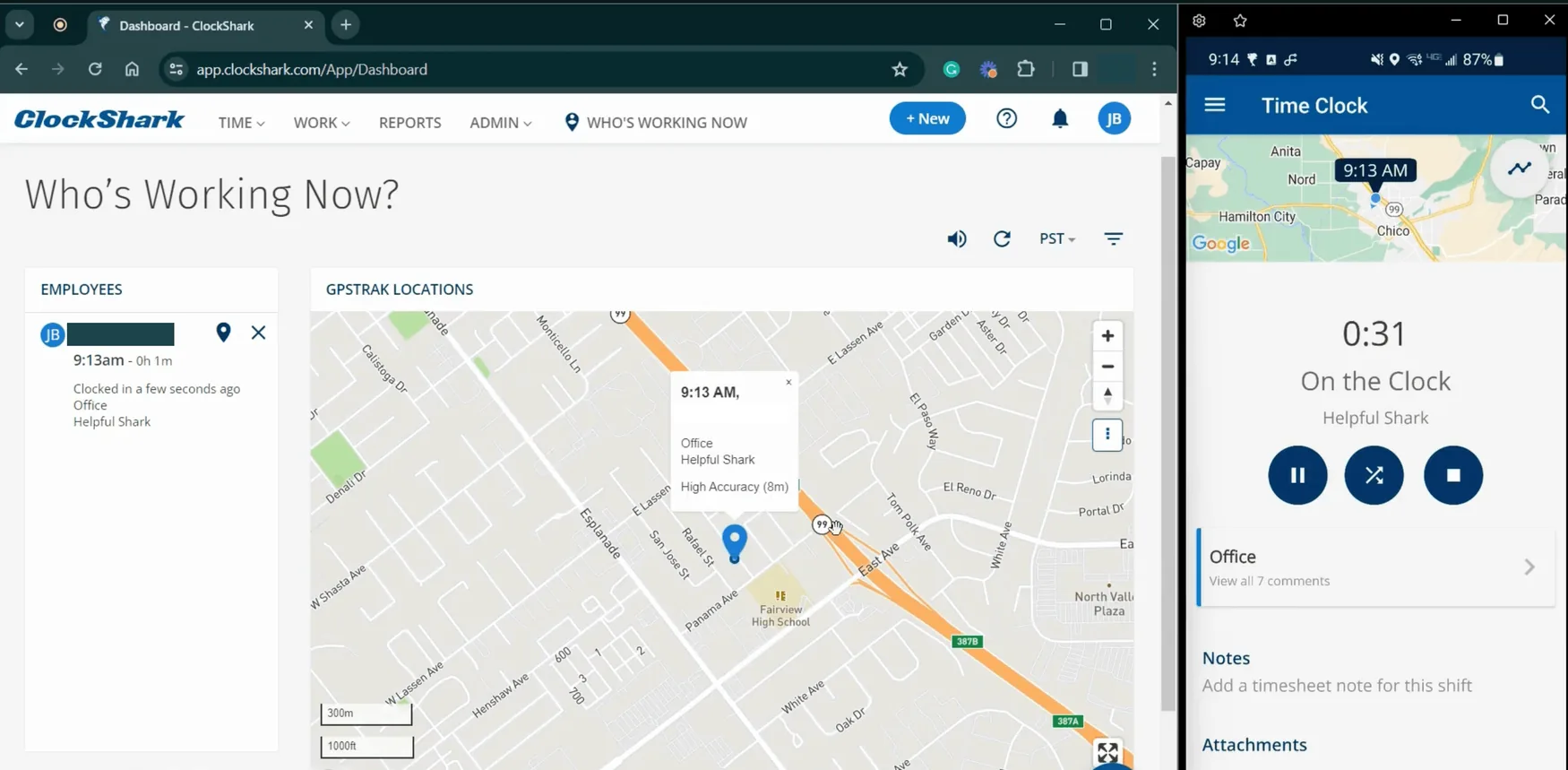
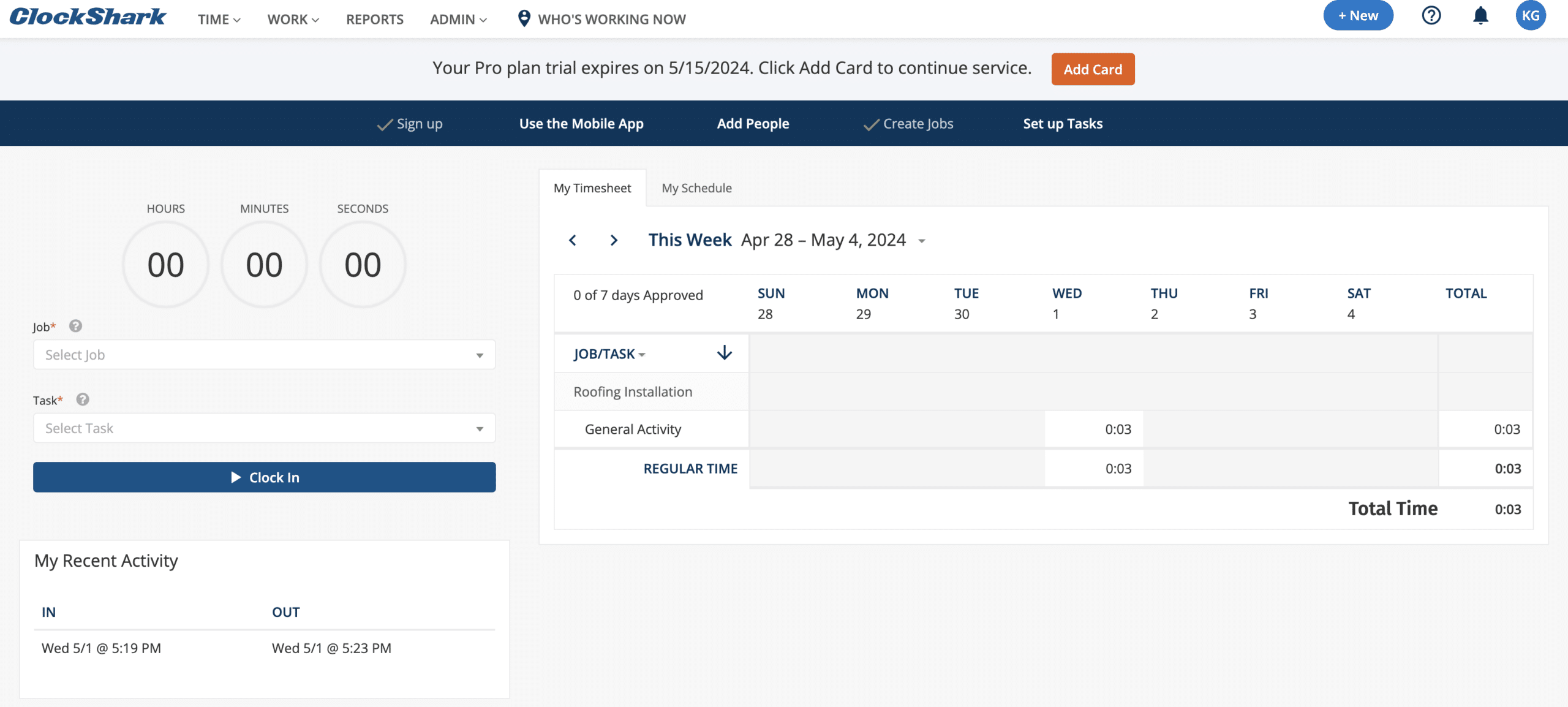
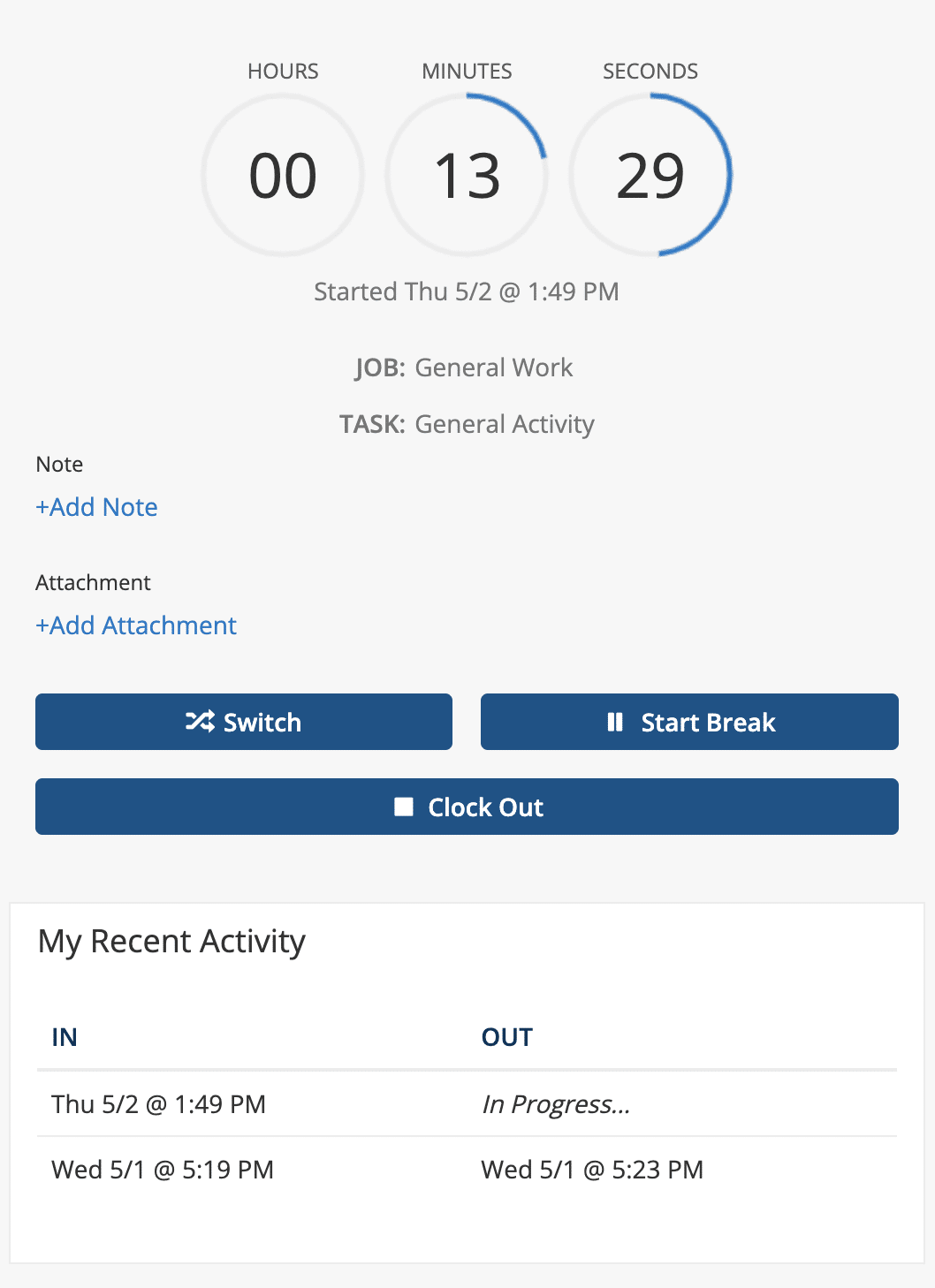
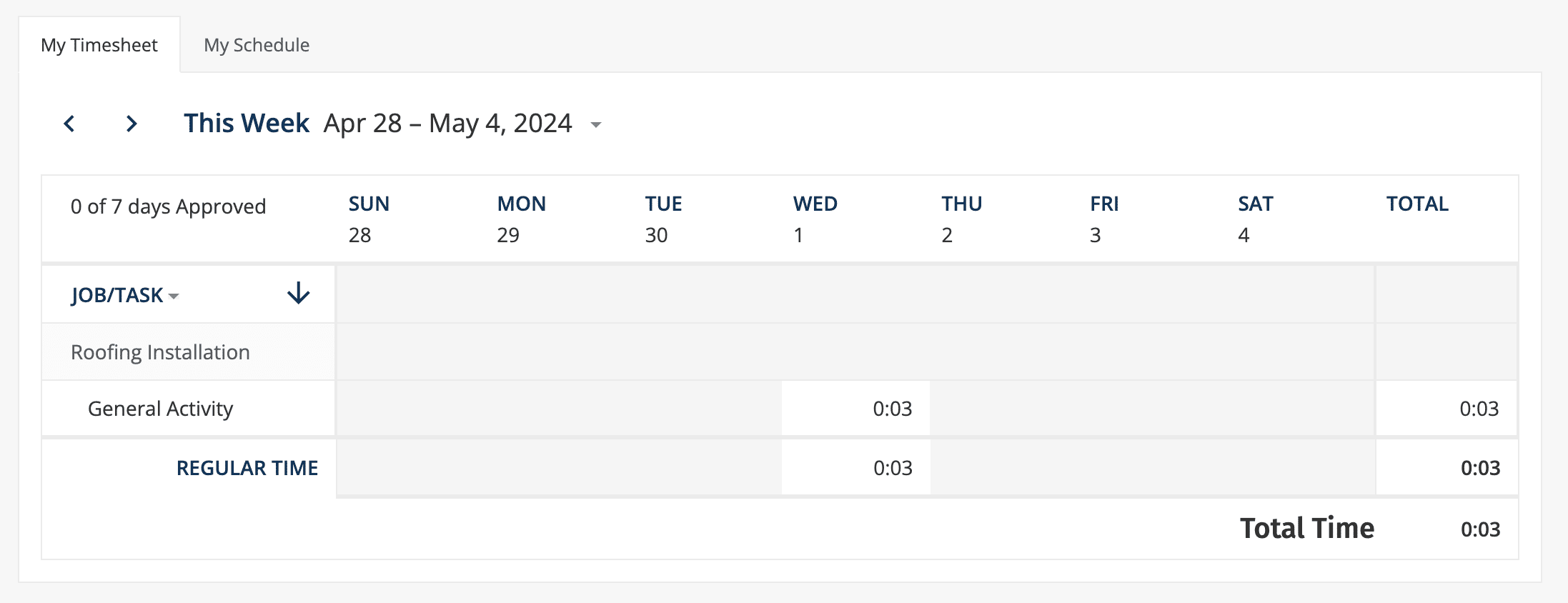
If you're tracking your own time, a clock starts as soon as you punch in. Below the clock you see your current shift and recent activity; to the right, ClockShark gives an at-a-glance look at your weekly timesheet and schedule in a calendar layout.

Job and task detail can get fairly deep. You can create a general job and add the project stage, customer information, address, and description, and colour-code jobs for easy viewing on the calendar. Each job can be paired with a task, and tasks carry financial details like billable rates, tax rates, and invoice descriptions.

After clocking in, employees can add notes and attachments so coworkers get a better idea of what happened during the shift. All hours tracked upload onto the timesheet after clocking out.

Schedules, timesheets & time off

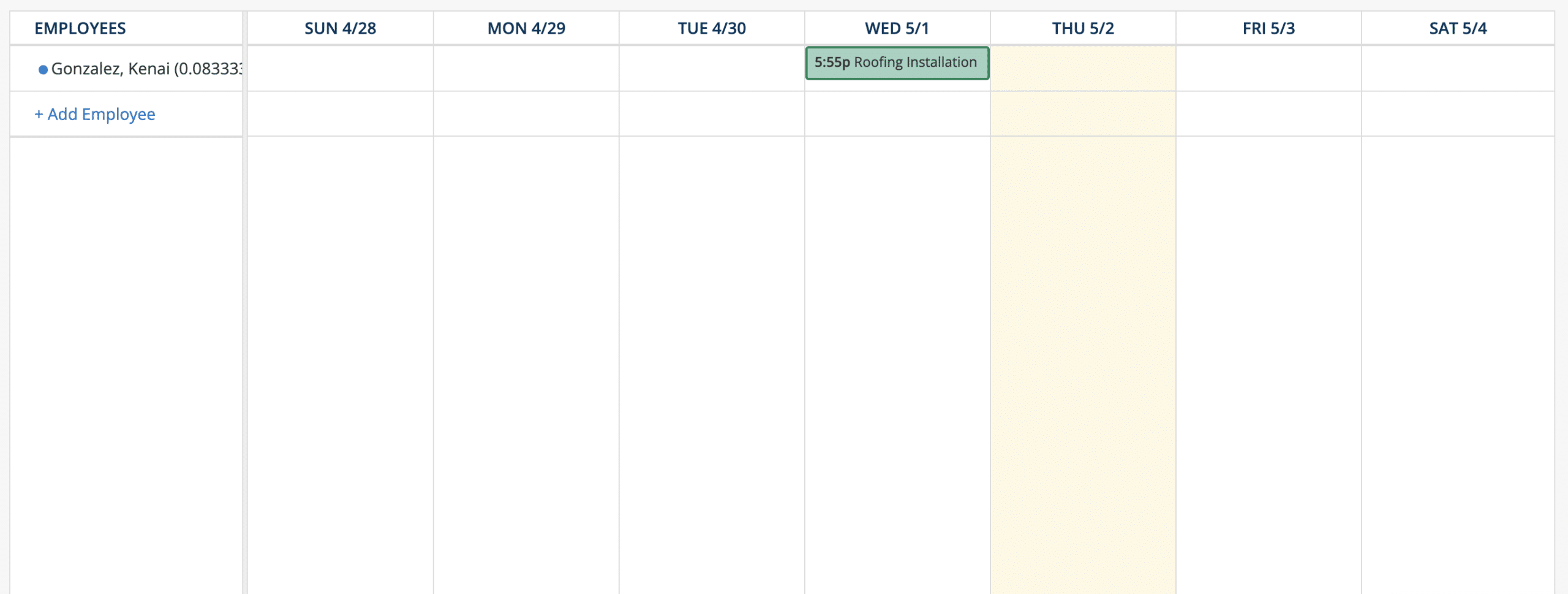
The Time scheduling panel uses the near-universal visual calendar to show who's working on which day, and you can toggle between day, week, 2-week, and month views. Adding a shift is simple — you can assign the same shift to multiple employees and select job/task details from one menu. The daily, weekly, and 2-week views give each worker their own row, so it's easy to drag shifts onto any worker. You can also switch from 'employee view' to 'jobs view' to focus on a single project, or add a shift by clicking a day in calendar view. Shifts are employee-based, which works fine for small teams — but moving a 6-person crew means dragging six individual blocks.

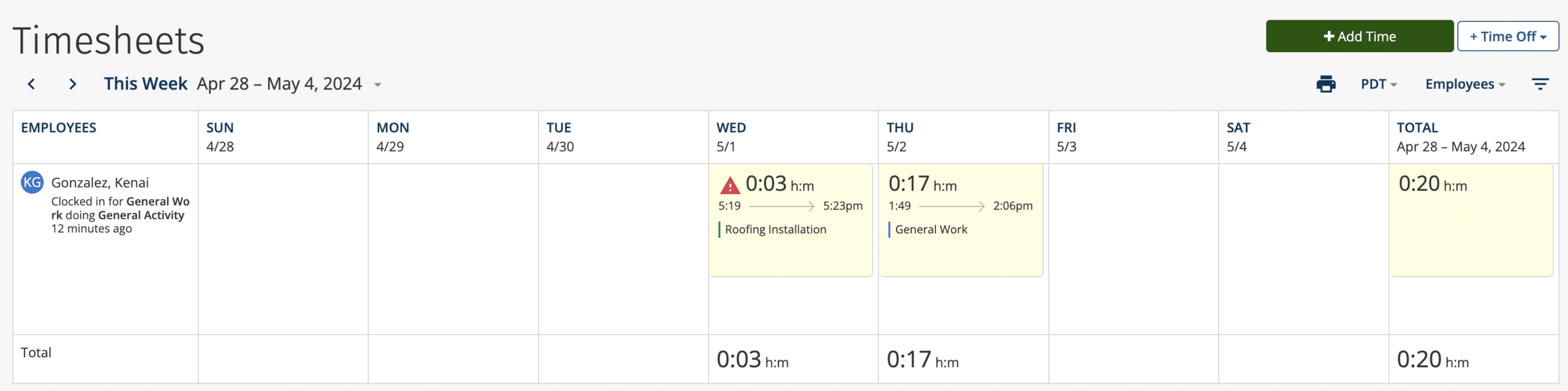
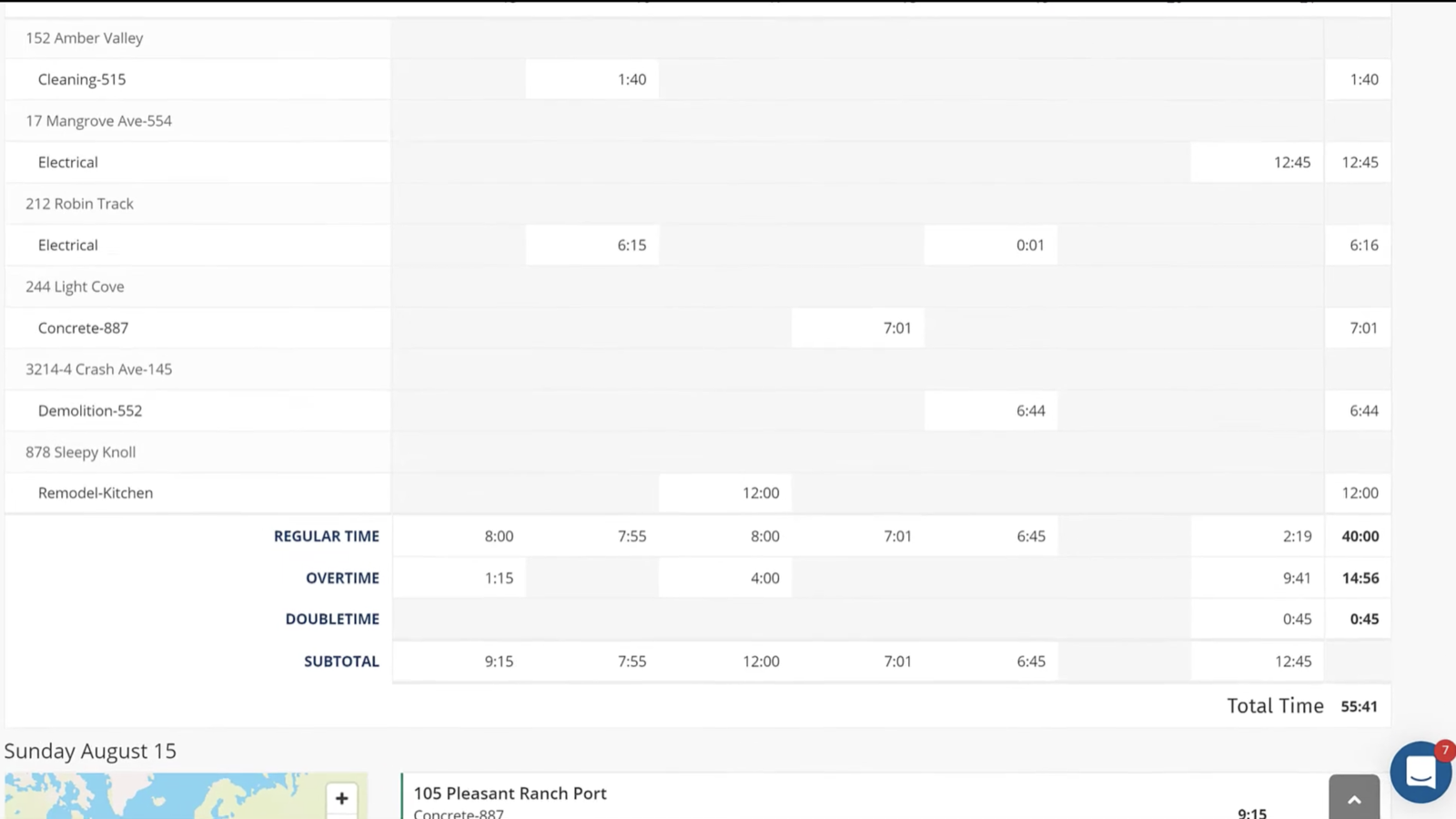
In the timesheets section you can view and approve timesheets from the previous pay period, see a summary of every employee's punches for the week, and click through for shift detail.

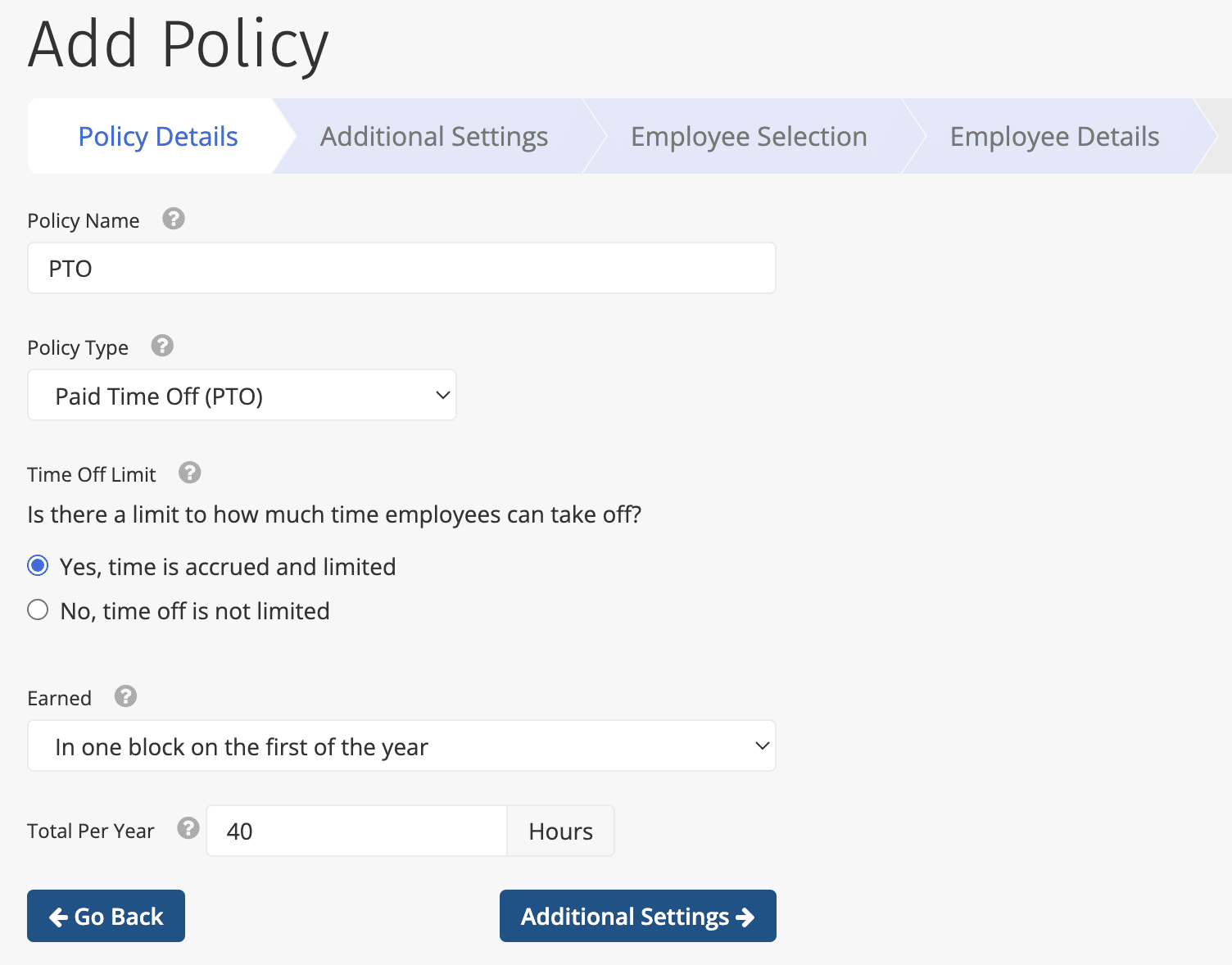
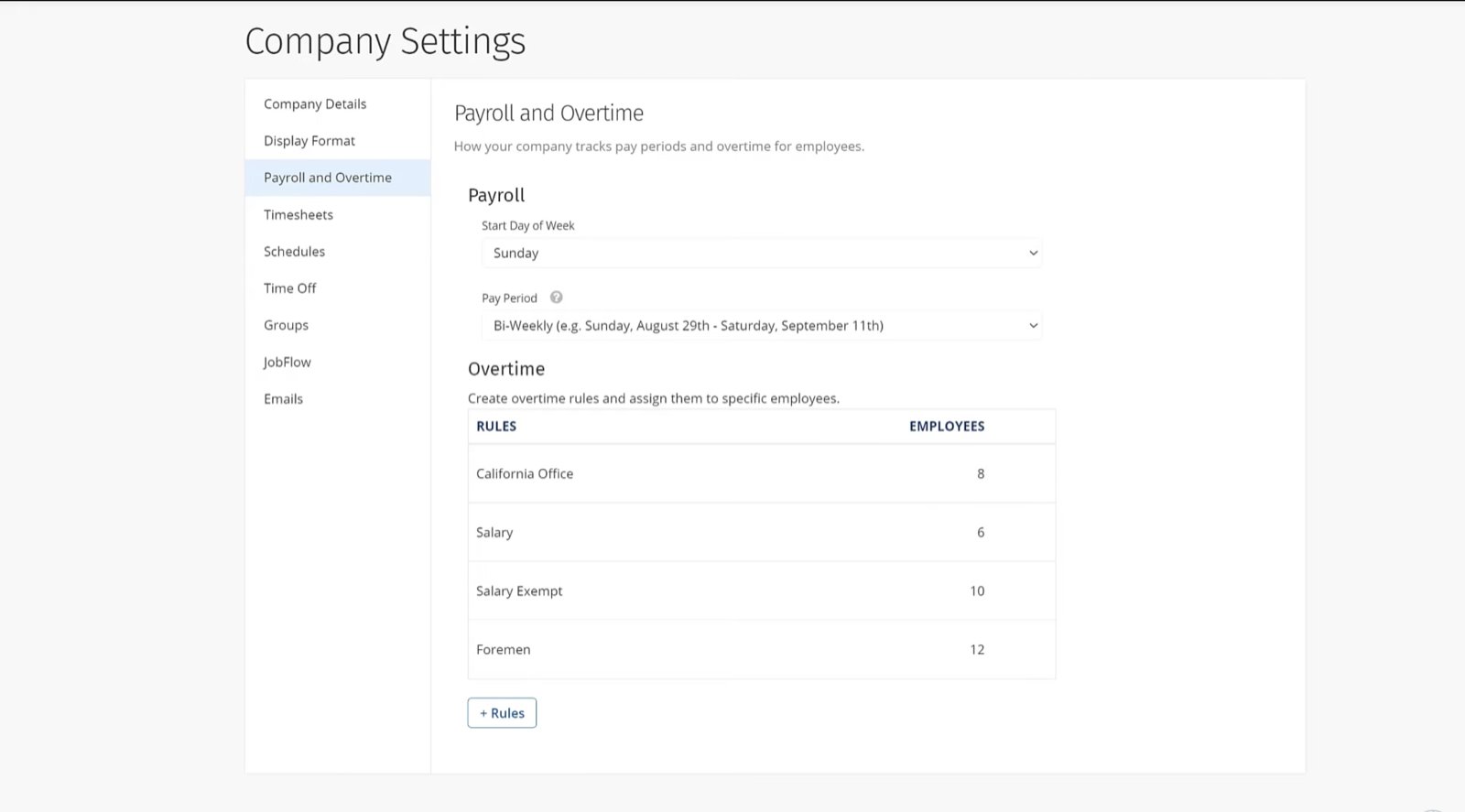
The Time Off section has two parts: Policies and Requests. Policies let you set the PTO accrual rate, which employees it applies to, any waiting period, whether PTO carries over, and a maximum balance. Once a policy is set, you can see each employee's accrued PTO at a glance, and employees can submit requests for approval in the Requests tab — though you must create a policy first.

Customers, jobs & invoices

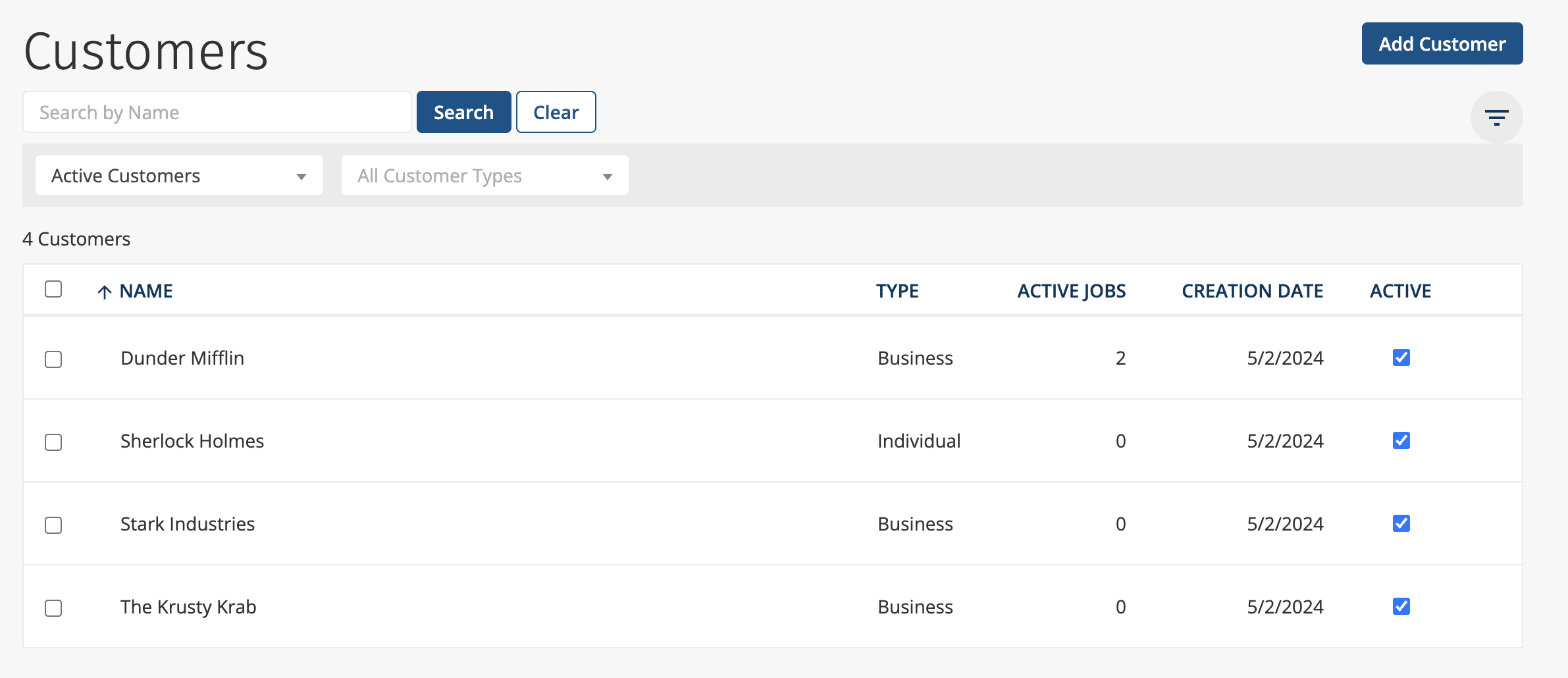
The Work tab keeps detailed information about customers and jobs. In Customers you can add as many customers as you work with, categorise them as businesses or individuals, store address, contact info, and notes, and mark them Active or Inactive so their details stay in your database even when you're not currently working together.

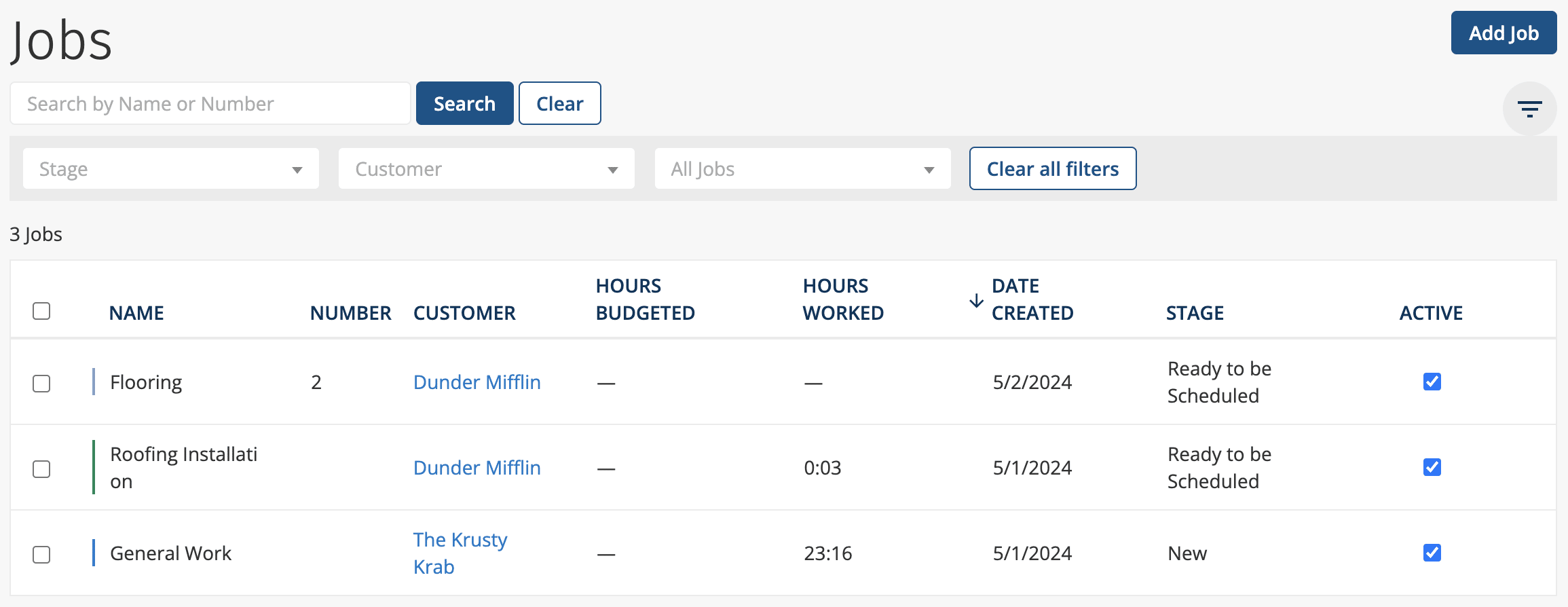
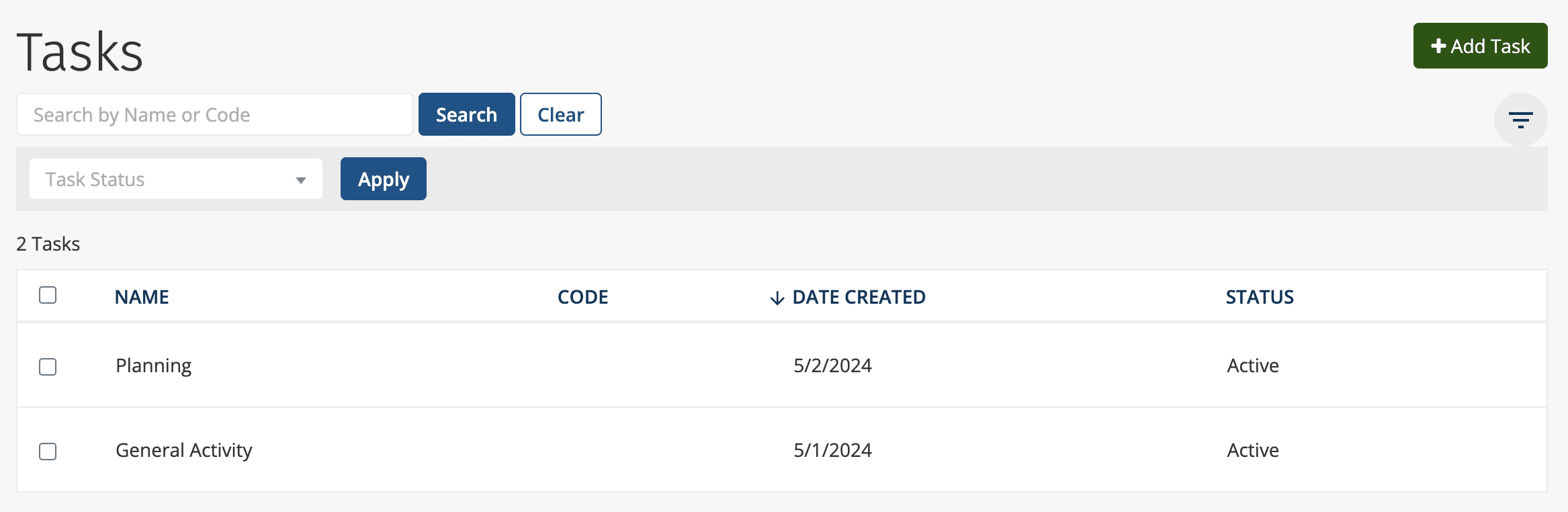
In Jobs you create job types using all that detail and pair them with customers to stay organised; you can edit any job's details at any time. Tasks are intended for job costing — trades like plumbers or electricians can use tasks with preset billable hours so every project is billed accurately, or you can create one general task and assign it to everyone if all employees are paid the same rate.

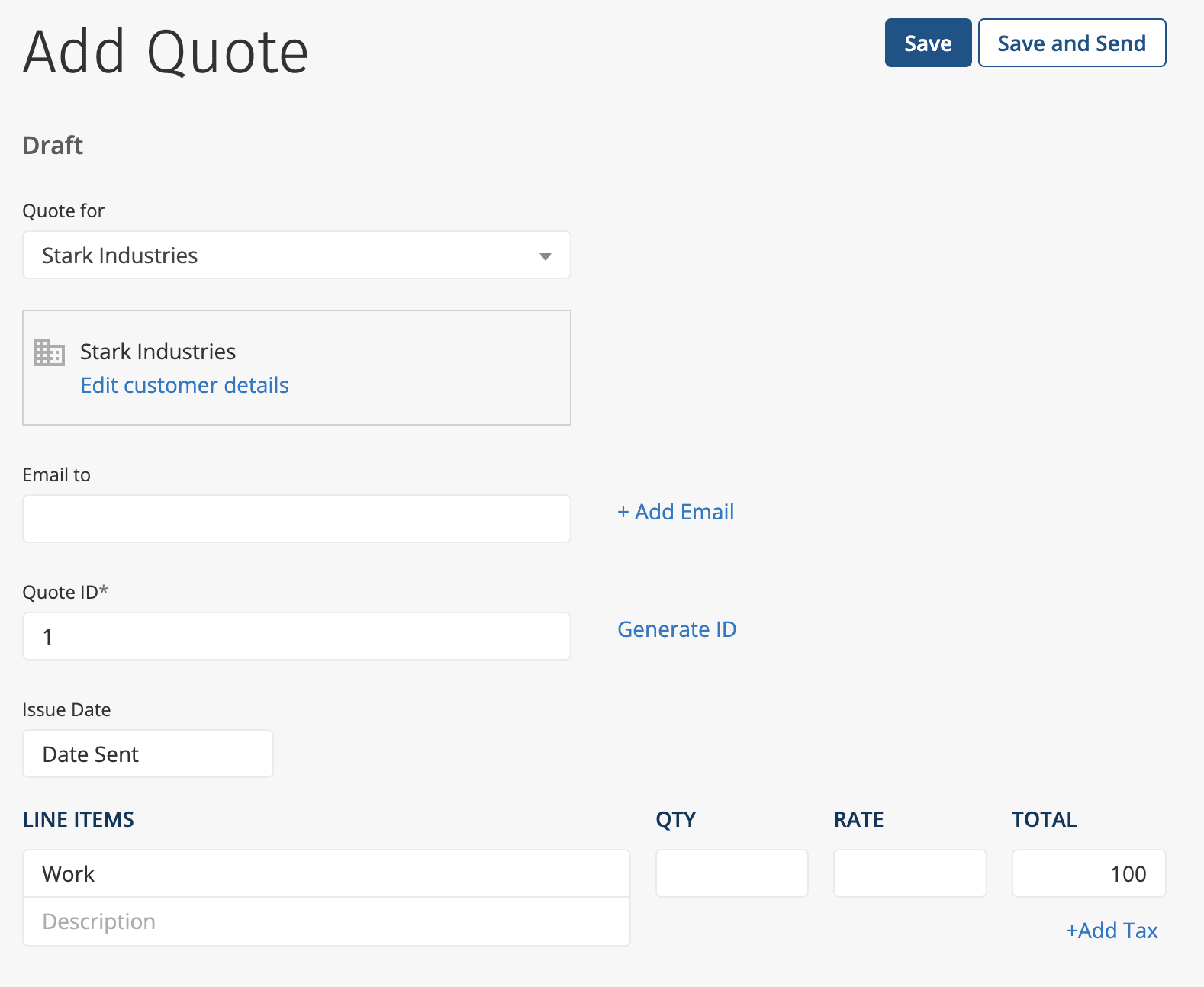
Quotes provide an easy way to send job quotes to clients by email, and clients can sign and return them. Invoices can be sent directly to clients too — and because you can click '+ Unbilled Time' to pull in employees' hours worked, you can invoice a project accurately against tracked time.

Reports

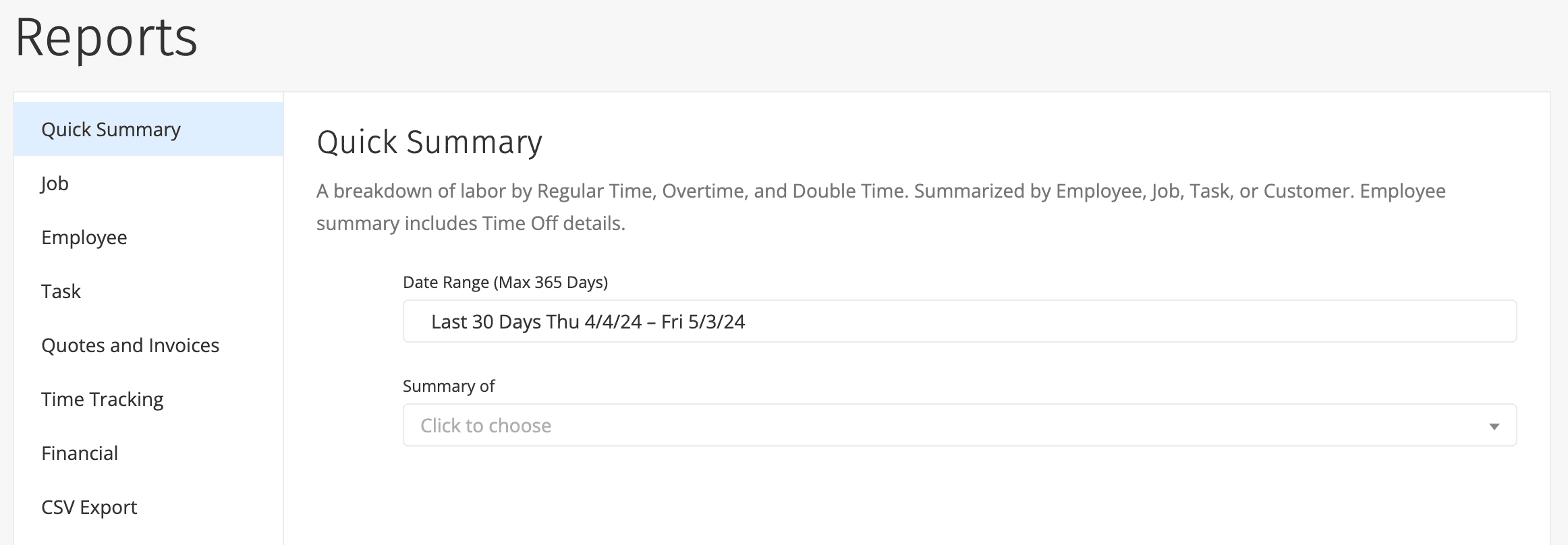
ClockShark lets you create detailed reports for virtually any feature, all in PDF format. The Reports tab presents a list of options: Quick Summary, Job, Employee, Task, Quotes and Invoices, Time Tracking, Financial, and CSV Export. For each, you can run a Summary report (a high-level overview) or a Detailed report that includes employees, job costs, specific tasks, and more, depending on the focus you choose.

The reports themselves are bland — essentially a list of information on a PDF, not pleasing to the eye. The saving grace is CSV export: you can pull the data out to build your own charts or graphs if you need to present it later or analyse it for new opportunities.

Integrations

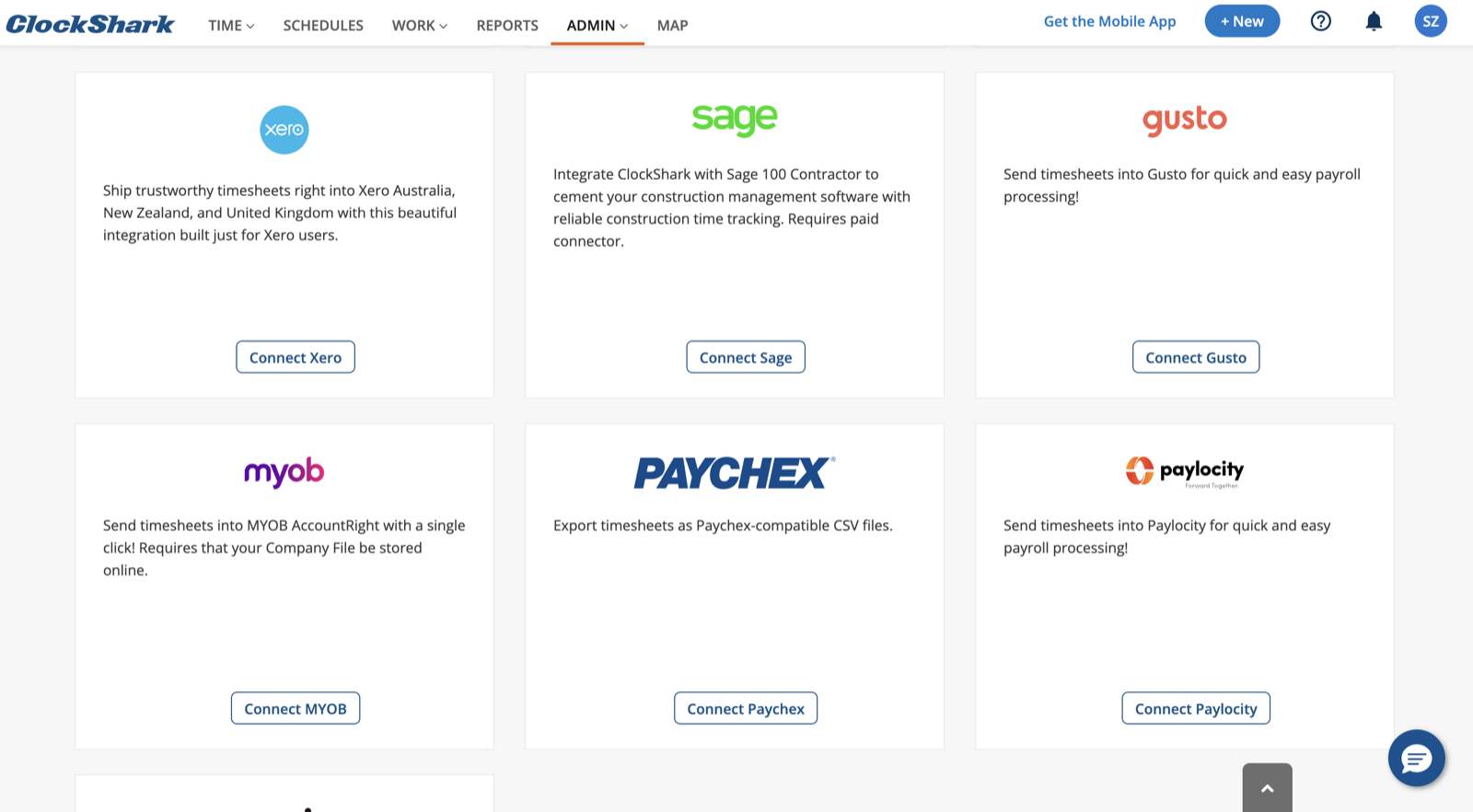
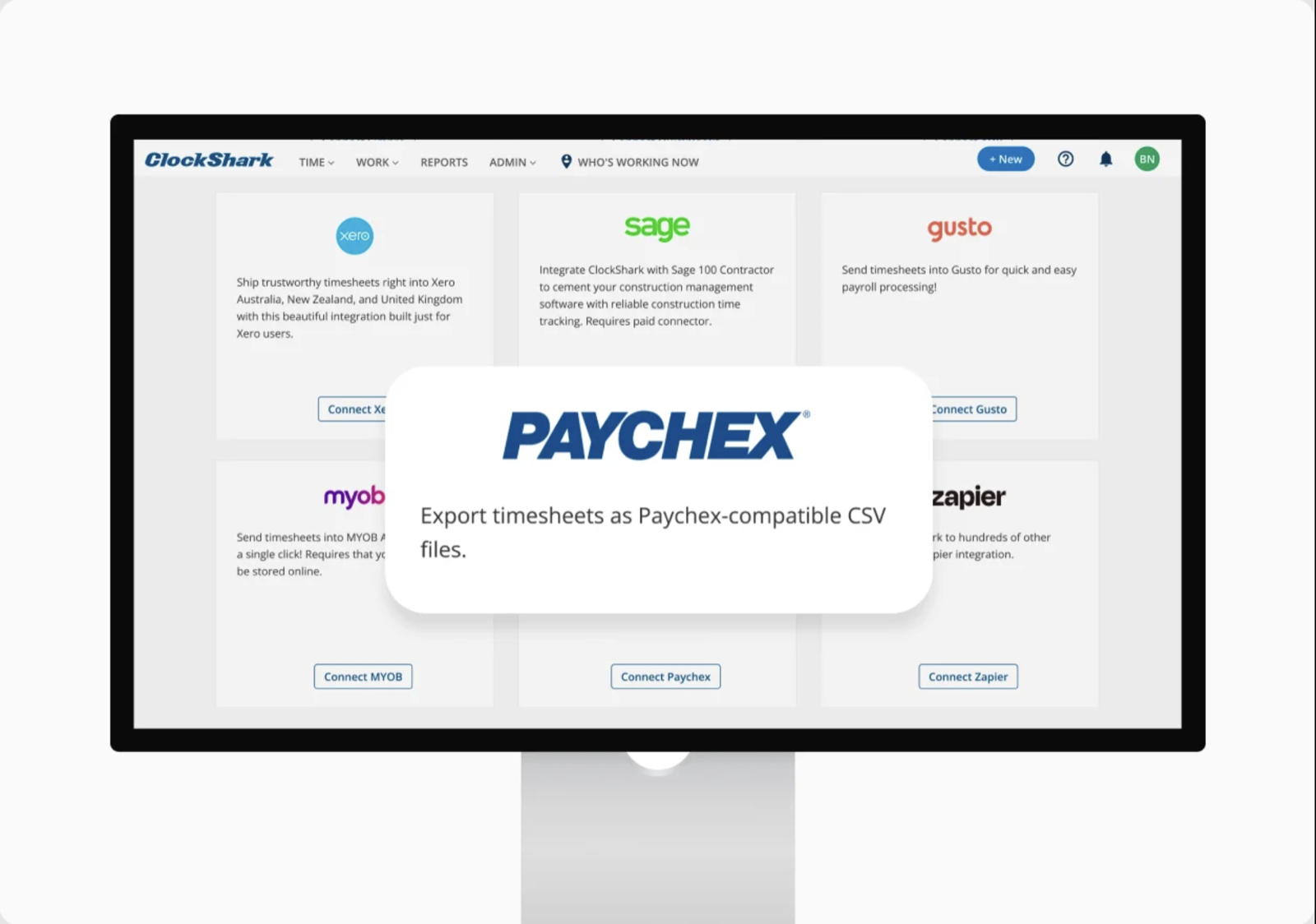
ClockShark has an intuitive way of integrating with other apps, including popular payroll tools like QuickBooks, ADP, and Gusto. If your team already relies on QuickBooks, it's worth understanding how timesheets sync to confirm the integration goes deep enough for your payroll workflow. To start, go to Admin > Integrations, where you'll find nine apps to connect with — click 'Connect [App]' and sign in.

There doesn't appear to be any way to integrate with apps outside this list; you'd need to raise that with their support team. The main downside is that the integration list isn't comprehensive, especially for construction. The only construction-specific app that stood out was Sage — good for contractors, but not the most popular option in the space.

ClockShark pricing

How much does ClockShark cost? Here's the actual math behind their two plans: Standard and Pro.

Standard
$11/user/mo + $48/month base

Plan features:

  • Time and attendance tracking
  • GPS tracking
  • Job and task tracking
  • Built-in Spanish language support
  • Drag and drop scheduling
  • Manager roles and approvals
  • Third-party integrations
  • Draft schedules
Pro
$13/user/mo + $68/month base

Plan features:

  • Everything in Standard
  • Paid time off (PTO)
  • Multi-department/office controls
  • Advanced job costing controls
  • Shift wrap-up & compliance forms

What it actually costs at scale

Compare ClockShark's tiers against Workyard pricing to see the real annual cost across three common crew sizes.

15 employees
ClockShark
Standard plan
$213/mo ($2,556/yr)
Workyard
Starter plan
$140/mo ($1,680/yr)
Save $876/yr with Workyard
100 employees
ClockShark
Standard plan
$1,148/mo ($13,776/yr)
Workyard
Starter plan
$650/mo ($7,800/yr)
Save $5,976/yr with Workyard
300 employees
ClockShark
Standard plan
$3,348/mo ($40,176/yr)
Workyard
Starter plan
$1,850/mo ($22,200/yr)
Save $17,976/yr with Workyard

Pricing scales linearly with headcount. Fine for small teams, but it might be the #1 switching trigger for contractors past 50 employees. Twenty-three contractor research calls specifically mentioned pricing as a concern at scale. Workyard's user discount kicks in at 50+ employees, and the lower per-user rate widens the cost gap as you grow.

Pricing verified May 18, 2026. Visit the ClockShark website for current pricing.

What contractors say about ClockShark

To build an honest picture of ClockShark, we analyzed reviews across four sources: Capterra, G2, the Apple App Store, and Google Play.

Capterra
4.7
1,911 reviews
G2
4.6
314 reviews
iOS App Store
2.9
268 ratings
Google Play
3.1
986 reviews

Star rating figures captured as of 23 June 2026.

From G2 and Capterra, we captured the headline star ratings and then clustered hundreds of admin and owner reviews into recurring strength and weakness themes, scoring each theme by how often it came up so the patterns reflect real frequency, not cherry picking.

From the App Store and Google Play, we surfaced the field worker perspective: the crews actually clocking in, viewing schedules, and uploading photos every day.

This is the layer that matters because admins and field crews often experience the same product very differently, and the on-the-ground reviews surface usability issues, GPS reliability problems, and sync failures that rarely show up in admin-focused review sites.

What’s working
Mobile clock-in speed (169 mentions)
QuickBooks sync simplicity
Quick onboarding with minimal training
What’s not
GPS accuracy and breadcrumb detail (48 mentions)
App stability and sync issues (49 mentions)
Geofencing reliability (22 mentions)

Real ClockShark user reviews

We sourced verified quotes directly from the reviews, so nothing on this page is paraphrased or generalized. The result is a side-by-side view of what is working well for ClockShark and what doesn't.

@ContractorMike, Capterra · ★★★★★

ClockShark transformed how we manage our field crew. The QuickBooks sync alone saves us hours every week.

@MaryT123, Google Play · ★★★★★

Easy to set up, but the GPS just doesn't work for what we need. Half the time it shows my crew at the wrong job.

How ClockShark compares to Workyard

Where ClockShark wins, where Workyard wins, and what that means for your team — scored across the 10 dimensions that came up most across 166 real conversations.

Feature ClockShark Workyard
GPS tracking & accuracy 15-20min interval GPS; reminder-based job selection Continuous GPS + polygon geofencing; automatic job assignment
Prevailing wage support No native prevailing wage; Davis-Bacon via partner add-on only Limited prevailing wage support
Crew-based scheduling Employee-based only; crew workarounds required Assign crews as units; inherent crew workflow logic
Reporting & customisation Rigid preset reports; CSV export required for analysis Advanced report builder with formulas; unlimited custom fields
Ease of use (mobile) Simple, plug-and-play; minimal training required Streamlined for field operations; intuitive multi-job support
QuickBooks integration Direct QB Online/Desktop sync; native integration Native QB sync + Gusto, Sage 300, ADP integrations
Customer support Mixed: excellent for some; 6+ months for others <24hr response time; proactive issue resolution
Pricing model $48+$11-13/user/month; per-user scaling at any size $50+$6/user (Starter annual); volume discounts at 50+
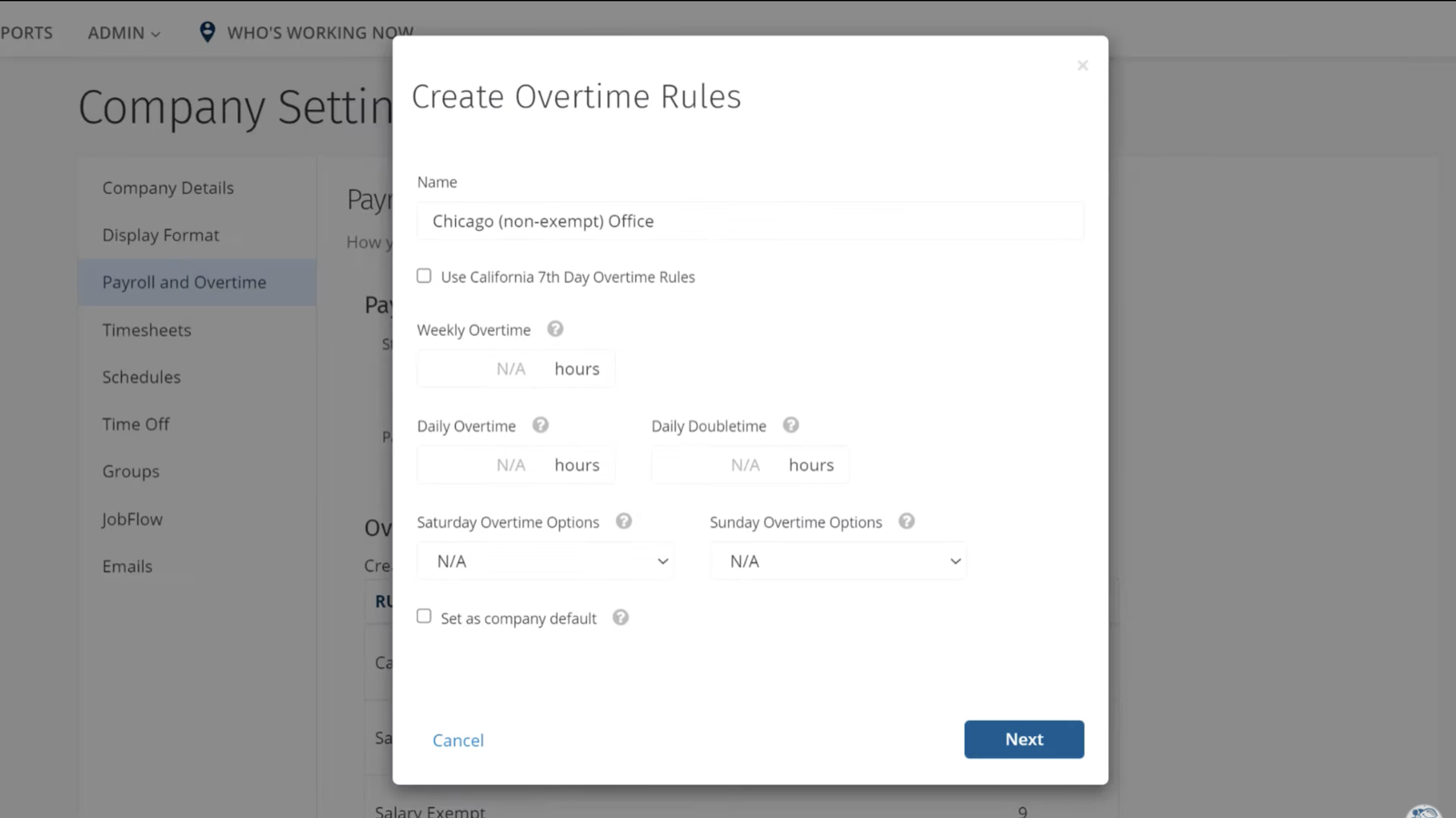
Break compliance & labor law Alerts for missing breaks after the fact Proactive break reminders; auto-enforcement flags
Scalability (50+ employees) Becomes clunky; users report outgrowing quickly Built for growth; complex multi-team operations supported

Read our full ClockShark vs Workyard comparison

What are the key areas you should test in ClockShark?

Four feature areas where ClockShark's pitch and the day-to-day reality diverge most. Worth pressure-testing during a trial before you commit.

Mobile time tracking

How ClockShark positions it

Let your hardworking team clock in and out with a tap, recording the timesheet data needed for payroll and job costing with 99.9% accuracy.

Testing approach

The mobile UX is genuinely strong, with 169 mentions of ease of use across our contractor research calls. But GPS updates every 10–15 minutes, not continuously, so the 'accuracy' applies to the tap, not the location trail. 48 conversations specifically flagged GPS detail as insufficient for certified payroll or dispute resolution. Workyard tracks GPS continuously with polygon geofencing. Worth testing side-by-side if your payroll workflow depends on defensible breadcrumb trails.

The question that matters

Can you trust the GPS trail for payroll and disputes?

Drag-and-drop scheduling

How ClockShark positions it

Reschedule jobs or reassign them to different team members as simply as clicking, dragging, and dropping.

Testing approach

The scheduling UI is clean and the drag-and-drop works as advertised. The core limitation: scheduling is employee-based, not crew-based. Moving a 6-person crew to a new job means dragging 6 individual blocks. 11 research conversations cited crew-based scheduling gaps as a switching trigger. If you run individual employees on independent schedules, this works fine. If you run crews as units, you may spend more time in this UI than you'd hope.

The question that matters

Can you schedule and manage crews as units?

Job management

How ClockShark positions it

ClockShark pitches Job Management as a single hub to replace spreadsheets — customer details, project stages, budgeted vs. actual hours, and job-costing visibility in one place, with built-in field-to-office messaging.

Testing approach

Job management works well for straightforward projects: customer info, address, color coding, billable rates. But 26 real calls flagged reporting and customisation frustrations. Contractors who need cost code breakdowns, formula-based reports, or unlimited custom fields hit a wall and end up exporting to CSV. If your job-costing workflow needs depth beyond preset reports, this may be a gap worth testing during a trial.

The question that matters

Can you pull the reports you actually need for job costing?

Kiosk clock & crew clock

How ClockShark positions it

ClockShark pitches flexible clock-in modes — CrewClock lets one supervisor clock in, switch tasks, and log breaks for an entire crew from a single phone, plus a shared-tablet kiosk for sites where workers don't carry their own devices.

Testing approach

Flexible clocking is a genuine strength — especially CrewClock, which solves a real problem for crews where not every worker has a smartphone. ClockShark scores 9.5/10 on ease of use in our analysis, ahead of most competitors. The trade-off: kiosk and crew clock modes inherit the GPS interval tracking limitations described elsewhere. The clock-in itself is fast and reliable; what happens between clock-in and clock-out is where the gap appears.

The question that matters

How quickly can your crew start using it without training?

ClockShark alternatives you should evaluate

If ClockShark's gaps are dealbreakers for your operation, here are the alternatives we'd recommend evaluating — based on which specific pain points matter most to you.

Workyard Try free

We put payroll, job costing, and compliance on autopilot.

Best for

Growing construction teams (25–500+) that need GPS-verified hours, expenses auto-coded to the right job and cost code with real time visibility.

What it solves that ClockShark doesn’t
  • Continuous GPS tracking (not 15-min intervals)
  • AI-powered forms that trigger at the right moment
  • Drag-and-drop scheduler with real-time crew locations
  • Lower per-user pricing with volume discounts at scale
Honest tradeoff

Steeper learning curve than ClockShark — more powerful means slightly more setup time. Not the cheapest option for very small teams (under 10).

Best for

Budget-conscious small crews who want free basic time tracking.

Tradeoff

Limited reporting depth. GPS accuracy draws similar complaints to ClockShark. Lacks prevailing wage support.

Best for

Non-construction field service teams who want an all-in-one employee app.

Tradeoff

Not construction-specific. Lacks the prevailing wage, crew scheduling, and job-costing depth construction contractors need.

ClockShark FAQs

Questions we hear from contractors evaluating ClockShark every week.

Is ClockShark accurate for GPS tracking?

ClockShark's GPS updates every 10–15 minutes, which works for basic clock-in verification. However, 48 contractor conversations mentioned the breadcrumb detail isn't sufficient for certified payroll or resolving location disputes. If GPS accuracy matters for your payroll process, test this specifically during your trial.

How much does ClockShark cost for a 30-person team?

On the Standard plan ($48/mo base + $11/user), a 30-person team pays roughly $378/month or $4,536/year. Scale to 100 people and that becomes $1,148/month. Per-user pricing means costs grow linearly: fine for small teams, but the #1 switching trigger as companies scale past 50 employees.

Does ClockShark work with QuickBooks?

Yes. This is one of ClockShark's genuine strengths. Native sync with both QuickBooks Online and Desktop works well. Where integrations fall short is with other payroll systems like ADP or Sage, where 13 conversations mentioned manual data transfer as a pain point.

Can ClockShark handle prevailing wage jobs?

No. ClockShark has no native prevailing wage support. Contractors on Davis-Bacon jobs report manually adjusting rates every week, which is a compliance risk and a time sink. If prevailing wage is part of your workload, this may be a critical gap.

Is ClockShark good for large construction companies?

It works well under 25 employees. Contractors report it becomes clunky at 50+ people: limited reporting, no crew scheduling, and per-user pricing that gets expensive. Five conversations specifically cited 'outgrowing' ClockShark as their reason for evaluating alternatives.

What are the biggest complaints about ClockShark?

The top three: GPS accuracy (48 mentions), system crashes during payroll (49 mentions), and geofencing reliability (22 mentions). These are risk areas we'd recommend testing thoroughly during any trial period rather than discovering after you've committed.

Does ClockShark have geofencing?

Yes, but with limitations. It prompts employees to clock in when they enter a geofenced zone, but it doesn't auto-clock them. 22 conversations mentioned it doesn't reliably prevent early clock-ins from outside the zone, which was a critical need for those contractors.

Is ClockShark better than Workyard?

It depends on your needs. ClockShark wins on simplicity and ease of use for small teams (5–25 people). Workyard wins on GPS accuracy, comprehensive time tracking features, crew scheduling, reporting depth, and scalability. The right choice depends on which of those considerations matters most for your operation.

Can ClockShark track break compliance?

Limited. It alerts supervisors after a break was missed, but doesn't proactively remind employees or enforce break rules. For California meal/rest break compliance or similar state requirements, this is a significant gap. After-the-fact alerts don't prevent Department of Labor (DOL) fines.

How easy is ClockShark to set up?

Very easy, and this is ClockShark's strongest selling point. 169 mentions of ease of use across our data. Crews can be clocking in within minutes of setup with minimal training. If onboarding simplicity is your top priority, ClockShark genuinely excels here.