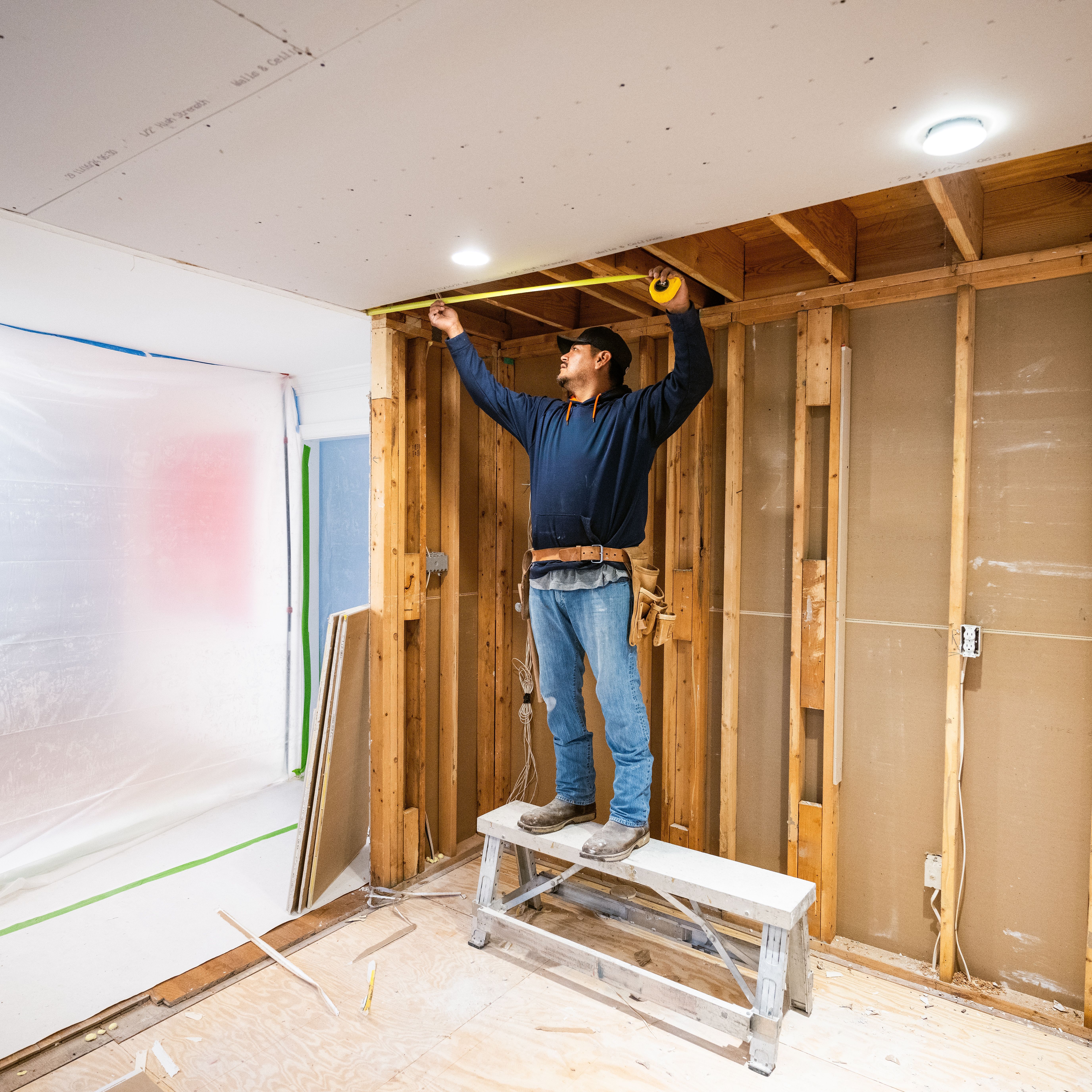
If you’re trying to start a carpentry business, then this article will help you understand what you’re getting into.
The carpentry industry will experience both growth and challenges in 2026. With over 923,000 carpenters employed in the U.S. and an estimated market revenue of $44.2 billion, carpentry remains a vital part of the construction sector.
Note that factors like labor shortages, rising material costs, and economic shifts are shaping this industry. As demand grows in areas like nonresidential construction, sustainability, and technological adoption, it helps to stay in the know. This way, you can make effective decisions. If you’re a construction project manager, this is also foundational to good construction workforce planning.
In this article, we give you facts about carpentry, including:
- Essential statistics and insights that illustrate the state of the carpentry industry, and
- Key areas of focus, from wages and job demand to technological advancements and union challenges.
We’ve included infographics to help you visualize the key takeaways at a glance. So, let’s start.
Industry Growth and Economic Impact
The carpentry industry is a big part of construction and plays an important role in the U.S. economy. Although there are challenges, especially in residential work, some areas are growing steadily.
- The U.S. carpentry industry was valued at $44.2 billion in 2024, showing its huge impact on the economy (IBISWorld).
- Spending on nonresidential buildings grew 20% in 2023 and is expected to rise another 4% in 2024, though it may slow to just 1% growth by 2025 (American Institute of Architects).
- Commercial carpentry is projected to grow by 5% each year from 2023 to 2030, thanks to the demand for office spaces and retail projects (Cognitive Market Research).
- There are over 919,000 construction businesses in the U.S., which shows the industry’s vast size (Associated General Contractors of America).
- The U.S. construction industry generates around $2.1 trillion in structures each year, with carpentry as a major contributor (Associated General Contractors of America).
- Over 8 million people work in construction across the U.S., making it one of the largest industries for employment (Associated General Contractors of America).
- North America has a 38% share of the global commercial carpentry market, which is largely driven by large construction projects (Cognitive Market Research).
- Construction companies rely heavily on subcontractors, who cover about 84% of the cost of building a single-family home and involve around 24 different subcontractors per project (LBM Journal).
- California has the highest demand for carpenters in the country due to its large population and high construction needs (IBISWorld).
- Public funding for hospital and institutional buildings has also boosted nonresidential carpentry work (IBISWorld).
Job Demand and Employment Trends
Carpentry is still in high demand across the construction industry, with job growth fueled by labor shortages and the need for skilled workers. Immigrant labor, workforce turnover, and specific job roles all create new opportunities for carpenters nationwide.
- In 2023, around 923,100 carpenters were employed in the U.S., showing steady demand for the trade (U.S. Bureau of Labor Statistics).
- Carpentry jobs are expected to grow by 4% each year through 2033, offering strong career stability (U.S. Bureau of Labor Statistics).
- About 76,500 job openings are projected annually, mainly due to retirements and worker turnover (U.S. Bureau of Labor Statistics).
- Immigrants make up 40% of the construction workforce in states like California, Texas, and Florida, highlighting the industry’s reliance on foreign-born workers (National Association of Home Builders).
- Overall, immigrants account for 31% of the U.S. construction workforce and provide a large portion of skilled labor (National Association of Home Builders).
- There’s a projected 65% shortage of finished carpenters in 2024, with a big need for roles focused on finishing (LBM Journal).
- Other high-demand trades include drywall installers (52%), painters (48%), roofers (47%), and carpet/tile installers (46%)—all essential to carpentry projects (National Association of Home Builders).
- Carpenter shortages peaked at 85% in 2021 and have since decreased to 65% in 2024, showing ongoing labor challenges (LBM Journal).
- Finish carpenters and framers are in steady demand, especially in nonresidential and building finishing projects (U.S. Bureau of Labor Statistics).
- About 56% of immigrant construction workers are based in states like California, Texas, Florida, New York, and New Jersey, where reliance on immigrant labor is highest (National Association of Home Builders).
With increased competition and ongoing challenges in construction labor shortage, job costing software and specialty contractor software can help carpentry businesses stay profitable through it all. Construction operations managers can increase efficiency by choosing work scheduling software or field service dispatch software with route optimization, integrations with leading payroll and accounting solutions like QuickBooks or Paychex, and employee attendance tracking.
Salaries and Wages for Carpenters
Carpenter wages depend on location, experience, and the type of work. Experienced and specialized carpenters earn higher wages, especially in nonresidential construction and the electric power sector.
- The median annual wage for U.S. carpenters was $56,350 in 2023, making it a well-paying skilled trade (U.S. Bureau of Labor Statistics).
- The median hourly wage for carpenters was $27.09, showing steady income potential across the industry (U.S. Bureau of Labor Statistics).
- Entry-level carpenters start at around $18 per hour, with good potential for wage growth as they gain experience (U.S. Bureau of Labor Statistics).
- Carpenters in the top 10% earn up to $45.47 per hour, showing the financial rewards of skill and experience (U.S. Bureau of Labor Statistics).
- Carpenters in nonresidential (commercial) construction make about $32.76 per hour, reflecting higher pay in this sector (IBISWorld).
- Electric power generation roles offer the highest pay in carpentry, with some earning up to $54.72 per hour (IBISWorld).
- The best-paying states for carpenters are Hawaii ($40.03/hour), New Jersey ($38.07/hour), and Washington ($36.13/hour), driven by demand and living costs (IBISWorld).
- Carpenters working for building finishing contractors make around $30.14 per hour, highlighting the pay boost for detailed work (IBISWorld).
- In Hawaii, carpenters earn an average of $83,250 per year, the highest in the U.S., due to high demand and living expenses (IBISWorld).
- Carpenters in busy metro areas in California earn about $39.06 per hour, with higher wages in regions with more demand (IBISWorld).
Technology and Progress
New technology is helping carpenters work faster, more accurately, and more efficiently. Tools, software, and prefabrication methods are making it easier to complete projects with precision.
- Cordless power tools like DeWalt FlexVolt and Makita LXT improve job site mobility, helping carpenters work more efficiently (CSLS).
- CNC routers, like those from ShopBot Tools, allow for precise woodworking and make detailed cuts easier (CSLS).
- BIM software such as Revit and Vectorworks helps coordinate projects and prevent design issues, making construction smoother (McKinsey & Company).
- Laser measuring tools like Bosch Laser Measures provide quick, accurate measurements, making work faster and more precise (CSLS).
- Prefabrication techniques can cut installation time by up to 43%, speeding up workflows (McKinsey & Company).
- Robotics and automated cutting tools handle repetitive tasks, boosting productivity and precision (CSLS).
- 3D printing and laser technology are new tools in carpentry that help create custom parts and designs (McKinsey & Company).
- Modular construction can reduce on-site labor to just 7%, speeding up project completion (McKinsey & Company).
- CAD software like AutoCAD and SketchUp helps carpenters plan and visualize projects in detail (CSLS).
- Project management tools like Workyard track time and manage tasks, helping carpentry businesses stay organized (CSLS).
Sustainability and Green Building Trends
Sustainability is becoming a big focus in carpentry as regulations and customer demand push for greener building practices. Carpenters who use eco-friendly materials and methods can better meet these demands.
- The sustainable construction market is set to grow 8.91% annually through 2031, showing strong demand for green building (Environment+Energy Leader).
- LEED-certified buildings grew 20% in the past five years, now covering over 6.99 billion square feet (Columbia Montour Chamber of Commerce).
- Green buildings can cut energy use by 26% and lower carbon emissions by 30%, adding appeal and value (Columbia Montour Chamber of Commerce).
- Insulated panels and low-VOC finishes are popular choices that create healthier indoor spaces (CSLS).
- FSC-certified and reclaimed wood are preferred by eco-friendly builders, helping reduce environmental impact (CSLS).
- Carpenters working on energy-efficient projects may benefit from tax incentives like the IRC 179D deduction and 45L credit (Columbia Montour Chamber of Commerce).
- Passive design methods use natural light and ventilation to improve energy efficiency and cut costs (CSLS).
- Low-VOC finishes, such as Benjamin Moore Eco Spec, improve indoor air quality, which clients increasingly prioritize (CSLS).
- Using reclaimed wood helps reduce construction waste, with suppliers like Vintage Timberworks leading the way (CSLS).
- Green renovations can increase a property’s value by up to 9%, making eco-friendly practices financially attractive (Columbia Montour Chamber of Commerce).
Challenges Facing the Carpentry Industry
The carpentry industry faces some big challenges, from labor shortages to rising costs. Recognizing these issues can help carpenters find solutions and keep projects moving smoothly.
- Cost overruns affect 98% of large projects, with budgets going over by 30% or more (Bridgit).
- Project delays impact 77% of construction work, with some running over 40% late due to labor and material shortages (Bridgit).
- Labor shortages continue to be a problem as the workforce ages and fewer young people join the trade (Bridgit).
- Cash flow issues, often from delayed payments, can slow down or halt projects (Bridgit).
- Rising material costs, worsened by inflation, put pressure on budgets, making cost control harder (American Institute of Architects).
- Manual paperwork and outdated document handling cause errors and inefficiencies, showing a need for digital tools (Bridgit).
- The lack of skilled labor in specialized areas like framing and finishing slows down productivity (National Association of Home Builders).
- Poor planning and budgeting often lead to unrealistic timelines and missed deadlines (Bridgit).
- Small construction firms that don’t adopt new technology miss out on efficiency improvements (Bridgit).
- Safety is a concern as inconsistent compliance with OSHA regulations can impact worker protection (McKinsey & Company).
Carpenter Unions and Worker Rights
Proposed policy changes, like Project 2025, threaten union carpenters by potentially impacting wages, benefits, and worker protections. Understanding these risks is essential for unionized carpenters.
- Project 2025 proposes decertifying labor unions, threatening union stability in construction (EASRCC).
- The initiative supports a National Right-to-Work Law that would allow non-union workers to benefit from union agreements without paying dues (EASRCC).
- Project 2025 aims to end multi-employer pension plans, posing a risk to retirement benefits for union members (EASRCC).
- The proposal includes reclassifying workers as independent contractors and reducing access to benefits like health insurance and overtime (EASRCC).
- Project 2025 seeks to weaken the Davis-Bacon Act, potentially leading to reduced wage standards for construction workers (EASRCC).
- The blueprint favors Industry-Recognized Apprenticeship Programs (IRAPs), which could undermine traditional union apprenticeships (EASRCC).
- The initiative advocates for privatizing unemployment insurance and reducing guaranteed benefits for workers (EASRCC).
- It proposes allowing local governments to bypass federal labor laws, which would affect worker rights across various states (EASRCC).
- Proposed changes include allowing Collective Bargaining Agreements to bypass OSHA and FLSA protections, impacting safety and pay standards (EASRCC).
- Project 2025 would end wage-based compensation standards, undermining pay consistency in union jobs (EASRCC).
Facts About Carpentry Show a Bright Future
The carpentry industry is poised for significant changes and opportunities in 2025. By understanding the key facts and trends — such as the rise in specialized roles, technological advancements, and sustainability efforts — carpenters and business owners can better navigate challenges and capitalize on growth areas. Staying informed and proactive is crucial to thriving in this evolving landscape.
Statistics for Other Trades
- HVAC statistics: market size, profit margins, wages and the technician shortage
- Landscaping statistics: industry revenue, the workforce and the most common services
- Painting statistics: jobs, paint use, costs and color trends
- Roofing statistics: market size, safety, wages and roofing materials
- Plumbing statistics: revenue, wages, the plumber shortage and customers