

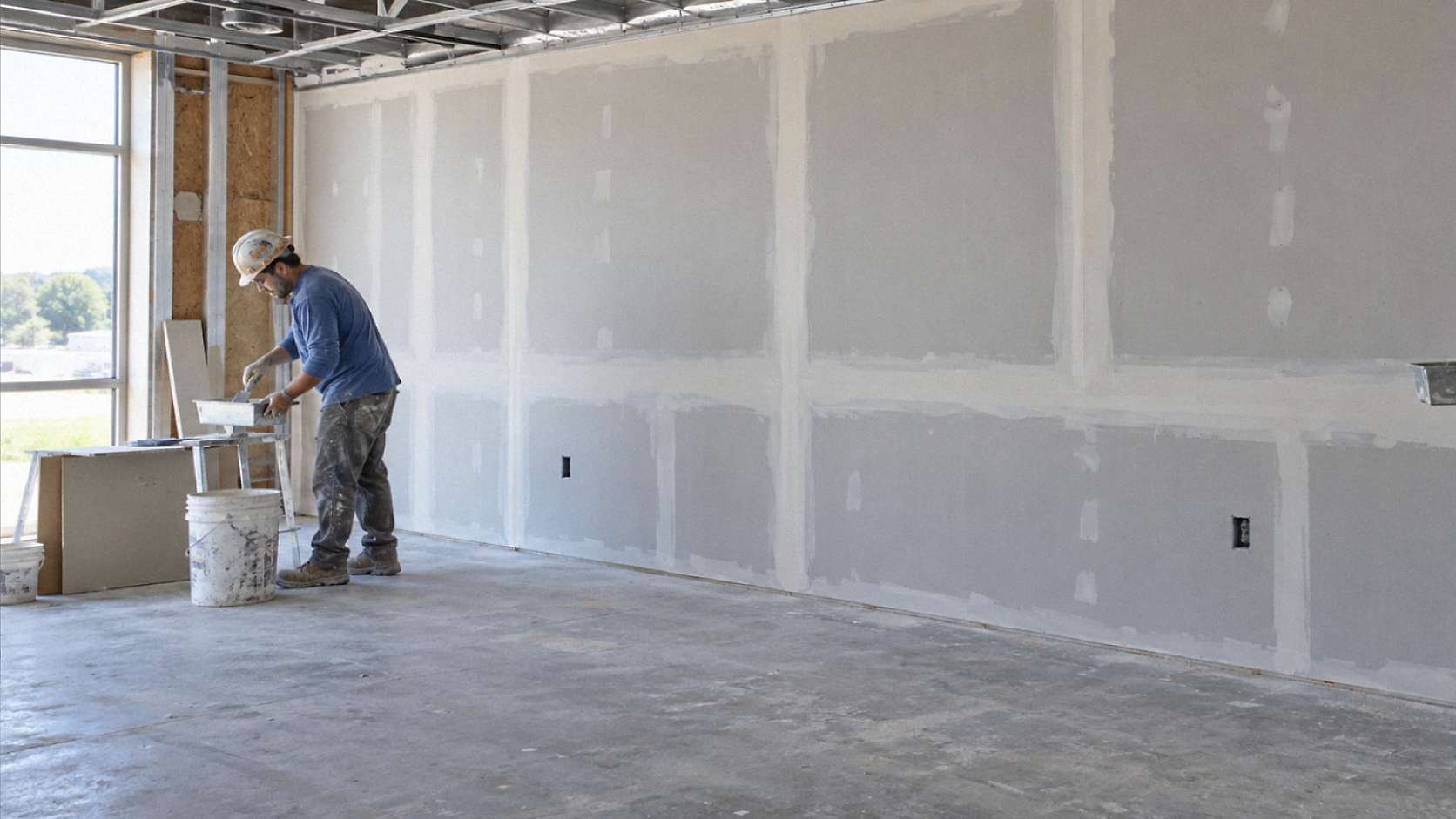

A construction housekeeping checklist is the quick walk a foreman or super makes to confirm the site is clean enough to work safely: clear walkways, stable stacks, scrap gone, exits open. A messy site is where trips, falls, puncture wounds and fires start, and most of it takes minutes to fix once someone looks.
What the construction housekeeping checklist covers
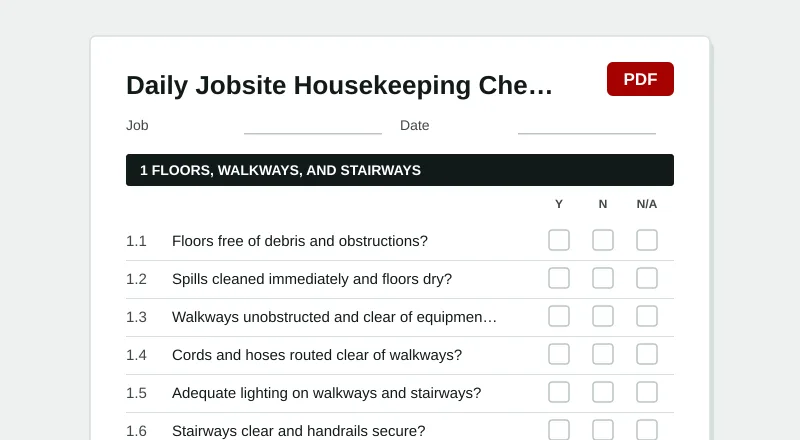
The jobsite housekeeping checklist has four inspection sections, each answered Yes, No or N/A.
| Section | What gets checked |
|---|---|
| Floors, walkways and stairways | Debris and obstructions, spills, cords and hoses routed clear, lighting, stairs and handrails, surface condition |
| Storage and materials | Materials off the floor, stable stacks, racks intact, flammables labeled in approved containers, combustibles away from ignition sources, chemicals secured |
| Waste and debris | Covered waste containers, scrap removed often, no combustible piles, lumber with protruding nails removed, oily rags in an approved bin, recycling used |
| Emergency exits and fire safety | Exit paths and doors clear, exit signs lit, extinguishers present and unblocked, fire doors working, no combustibles near exits |
Floors and storage each take photos. The last section records whether corrective action is needed, the target date, the inspector's name and signature, the date and time, the location and area, and how often this check runs.
Daily housekeeping checklist format
A daily check works best when it is short and tied to the shift. A simple format most crews can keep up with:
- Start of shift: walk the access routes, stairs and exits first, since those are where people move fast and carry things.
- Mid-day: check scrap and waste after the busiest trades have been working, and empty bins before they overflow.
- End of shift: cords coiled, materials stacked, flammables put away, nails pulled from scrap lumber, extinguishers visible.
- Log it: answer the checklist, photograph anything marked No, and set a fix date.
Pick daily, weekly or monthly on the form to match how the site runs. A busy framing or demo job needs it every day, while a weekly supervisor audit such as the weekly site cleanup audit catches what daily walks get used to.
Fixing what you find
A No is only useful if someone owns it. Note the problem, name who fixes it and when, and look again on the next walk. Repeat findings in the same spot usually point to a missing bin, a bad cord route or a storage area that is too small, which is a planning problem, not a cleanup one.
Run it on a phone or download it
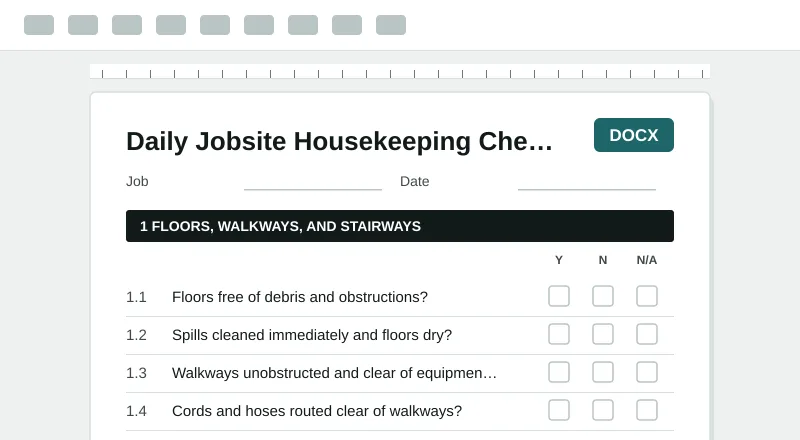
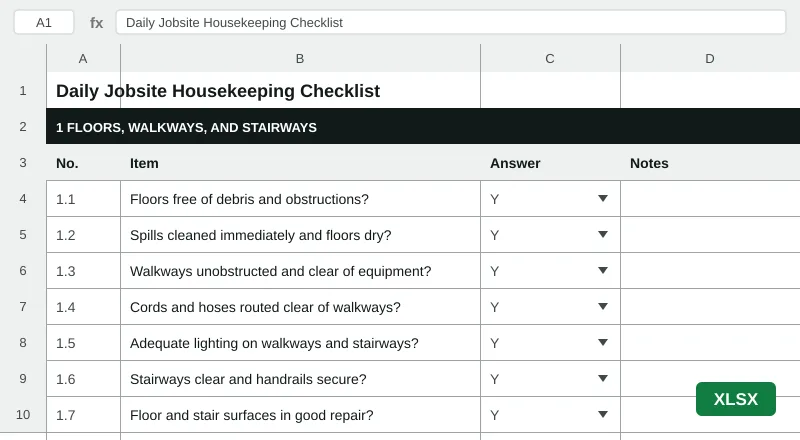
In Workyard, the checklist can open on crews' phones at clock-in, so the morning walk comes up as the day starts. Photos and the signature are taken on screen, any No goes to the person you name, and every checklist is filed to the job in the office. See the Workyard safety tools, or more cleanup checklists. The template is free to download as a PDF, Word or Excel file.


