



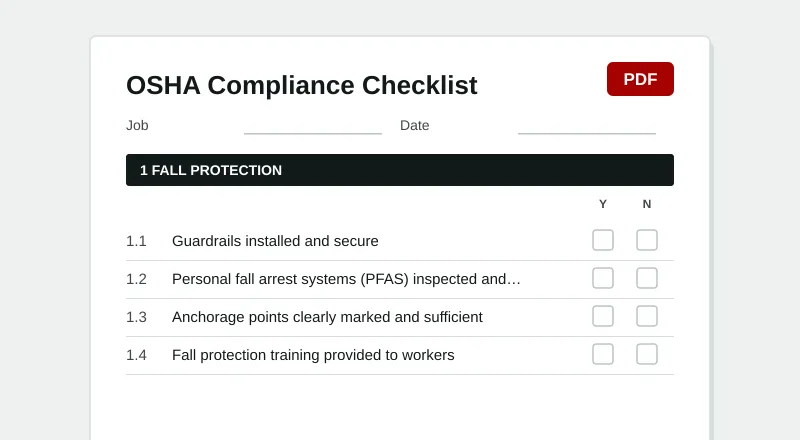
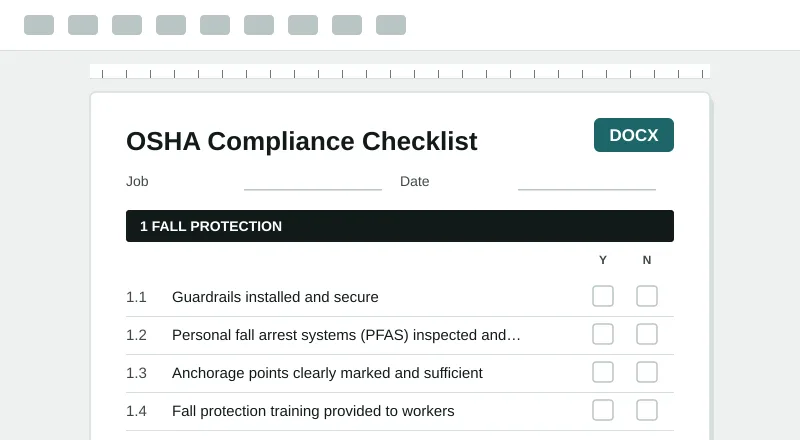
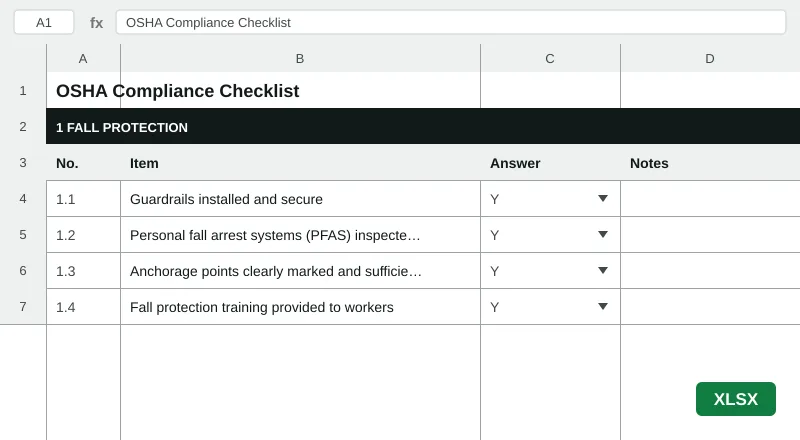
An OSHA compliance checklist is a form for walking a construction site's main hazard areas: falls, scaffolds and ladders, electrical, trenches, PPE, emergency equipment, tools and housekeeping. Superintendents, foremen and safety managers use it for routine walks and before audits, and it records what was found, who will fix it and by when.
How the OSHA compliance checklist for construction is organized
The form has eight sections. Each one opens with a yes or no question, then lists the lines to check, with a notes column for anything that's a risk.
| Section | The question it asks | Lines checked |
|---|---|---|
| Fall protection | Are systems in place for work at 6 feet or more? | Guardrails, personal fall arrest systems, anchorages, training |
| Scaffolds and ladders | Are they safe and used properly? | Level and planked, inspected, fall protection over 10 feet, ladder condition, three points of contact |
| Electrical | Is the site protected from electrical hazards? | GFCIs on temporary power, cords, guarding and grounding, lockout/tagout |
| Excavation and trenching | Are trenches 5 feet or deeper protected? | Shoring, shielding or sloping, inspections recorded, access within 25 feet, spoil 2 feet from the edge |
| PPE and hazard communication | Are workers trained and equipped? | Hard hats, glasses, gloves, respirator fit tests, SDS, container labels |
| Emergency equipment | Are emergency measures in place? | Extinguishers, eyewash, exit routes, posted emergency contacts |
| Tools and machinery | Are they safe to operate? | Tools and cords, machine guards, lifts and hoists, operator training |
| Housekeeping and access | Is the area clean and orderly? | Debris and walkways, storage, barricades, slips and trips |
The thresholds on the form (6 feet, 10 feet, 5 feet) follow OSHA's construction rules as most contractors know them. Confirm the current rule for your work, since some trades and tasks have their own requirements.
What the checklist can and can't do
No form can guarantee OSHA compliance, and the template says so. It's a high-level walk of the common construction hazards, built around OSHA's key requirements. It doesn't replace your written safety program, trade-specific inspections or a competent person's daily checks on scaffolds, trenches and fall protection. Use it to spot problems across the whole site; use the detailed forms for each system.
Running a site walk with the checklist
- Walk the whole job, not just the area you're working in. Start at the gate and finish at the furthest work area.
- Answer every line. Where a line doesn't apply today, say so in the notes rather than leaving it blank.
- Photograph each problem as you find it, and note the location so someone else can find it.
- Fix what you can on the spot, such as a missing cord cover or a blocked exit, and still record it.
- Talk to the crews. A worker who says the harnesses don't fit has told you more than the guardrails will.
Turning findings into corrective actions
The sign-off section gives an overall assessment: passed, or passed with corrective action needed. Below it, the corrective action list takes each issue, the action, the responsible person, a due date and notes. The inspector signs, a supervisor reviews and signs, and the form records the project, location and the date of the next inspection, so the follow-up walk is already on the calendar.
Download the OSHA compliance checklist free as a PDF, Word or Excel file, no sign-up needed. To run it on phones, use Workyard's safety tools: the walk is filled in on the job with photos and on-screen signatures, a No answer goes to the person you name, and each completed checklist is filed to the job in the office. For a scored audit, use the safety audit report, and see the OSHA inspection checklist for a shorter walk.


