


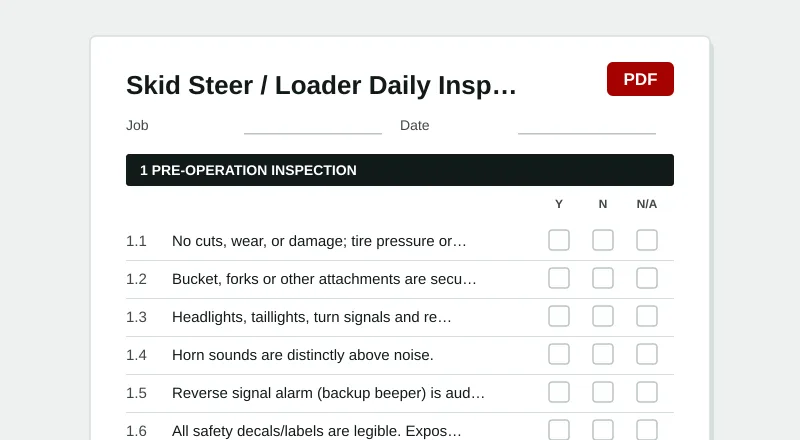
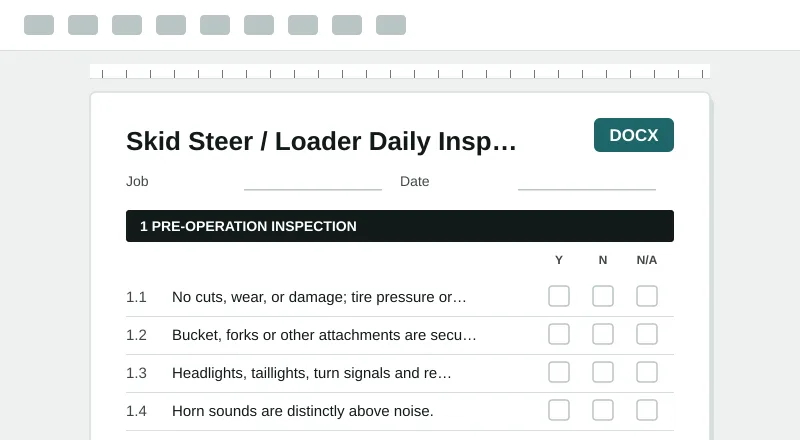
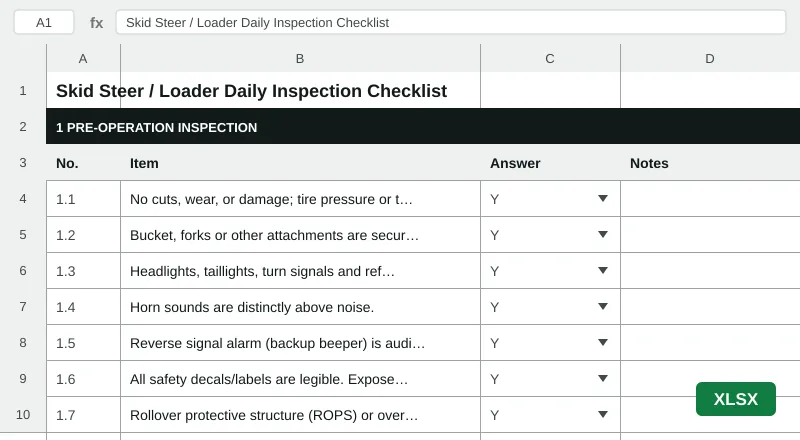
A skid steer daily inspection checklist is the walk-around and seat check an operator does before starting a skid steer or compact loader: tires or tracks, attachments, lights and alarms, the ROPS and seat bar, controls, brakes and fluids. It takes a few minutes and catches the leaks, loose attachments and dead interlocks that cause most avoidable breakdowns and injuries.
What's on the skid steer daily inspection checklist
The skid steer loader daily inspection checklist has a pre-operation section, a post-operation section and the job details: inspector, date and time, unit number, jobsite and signature.
| Pre-operation check | What a pass looks like |
|---|---|
| Tires or tracks | No cuts or damage, pressure or track tension correct |
| Attachments | Bucket, forks or other tool mounted securely, latches locked |
| Lights, horn and backup alarm | Lights work where fitted, horn is clearly louder than site noise, backup alarm audible in reverse |
| Decals and guards | Safety labels legible, pinch points guarded |
| ROPS and restraint | Rollover structure or overhead guard in good shape, seat belt or bar working |
| Interlocks | Lift, tilt and drive stop when the seat bar is raised or the belt is unbuckled; lift-arm support device present |
| Steering, controls and brakes | Normal operation, service and parking brakes hold |
| General | No loose parts, debris or leaks under the machine |
Fluid levels are marked OK, Low or Leak for hydraulic oil, engine oil, coolant and fuel. A photo is required for anything wrong.
Pre-operation and end-of-shift checks
The post-operation section catches what happened during the day: debris cleared from the cab, radiator and tracks, fluids topped up, any new damage, and the machine parked safely with the bucket on the ground, controls in neutral, engine off, keys out and parking brake set. Describe any failure for the shop, such as a hydraulic leak at a hose. The next operator then starts from a known state instead of guessing.
Can you drive a skid steer on the road?
It depends on your state and local rules, and the answer is often no or only under narrow conditions. Most skid steers are built as off-road equipment, without the lighting, speed or registration a road vehicle needs, so contractors haul them between sites on a trailer. Check with your state before driving one on a public road, even for a short distance.
Run it in Workyard or download it
In Workyard the checklist can open on the operator's phone at clock-in, so the check comes up as they start the day. Photos and the signature go on screen, a failed item goes to the person you name, and every check is filed to the job in the office. See inspections in Workyard, or the front-end loader inspection checklist for larger wheel loaders. The checklist is also free to download as a PDF, Word or Excel file.


