


A crawler crane inspection checklist is the check run on a tracked crane before each shift: the visible parts for damage and leaks, the safety devices, the setup under the tracks, and the crane's movements under power. Operators and the person their company has named to inspect cranes fill it in on construction, steel and earthwork jobs, and a supervisor reviews it before the first lift.
How the crawler crane checklist is laid out
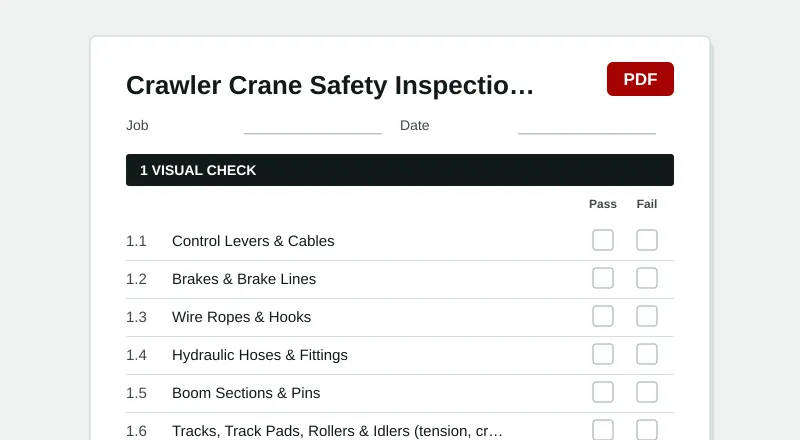
The form moves from paperwork to power. Each line is marked Pass or Fail, with a box to describe the defect.
| Section | What gets checked |
|---|---|
| Crane info | Model and serial number, job site, date, inspector, crew or company |
| Visual check | Control levers and cables, brakes and brake lines, wire ropes and hooks, hydraulic hoses and fittings, boom sections and pins, tracks, pads, rollers and idlers, counterweight |
| Safety systems | Horn, load moment indicator or rated capacity limiter, boom angle indicator, anti-two-block, boom stops, level indicator |
| Documentation | Load chart present and legible, operating manual in the cab |
| Setup inspection | Crane pads and mats, crane level within the manufacturer's tolerance, ground stability |
| Function test | Swing, hoist up and down, boom raise and lower, emergency stop |
| Issues and repairs | Defect description, date corrected, mechanic's initials, photos |
| Sign-off | Inspector signature, supervisor name and signature, review date and time |
Run the visual check and documentation with the crane shut down, then start it for the safety systems and function test. Test each motion slowly and without a load.
Tracks, mats and ground: the crawler-specific checks
A crawler crane carries its load through its tracks into the ground, so the setup section matters as much as the boom. Check track tension and look for cracked pads, worn rollers or damaged idlers. Then look at what the tracks are sitting on: firm ground or mats, level within the tolerance in the manufacturer's manual, with no soft spots, recent excavation or buried utilities underneath.
Ground changes overnight. Rain, a trench dug nearby or a travel route across fresh fill can turn a good setup into a bad one, so check it every shift, not just on the day the crane was assembled.
Recording defects and taking the crane out of service
A Fail on any line goes in the issues and repairs section: what's wrong, photos, and once it's fixed, the date and the mechanic's initials. Anything that affects safe operation, such as a damaged wire rope, an anti-two-block that doesn't stop the hook or a load moment indicator showing a fault, keeps the crane out of service until it's repaired. The manufacturer's manual and OSHA's crane rules for construction set what counts; check the current rule and your lift plan.
Keep each day's form with the crane's file. A defect noted and corrected, with the mechanic's initials beside it, is the record that shows the crane was checked and fixed before it lifted again.
Digital crawler crane inspection and free download
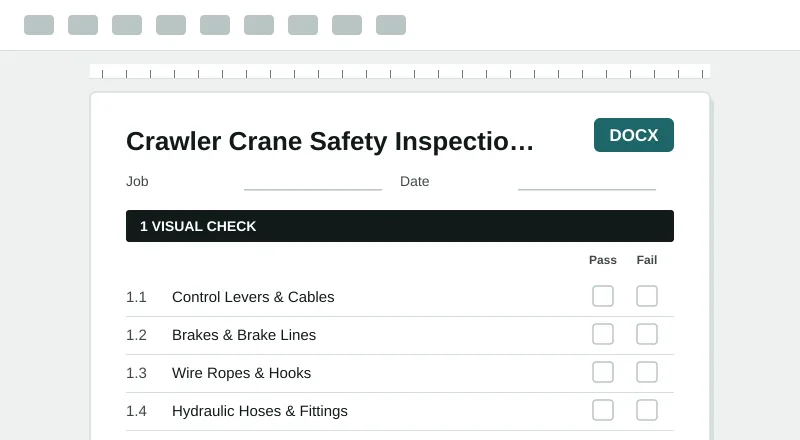
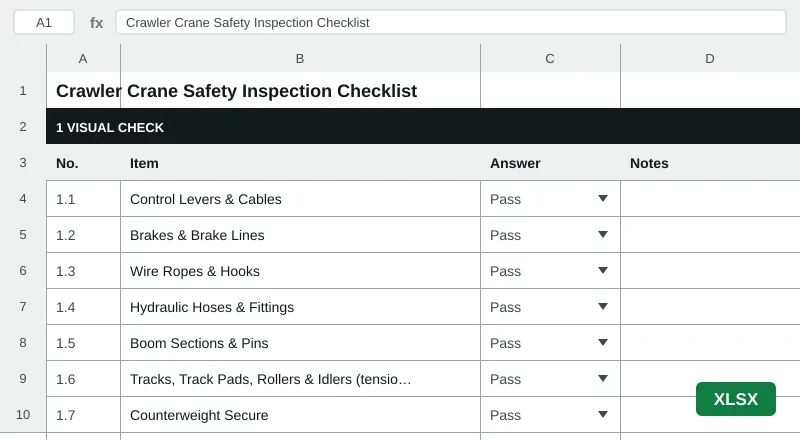
Download the crawler crane inspection checklist free as a PDF, Word or Excel file, no sign-up needed. To fill it in on a phone, run it in Workyard's inspection app: the inspector completes it at clock-in, adds photos of any defect and signs on screen, a Fail goes to the supervisor you name, and each crawler crane inspection is filed to the job in the office. For other crane types, use the crane inspection checklist, and check slings and hardware with the rigging inspection checklist.


