


An asphalt plant inspection checklist is the walk-through a plant inspector, operator or maintenance lead follows to check a hot-mix plant before and during production: safety gear and emergency stops, housekeeping, guarding on conveyors and drives, the drum and burner, asphalt cement tanks, silos and loadout, and dust and spill controls. Paving contractors and plant owners use it daily, weekly or monthly, and the inspector signs off whether the plant is clear to run.
What's on the asphalt plant inspection checklist
The checklist follows the material through the plant, from the yard to the truck. Each item is marked Pass or N/A with a short description of what passing looks like, so a newer inspector knows what to look for.
| Section | What you check |
|---|---|
| General information | Plant name or ID, location, and whether this is a daily, weekly or monthly inspection |
| Safety and preparation | PPE available and worn, checked in with the plant operator, fire extinguishers mounted and charged, emergency stops reachable and the start-up horn working |
| Housekeeping and access | Floors and passages free of dust, debris and oil, platforms, catwalks, stairs and ladders sound and guarded, warning signs legible |
| Machinery guards | Guards on belts, chains, pulleys and gears, conveyors tracking with skirtboards and idlers in place, no exposed nip points, no abnormal vibration, heat or noise |
| Drum dryer and burner | Drum turning smoothly on adjusted, lubricated trunnions, seals intact, burner mounts tight, fuel lines, tanks and pumps leak-free, fuel shut-off reachable |
| AC tanks, silos and loadout | Tank temperatures and levels in range, hot-oil heater without faults, no leaks at jacketed lines, silo gates and drag conveyor in good condition, nobody under the loadout |
| Environmental controls | Baghouse pressure drop, stack emissions, baghouse seals and cleaning cycle, monitors, secondary containment, leaks, a stocked spill kit |
| Sign-off | All clear, or clear with issues identified, photos, inspector's name, date and signature |
Asphalt plant safety: the checks that protect people
Most serious plant injuries come from machines starting or moving while someone is close to them, so the checklist puts those items first. Before walking the plant, the inspector checks in with the operator and tells the loader operators they're on site. Then:
- Emergency stops and the start-up horn. Press-test the stops you can, and confirm the horn sounds before motors and belts start.
- Guarding. Every belt, chain, pulley and tail pulley should be guarded. A missing guard on a conveyor is a stop-work item, not a note for next week.
- Access. Catwalks and ladders on drums and silos get wet, oily and dusty. Check rails and footing, not just that they exist.
- Loadout. Nobody under the loadout while trucks are loaded, and warning signs posted.
The form cites OSHA's general industry rules, including 29 CFR 1910.22(a)(1) for housekeeping and 29 CFR 1910.212 for machine guarding. Check the current text, and the plant manufacturer's manual for the maintenance side.
How to run the inspection
- Pick the frequency at the top so daily, weekly and monthly checks don't get mixed together.
- Check in with the operator and confirm PPE, extinguishers and emergency signals before you go near moving equipment.
- Walk in the direction the material flows: cold feed and conveyors, drum and burner, baghouse, tanks, silos, loadout.
- Write down the baghouse pressure drop reading every time. One number means little; a week of them shows a filter problem coming.
- For anything that isn't a pass, take a photo and describe it.
- Mark the plant All Clear or Clear with issues, and sign.
Keep fire extinguisher checks on their own fire extinguisher inspection checklist so the monthly record stays with each unit. More paving forms are in asphalt paving.
Get the checklist free or run it on a phone
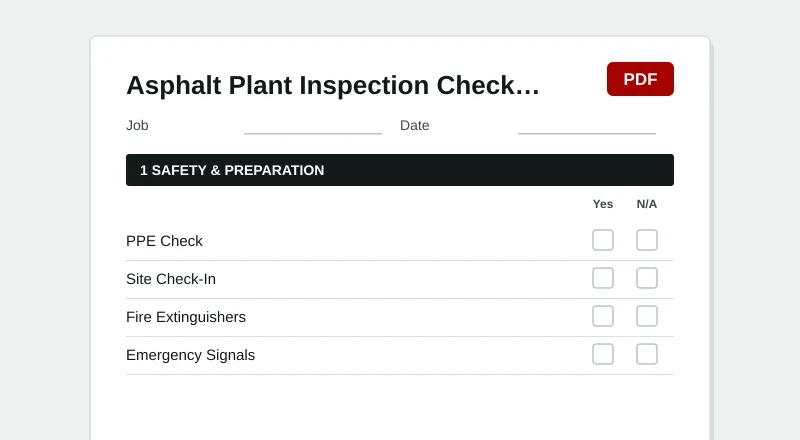
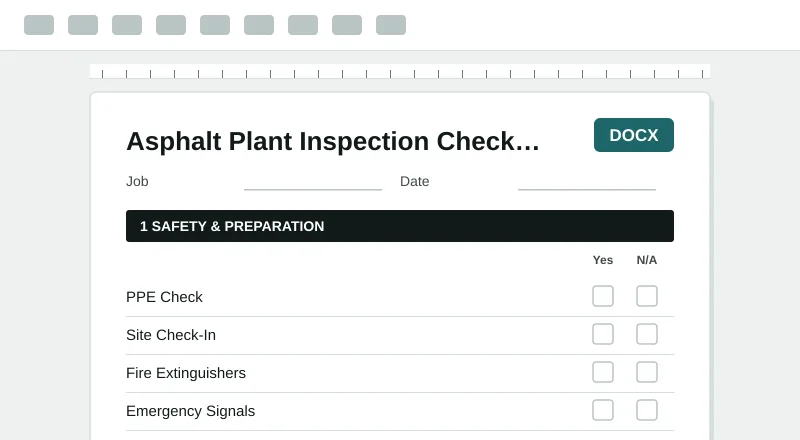
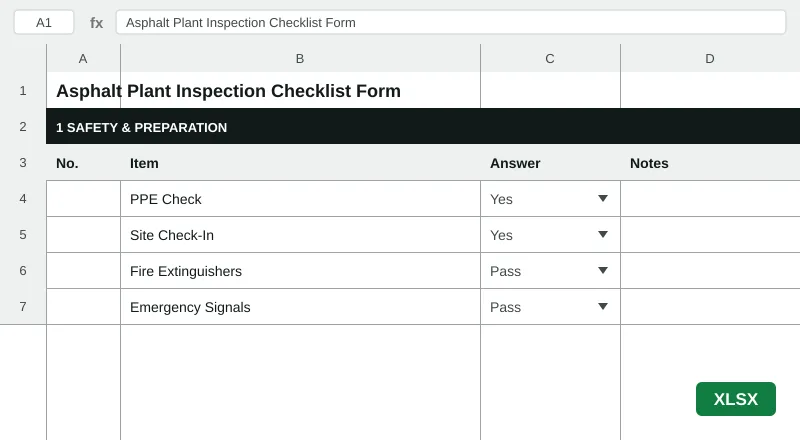
Download the asphalt plant inspection checklist free as a PDF, Word or Excel file, no sign-up needed. Or run it in Workyard's construction inspection app: the inspector fills it in on a phone while walking the plant, adds photos, signs on screen, issues go to the person who fixes them, and every inspection is filed in the office, ready to export as a PDF or CSV.


