



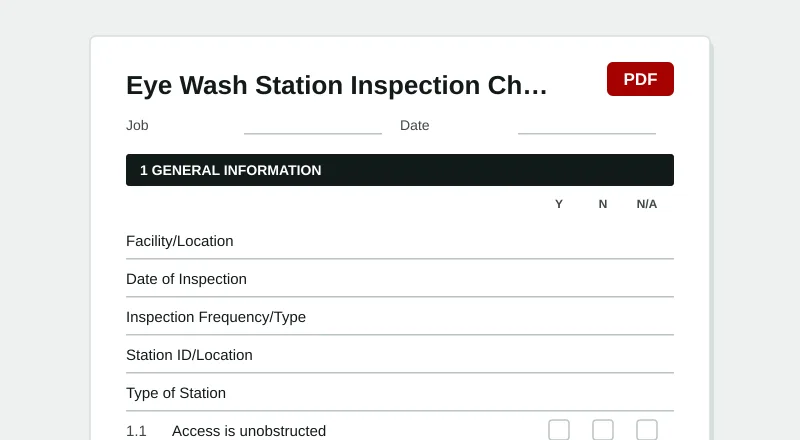
An eye wash station inspection checklist is the quick, regular check that an emergency eyewash will work the moment someone needs it: it's easy to reach, it's clean, it activates, and it flushes long enough with clean, comfortable water. Safety leads, superintendents and facility staff use it on plumbed stations and portable self-contained units wherever crews handle chemicals, concrete, batteries or anything else that can splash.
What the eye wash station inspection checklist covers
Each station gets its own entry: its ID or location and its type, plumbed or self-contained. Then come two sets of checks.
Visual inspection and access:
- access unobstructed
- within 10 seconds (about 55 feet) of the hazard, on the same level
- signage easy to see
- station clean, nozzles intact, dust caps in place
- nozzles 33 to 53 inches above the floor and at least 6 inches from the wall
- flushing fluid full and within its expiration date (self-contained units)
Activation and performance:
- activates immediately
- flow covers both eyes
- runs for the minimum flow duration
- water clear and at a safe temperature
- drain works
- valve and shut-off in good condition
The checklist ends with an overall condition (working with no maintenance, working but needing some, or out of service), a photo, and the inspector's name, date and signature.
How often to inspect an eye wash station
The form has an Inspection Frequency/Type field because there are really two kinds of check. The quick one is an activation check: run the station, confirm water comes out clean and flushes the line. The full one walks every item on the list, including flow, duration and temperature. Many safety programs run the quick check weekly on plumbed units and the full one once a year, and handle self-contained units on the manufacturer's schedule for replacing the fluid. Set your schedule from the manufacturer's instructions and the current standard, and write the type on each sheet so the log shows which check was done.
OSHA eye wash station inspection checklist requirements
OSHA's rules require suitable facilities for quickly flushing the eyes wherever workers can be exposed to corrosive or injurious materials. The detail on placement, flow, duration and water temperature comes from the ANSI standard for emergency eyewash equipment, and the access, height and distance items on this checklist follow it. That makes the form a practical OSHA eye wash station inspection checklist, but check the current OSHA rule and ANSI edition for your work, and the manufacturer's manual for your unit.
Keep an eye wash station inspection sheet for each station
Fill in one sheet per station per inspection and the sheets become that station's log. When a station fails, take it out of service, mark it clearly and note the fix and the recheck. A run of passing sheets for one station ID, each signed and dated, is what you show a client, an insurer or an inspector who asks.
Get the free eye wash station inspection checklist
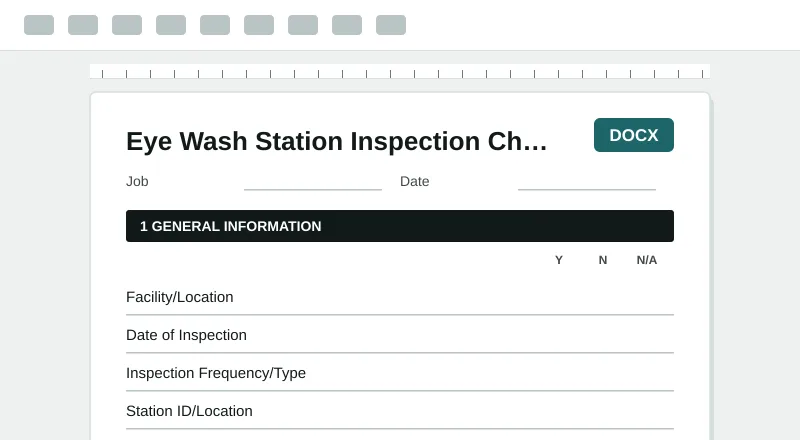
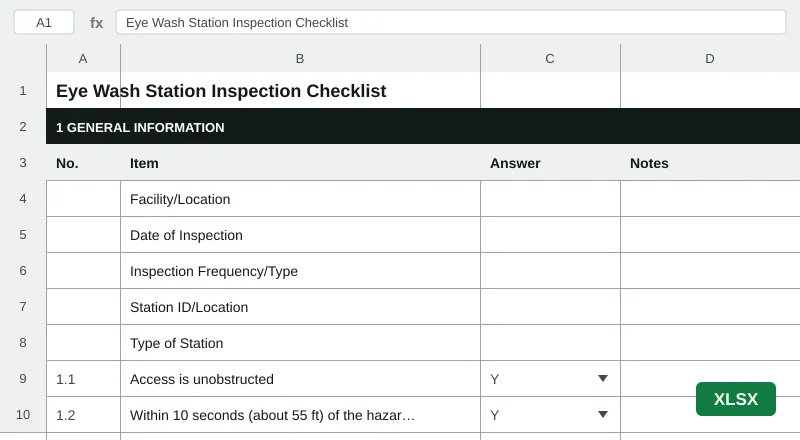
Download the checklist as a PDF to hang beside the station, or as a Word or Excel file to set up a log for every station on site. It's free, with no sign-up. In Workyard, crews fill in the same form on their phones on the job, attach a photo of the station, sign on screen, and an out-of-service answer goes straight to the named safety lead. Every inspection files to the job in the office and exports as a PDF or CSV. See Workyard's safety tools, the chemical safety checklist and more site inspection templates.


