



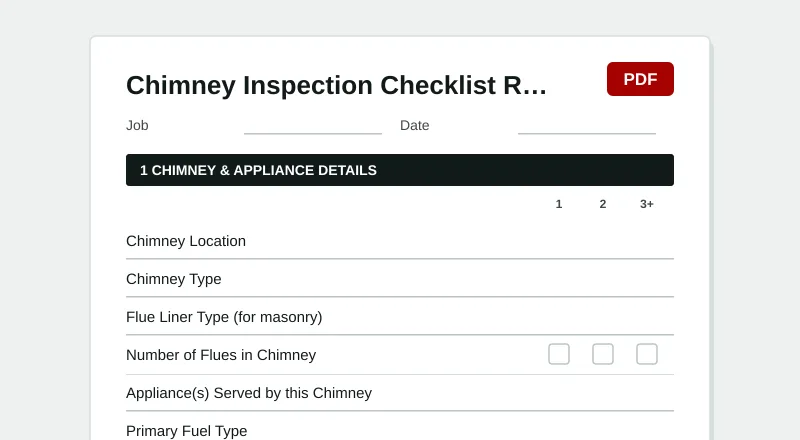
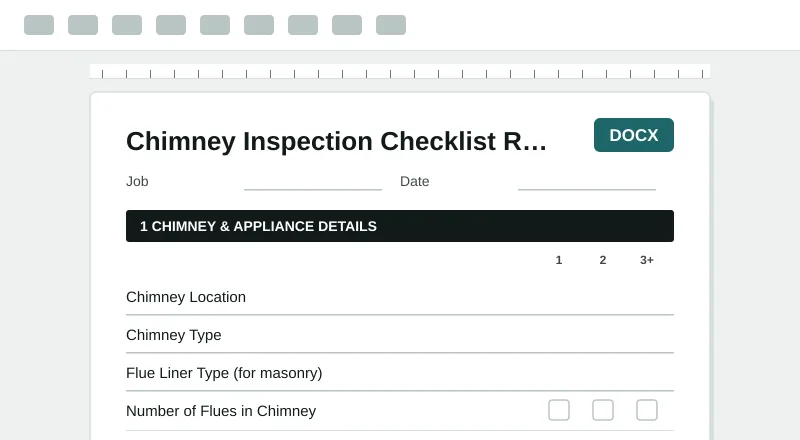
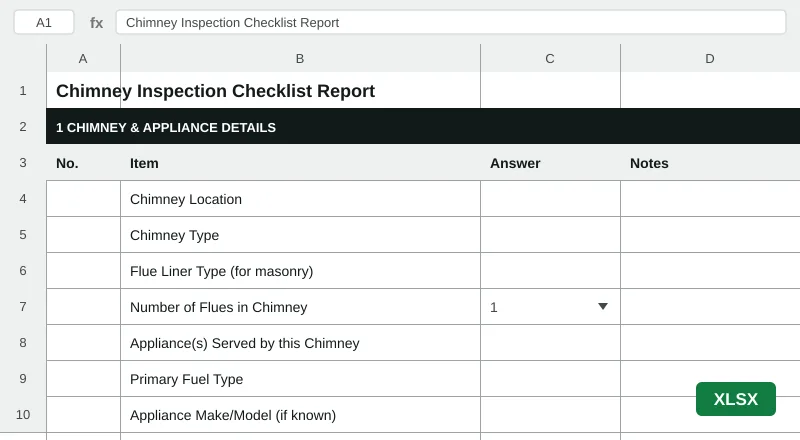
A chimney inspection checklist is the form a chimney sweep, inspector or masonry contractor follows to check a chimney from the cap down to the cleanout, and the chimney inspection report is what the owner gets at the end: the condition of each part, what needs fixing and whether the chimney is safe to use. This one covers masonry and factory-built chimneys serving wood, gas and oil appliances, at Level 1 or Level 2.
Level 1 vs Level 2 chimney inspection checklist
The first question on the form is the level, because it decides how far you look. The levels come from NFPA 211, the standard the form is built around.
| Compared | Level 1 | Level 2 |
|---|---|---|
| What it is | A standard visual inspection of the readily accessible parts | An enhanced inspection that adds attics, crawl spaces, basements and a look inside the flue |
| Typical reasons | Routine inspection before the heating season, chimney in continued use | After a chimney fire or sudden event, property sale or transfer, a new appliance or a fuel change |
| Tools | Flashlight, basic access | Flashlight or video scan of the flue, roof and attic access |
The form notes that NFPA 211 typically calls for a Level 2 inspection on sale. Check the current edition and your local code before you promise a client what a Level 1 will cover.
What goes on the chimney inspection report template
The chimney inspection report template works from the top of the chimney to the bottom, with photos in each section:
- Inspection information: client, address, level, reason for the inspection and whether you swept the chimney on this visit.
- Chimney and appliance details: interior or exterior, masonry or factory-built, liner type, number of flues, the appliances served, fuel, make and model, whether the appliance is listed, and the venting path.
- Above the roof: height against the 3-2-10 rule (3 feet above the roof penetration and 2 feet higher than anything within 10 feet), cap and spark screen, crown or chase cover, masonry condition, flashing, nearby branches and heat damage.
- Fireplace or appliance: firebox, damper, smoke chamber, hearth extension, combustibles under the hearth, mantel clearance; for stoves and inserts, clearances, stovepipe and draft controls; for gas and oil, the draft hood, barometric damper and vent connector.
- Flue interior: obstructions, liner condition, cracks, signs of a past chimney fire, and whether a flue test is needed and how it went.
- Accessible areas (Level 2): clearance to framing in the attic, the base and cleanout in the basement or crawl space, wall pass-throughs and soot stains in nearby rooms.
- Summary: safe and in good condition, safe but needs repairs, or a safety risk that shouldn't be used, with the recommended work and your signature.
How to fill out a chimney inspection report
- Set the level and the reason before you start. It tells the reader what you did and didn't look at.
- Record the system before judging it. Liner type, fuel and appliance listing decide which answers are right.
- Check the roof first in good weather, wearing fall protection, and photograph the cap, crown and flashing.
- Work the fireplace or appliance, then the flue. Answer the flue test question honestly: the form lists when one is typically needed, such as after a chimney fire, a damaged or unlined flue, or signs of flue gas leaking.
- For Level 2, get into the attic and basement and photograph the chimney's clearances.
- Pick the overall condition and tick the recommendations. Write the summary in plain words the owner will understand.
When the chimney is part of a bigger roof or attic job, pair this with the roof inspection checklist or the attic inspection checklist. More forms for brick and block work are in masonry.
Get the report free or fill it in on a phone
Download the chimney inspection report free as a PDF, Word or Excel file, no sign-up needed. Or run it in Workyard's construction inspection app: the tech fills it in on a phone on the roof and at the hearth, adds photos, signs on screen, and every report is filed to the job in the office, ready to send to the owner as a PDF.


