


A mold inspection report records what an inspector, restoration tech or contractor found at a property: where mold and moisture are, how much there is, what is feeding it and what should happen next. Property managers, restoration crews and remodelers use it after water damage, on complaints and before work starts in a suspect area.
What the mold inspection checklist walks through
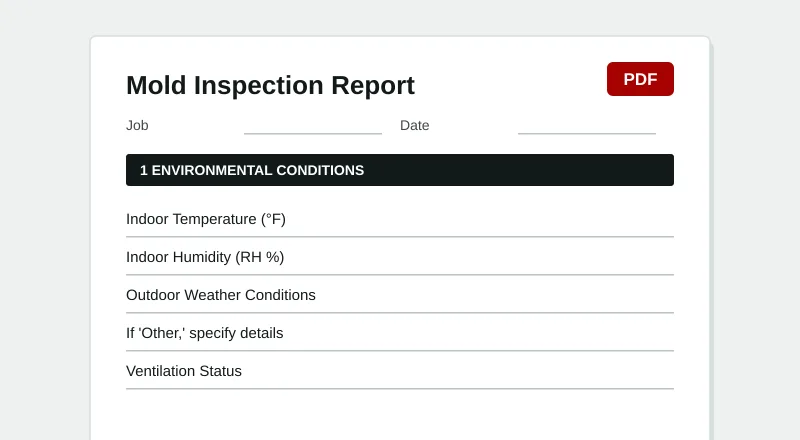
The form is a mold inspection checklist and report in one. Its ten sections follow the order of a site visit:
- General information: client or project, address, property type, occupancy and the reason for the inspection (routine, post-water damage, move-in or move-out, complaint).
- Environmental conditions: indoor temperature and relative humidity, outdoor weather, and whether the HVAC or windows were on, off, open or closed.
- Exterior: roof, siding and eaves, drainage and pooling near the foundation, mold on outside surfaces, with photos.
- Interior: musty smells, visible mold, stains, damp materials and condensation, then the attic, basement or crawl space, plumbing fixtures, HVAC, windows and doors, and whether bath and kitchen fans work.
- Moisture measurements: moisture meter readings and thermal imaging results if an IR camera was used.
- Mold assessment: estimated extent, likely moisture source and conditions that favor growth.
- Photo documentation.
- Recommendations: actions taken during the visit, recommended corrective work and whether a follow-up inspection is needed.
- Safety: the PPE the inspector wore and a compliance confirmation.
- Sign-off: inspector's name, signature and date.
Mold extent and moisture source
The two answers that drive the next steps are how big the problem is and where the water comes from. The form sorts visible mold into three sizes:
| Extent on the form | Approximate area |
|---|---|
| Small | Less than 10 sq ft |
| Medium | 10 to 100 sq ft |
| Large | More than 100 sq ft |
For the source, it lists roof leaks, plumbing leaks or burst pipes, flooding or rainwater, condensation, groundwater seepage and HVAC condensation. Cleaning mold without stopping the water means it comes back, so the recommended actions should name the source fix first.
Mold inspection report example
A filled-in report reads like this: Post-water damage, occupied home. Indoor 74 °F, 68% RH, HVAC on. Musty odor in the hall bath; visible growth on drywall behind the vanity, about 6 sq ft (Small). Meter readings high on the lower 2 ft of the shared wall. Likely source: slow supply-line leak at the vanity. Action taken: water shut off at the fixture. Recommended: repair the leak, remove and replace affected drywall under containment, dry out and re-test before closing up. Follow-up: yes. Photos back every finding. For the water side of the job, pair it with a water damage inspection report.
Fill it in on a phone or download the mold inspection report template
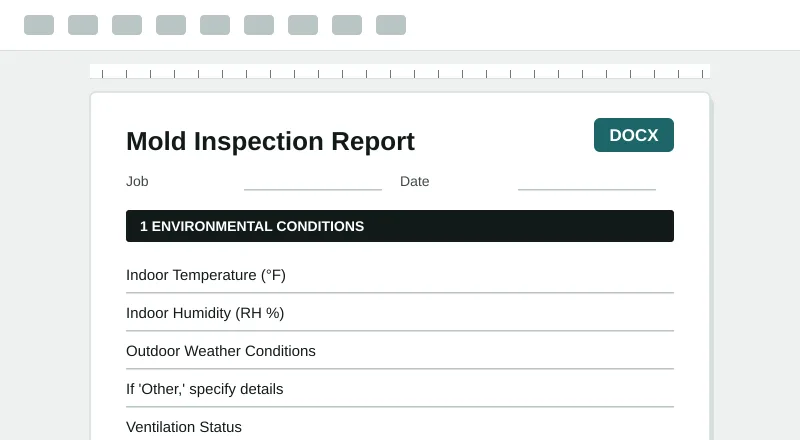
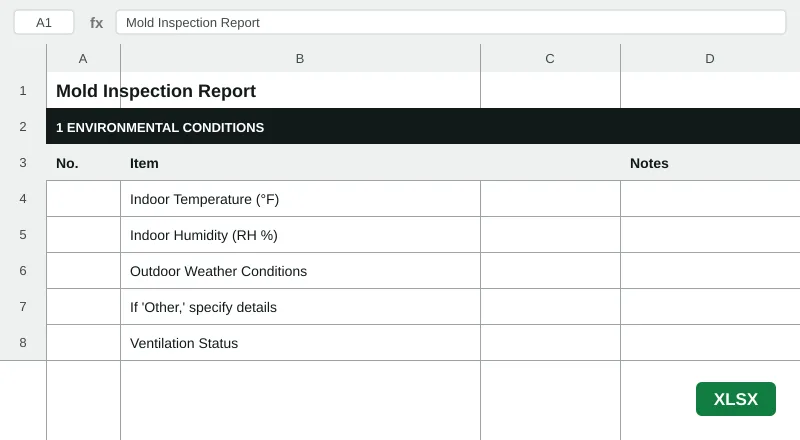
In Workyard, techs fill in the mold inspection report template on their phones on the job, with photos in each section and the signature on screen. Any flagged answer goes to the person you name, and the report is filed to the job in the office, ready to export as a PDF for the client or insurer. See the construction inspection app and Workyard for restoration contractors. The template is also free as a PDF, Word or Excel file.


