


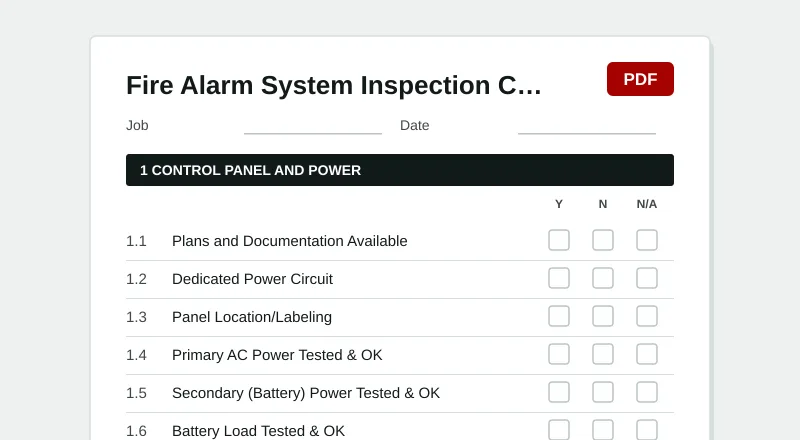
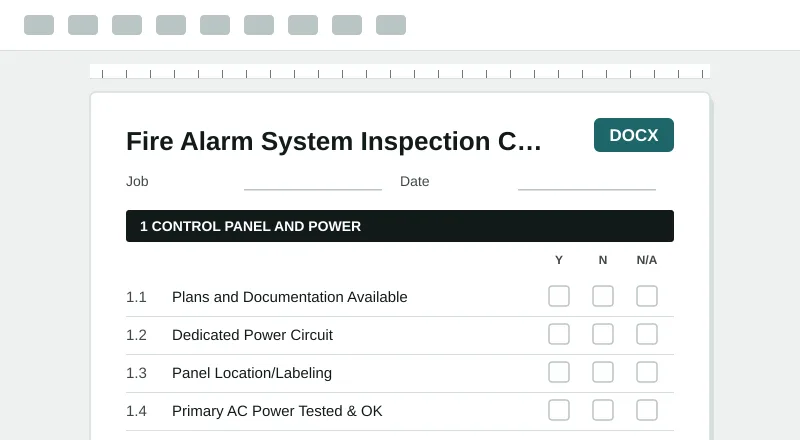
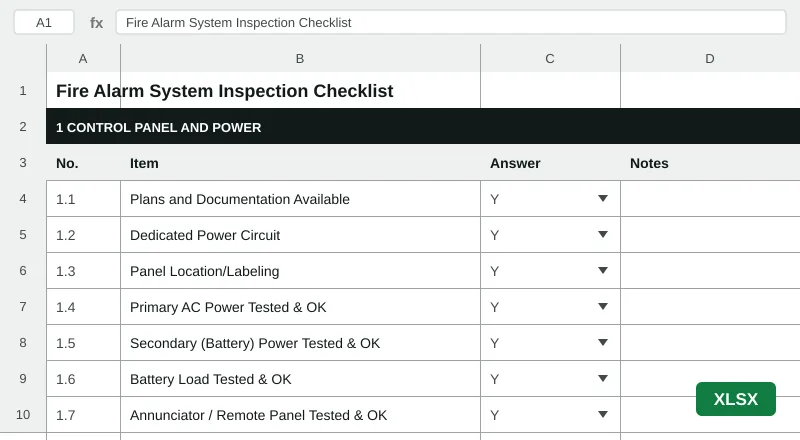
A fire alarm inspection checklist records the test of a building's fire alarm system: the control panel and its power, every type of initiating device, the horns, strobes and speakers, and the signal to the monitoring station. Fire alarm and low-voltage contractors use it at acceptance after an install or renovation, and facility teams use it for periodic tests. It sits alongside your local fire code and NFPA 72; it doesn't replace either.
What goes on a fire alarm inspection checklist
The template is a fire alarm system testing checklist in six parts, with a photo upload after each test section.
| Section | What you record |
|---|---|
| Project and system information | Building, installer company, license number and contact, system type (conventional, addressable or wireless), voice evacuation, zones or floors covered |
| Control panel and power | Plans on hand, dedicated circuit, panel location and labeling, primary AC power, battery power and battery load test, annunciator, zone map, trouble signals |
| Initiating devices | Smoke, heat, CO and duct detectors, pull stations, waterflow and valve tamper switches, door releases, emergency phone jacks |
| Notification appliances | Horns and bells, strobes, voice evacuation, speaker output, signal pattern, sprinkler interface |
| Communication and monitoring | Supervisory service, alarm transmission, circuit integrity, annunciator status, notifications before and after testing |
| Final result and sign-off | Pass, pass with corrective actions, or fail, plus inspector name, company, signature and dates |
Each device line is marked Pass, Fail or N/A. Every Fail needs a note saying which device, where, and what it did, or didn't do. 'Smoke detector failed' isn't much use to the tech coming back to fix it; 'smoke detector, 2nd floor corridor outside room 214, no alarm at panel' is.
Notify before you test, restore after
A fire alarm test sets off a building's alarms and sends signals off site, so the communication section starts with who has to know. Before testing, notify the supervising station, the fire department and the building's occupants. After testing, put the system back to normal and tell the supervising station it's back in service. Both lines are on the checklist so nobody skips them on a busy day.
Agree the test window with the owner or property manager ahead of time, and keep someone at the panel while devices are tripped around the building, so each alarm is matched to the right zone and address.
How often to complete a fire alarm system inspection
How often depends on the device, the building and who enforces the code. NFPA 72 sets inspection and testing frequencies by device type, and your local fire code or fire marshal decides which edition applies and whether anything extra is required. Check the current rule for your building rather than relying on a general schedule.
In practice, contractors use the checklist at three points:
- Acceptance testing at the end of a new install, an addition or a renovation that touched the system.
- Periodic tests on an existing system, marking devices not tested this round as N/A and noting why.
- After repairs, to confirm the fixed device and anything near it work and the panel is clear of trouble signals.
Turning the checklist into a fire alarm inspection report
The final section gives the overall result: pass, pass with corrective actions needed, or fail, where one or more issues could be fatal and need fixing right away. With the photos from each section and the inspector's signature, the completed checklist is the fire alarm inspection report you hand to the owner. For a new system, pair it with the fire alarm record of completion.
Download the fire alarm inspection checklist free as a PDF, Word or Excel file, no sign-up needed. To run it on techs' phones, set it up in Workyard's inspection app: photos go in at each section, the inspector signs on screen, a Fail goes to the person you name, and each report is filed to the job in the office and exports as a PDF. More test forms are under system tests.


