

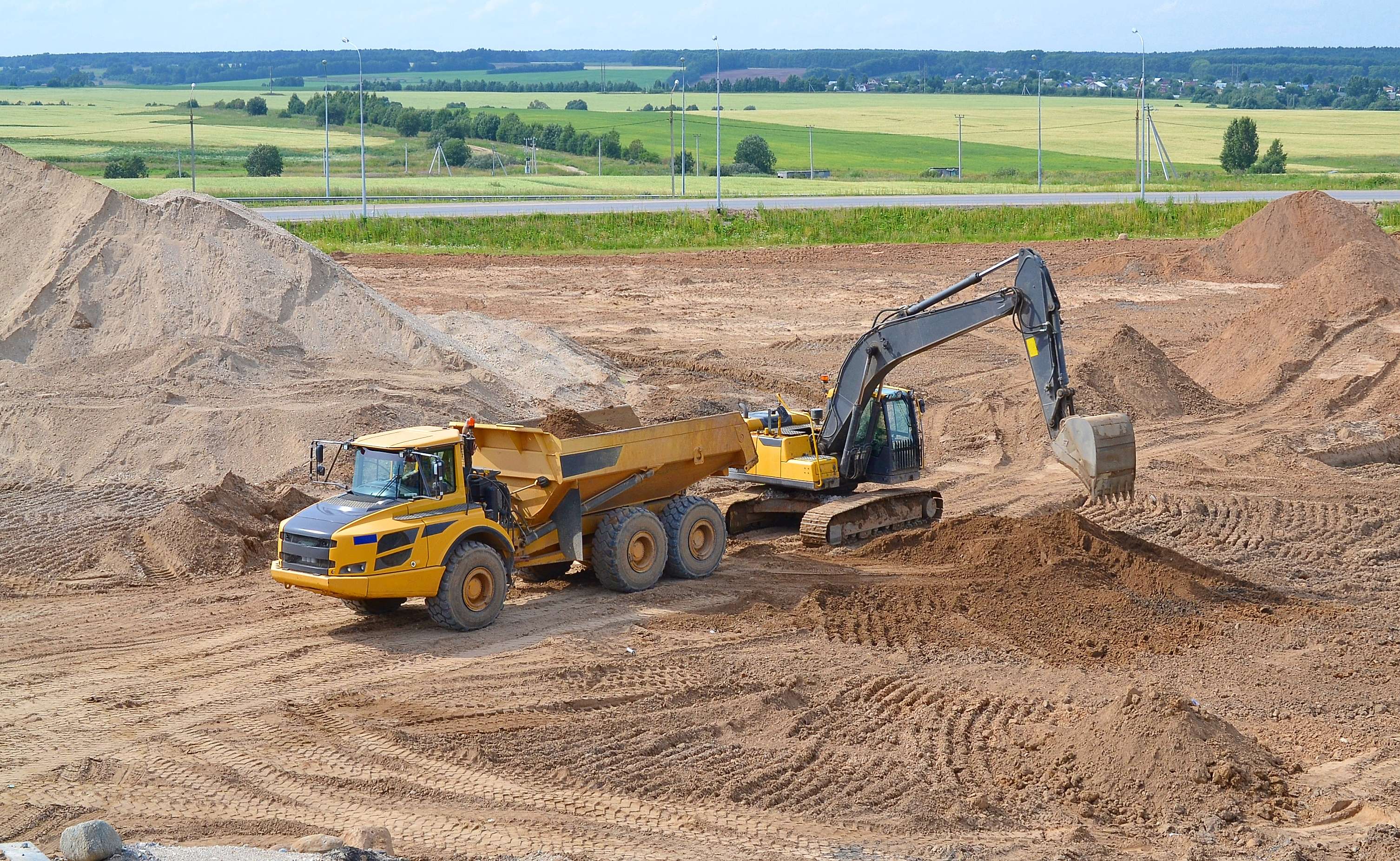

A heavy equipment inspection checklist is the walk-around and function test an operator completes before running a dozer, excavator, loader, grader, crane, forklift or aerial lift at the start of a shift. It catches the leaking hose, the dead backup alarm or the soft brake pedal while the machine is still parked, and it leaves a signed record that the check happened.
The form here follows the order an operator actually works: identify the machine, walk around it with the engine off, start it and test the functions, record the result and any fixes, then sign.
What is a heavy equipment daily inspection?
A heavy equipment daily inspection is a pre-shift check by the operator to confirm the machine is safe to run that day. It takes minutes and looks for obvious problems: damage, leaks, missing guards, controls that don't respond. It's separate from scheduled maintenance, which is the mechanic's work done by hours or calendar (oil changes, filter changes, deeper component checks). The daily check feeds maintenance by flagging what needs attention between services.
Who inspects and who signs off
The operator runs the heavy equipment daily inspection checklist, because they're about to depend on the machine. A supervisor reviews anything marked Needs Repair or Fail and decides whether the machine runs, and maintenance closes out the repair. OSHA's construction standards require frequent and regular inspections of job sites, materials and equipment by a competent person, someone who can recognize hazards and has the authority to correct them, under 29 CFR 1926.20(b)(2).
| Role | What they do | What they sign |
|---|---|---|
| Operator | Walk-around and function test before the shift | The daily checklist |
| Supervisor or foreman | Reviews defects, decides whether the machine runs or is tagged out | Defect review and out-of-service decision |
| Mechanic or maintenance | Repairs the defect and confirms the fix | Repair record, before the machine goes back in service |
The heavy equipment inspection checklist, section by section
Equipment and inspector information
Equipment type (bulldozer, excavator, loader, grader, crane, forklift or aerial lift), unit number, make and model, serial or license number, and location. The unit number is what ties today's check to last week's defect.
Walk-around with the engine off
Each item is marked OK, Needs Repair or NA:
- Running gear: tires or tracks, wheels and rims, undercarriage.
- Visibility and warning: lights and signals, horn, backup alarm, mirrors, glass.
- Operator protection: seat and seat belt, steps, handholds and grab rails, ROPS and FOPS (no cracks or modifications), fire extinguisher.
- Hydraulics and attachments: hoses and cylinders, attachments and tools.
- Fluids: leaks under the machine, then engine oil, coolant, hydraulic oil and fuel levels.
- Engine compartment: belts and general condition, plus overall cleanliness.
Function test with the engine on
Start the machine and mark each function Pass, Fail or NA: engine start and instruments, service brakes, parking brake, steering, hydraulics and controls, drive transmission, and operational safety devices. Listen for abnormal engine or hydraulic noise and feel for vibration that wasn't there yesterday.
Result, repairs and sign-off
The overall result is one of three: passed with no maintenance needed, passed but needs some maintenance, or failed and not to be used until repaired. Record any immediate actions taken (topped up hydraulic oil, replaced a mirror), attach photos, and sign with your name and the date.
Out-of-service rules: red, yellow and green tags
A failed item that affects safe operation takes the machine out of service until it's fixed. Brakes, steering, ROPS, seat belts, backup alarms and major hydraulic leaks are the usual examples. Many contractors use a simple tag system:
- Red tag: do not operate. The machine is locked or tagged out until repaired and rechecked.
- Yellow tag: restricted use. A minor defect with an owner and a repair deadline.
- Green: passed, clear to run.
OSHA's construction rules say equipment that doesn't comply must be identified as unsafe by tagging or locking its controls, or physically removed from its place of operation (29 CFR 1926.20(b)(3)). The checklist's overall result maps straight onto that: a "failed" result means a tag goes on before anyone else climbs in.
OSHA rules behind the daily check
There isn't one OSHA rule called "heavy equipment inspection." The requirement comes from a general construction rule plus rules for specific machines:
| Standard | What it covers |
|---|---|
| 29 CFR 1926.20(b)(2) | Frequent and regular inspections of job sites, materials and equipment by a competent person |
| 29 CFR 1926.20(b)(3) | Unsafe equipment tagged, locked out or removed |
| 29 CFR 1910.178(q)(1) and (q)(7) | Forklifts: removed from service when unsafe, and examined before being placed in service, at least daily |
| 29 CFR 1926.1412(d) | Cranes: shift inspection by a competent person |
Whether a written record is required depends on the machine and the rule, and the rules don't all say the same thing. Writing it down anyway costs little and gives you proof the check happened if there's ever an incident or an audit.
Add-ons by machine type
One checklist covers the shared items. Each machine has a few of its own, so add them or use a dedicated form:
- Excavators: bucket teeth and pins, swing bearing, boom and stick for cracks, quick coupler lock.
- Skid steers and loaders: lift arm and bucket pins, seat bar and interlocks, door and screen. See the skid steer daily inspection checklist.
- Forklifts: forks, chains, mast, load backrest and data plate. See the forklift inspection checklist.
- Cranes: wire rope, hooks, load indicators, outriggers. See the crane inspection checklist.
- Aerial lifts: platform controls, guardrails, emergency lowering.
More pre-start forms are under equipment pre-start checks.
Daily inspections on the operator's phone
In Workyard, the checklist runs on the operator's phone as a digital inspection, filled in at the machine before the shift starts. Photos of defects go straight into the form, the operator signs on the screen, and every submission lands in the office under the job, with the unit number on it. A failed result reaches the supervisor and the shop the same morning, not when someone finds the paper in a cab.
Get the free heavy equipment inspection checklist
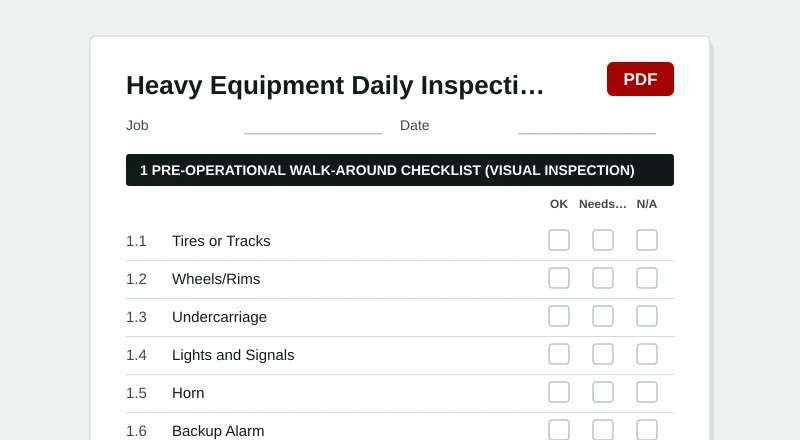
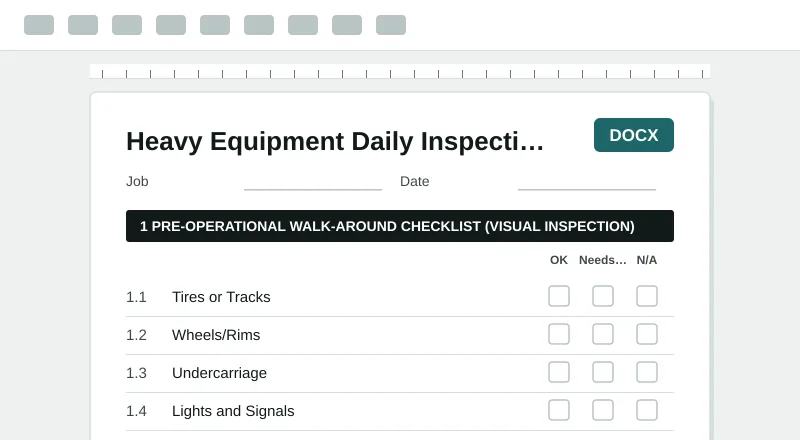
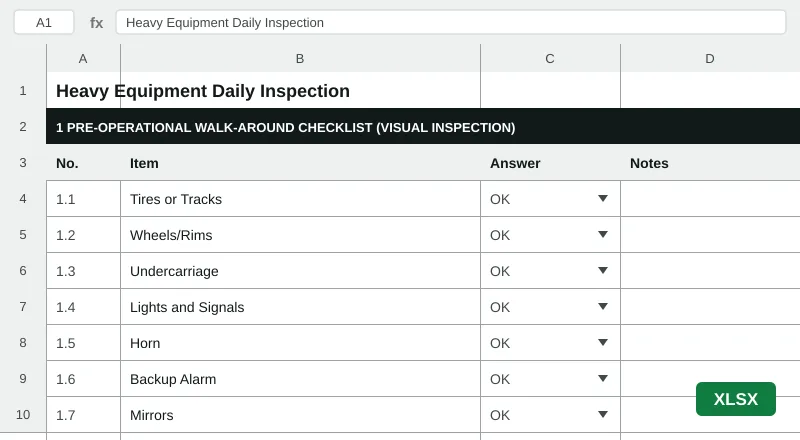
Download the heavy equipment daily inspection checklist as a PDF, Word document or Excel sheet. It's free and there's no sign-up. Print a pad for each cab, or use the Excel version as a log by unit number.


