


A forklift inspection checklist is the check an operator runs on a lift truck before driving it: a walk-around for leaks and damage with the engine off, then a test of the brakes, steering, mast and horn with it running. Yards, warehouses and contractors who move material on site all use one, and the operator who will drive the truck that shift is usually the one who fills it in.
What goes on a daily forklift inspection checklist
The form follows the two checks OSHA's powered industrial truck rule describes, and its notes point to 29 CFR 1910.178(q)(7) for the daily examination and to ANSI/ITSDF B56.1 for the operating checks. Every line is answered Yes, No or N/A, and each half has its own photo upload.
Visual checks, engine off
- General condition: clean, no leaks or visible damage
- Forks, carriage and frame: no cracks or bends, forks seated, frame secure
- Mast and chains: lubricated, not binding
- Hydraulic hoses and fittings: no leaks
- Overhead guard: present and undamaged
- Tires and wheels: inflation and damage
- Fluid levels: engine oil, coolant, hydraulic fluid
- LPG cylinder (LPG trucks) or battery, cables and restraint (electric trucks)
- Safety labels, decals and the capacity data plate: present and legible
Function checks, engine on
- Service and parking brakes
- Steering and drive control, forward and reverse
- Lift, tilt and hoist: smooth, no hesitation
- Gauges and indicators
- Horn, reverse alarm and lights
- Seat belt
- Unusual noises or vibration
Use N/A for items that don't apply to the truck in front of you: there's no LPG cylinder on an electric unit and no battery restraint on a diesel.
What to do when an item fails
A No answer moves the operator to the defect section, which asks whether any item failed, what the problem is, whether the forklift is safe to use, whether repairs are needed right away and when they're expected. The form's notes cite 29 CFR 1910.178(q)(1): a truck that isn't in safe operating condition comes out of service, and only authorized personnel repair it. Under (q)(7), defects are reported and corrected as soon as they're found. Check the current rule and your own program for the details.
In practice that means taking the key, tagging the truck and telling the supervisor before the shift moves on. The follow-up section records whether repairs are needed, whether the responsible person was told, and photo evidence of the defect, so the next operator can see why the truck is parked.
Using the forklift inspection form as a log
The truck and operator section records make and model, serial number, fuel type, hour meter reading, shift, time of inspection, operator name or ID and supervisor. The sign-off takes the inspector's signature, a supervisor acknowledgment where your program requires one, and the date it was verified.
Filed by serial number, those forms become the truck's log. Hour meter readings show use between services, and the same item failing week after week points to a part that needs replacing rather than another quick fix. Keep the completed forms for as long as your safety program and insurer require.
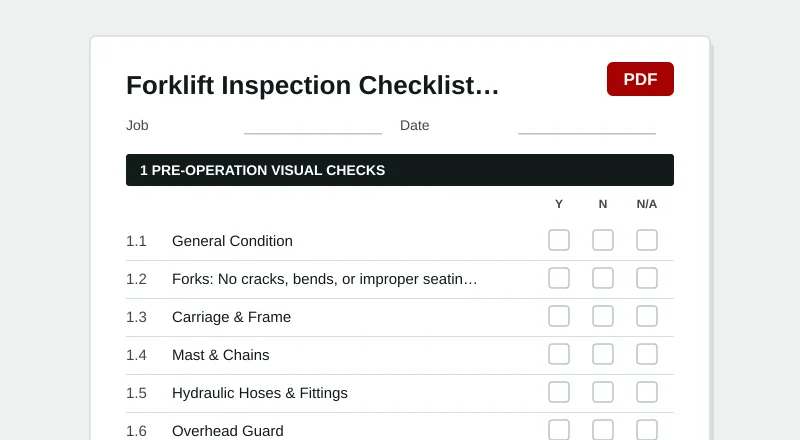
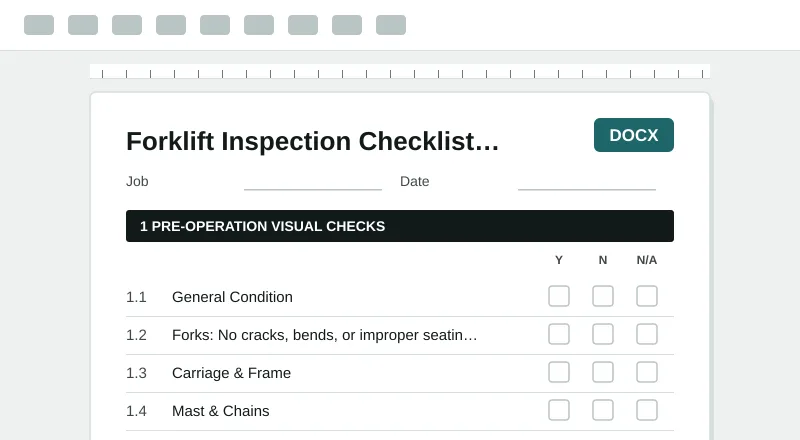
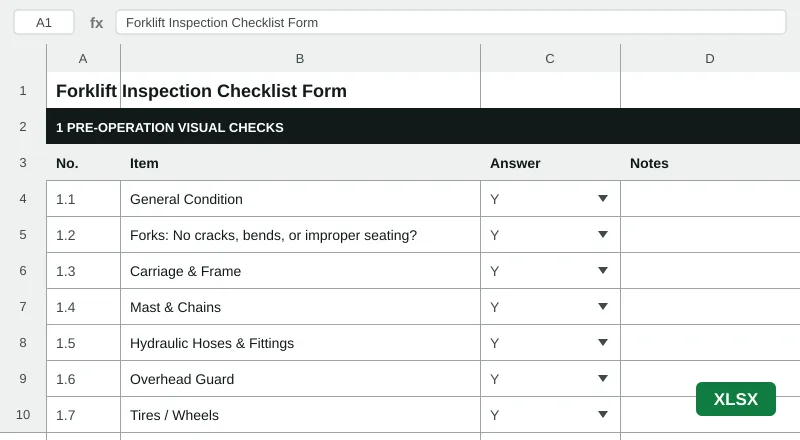
Free forklift inspection checklist: PDF, Word and Excel
Download the forklift inspection form free as a PDF, Word or Excel file, no sign-up needed, and keep a stack on each truck. To run it on operators' phones, set it up in Workyard's inspection app: the operator fills it in at clock-in, photographs any leak or damage and signs on screen, a No answer goes to the supervisor you name, and every form is filed to the job in the office. For other machines, see equipment pre-start checks and the heavy equipment daily inspection.


