

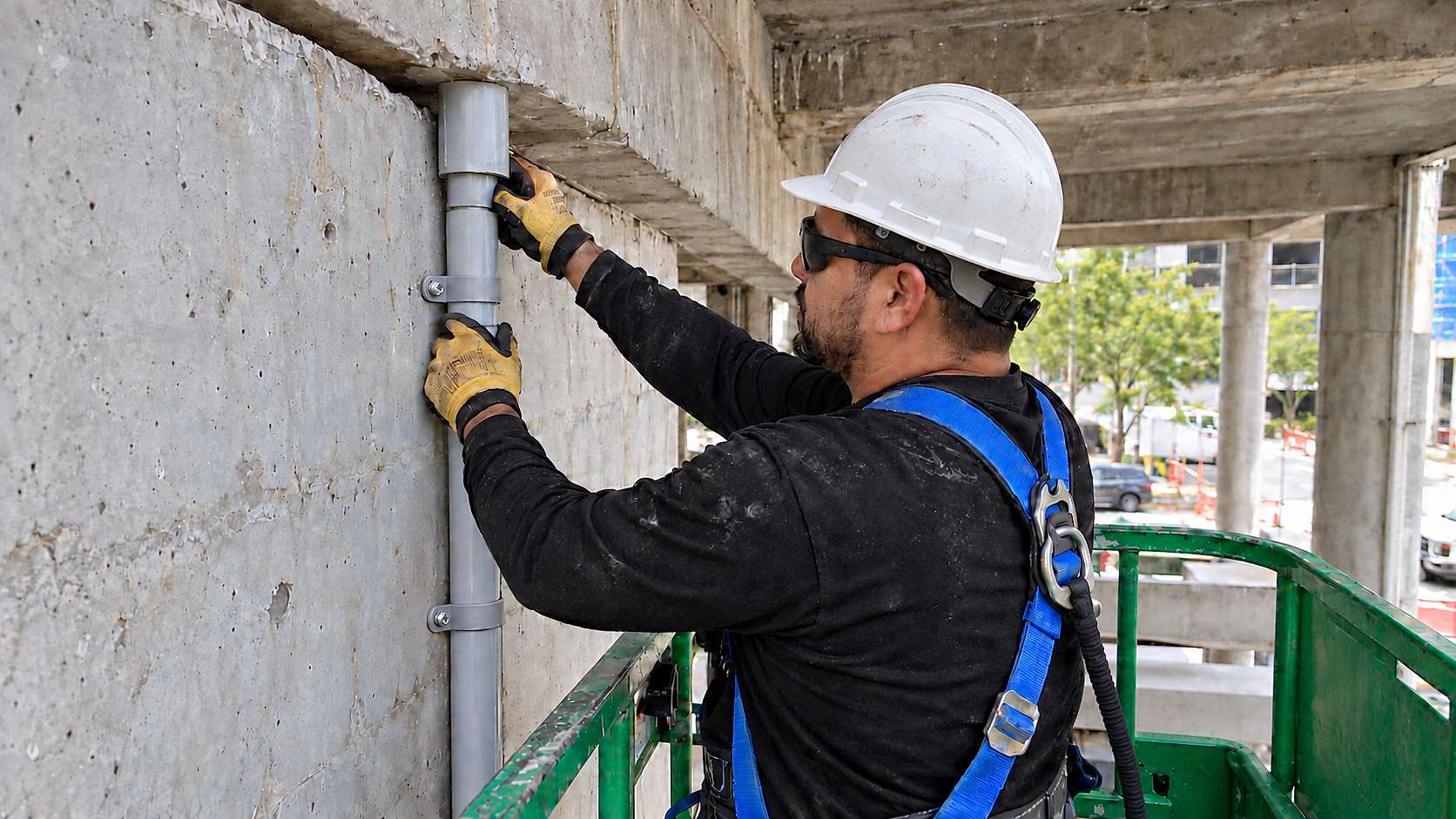

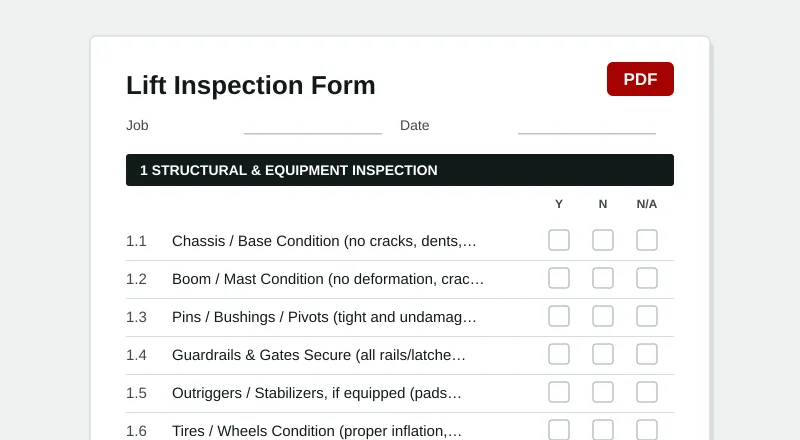
An aerial lift inspection form is the pre-use check an operator completes on a scissor lift, boom lift, mast lift or manlift before going up: structure, site conditions, controls, fall protection and paperwork. It covers every common lift type, so one lift inspection form works across a mixed fleet or a rental yard's machines.
What the aerial lift inspection form covers
Six sections, most of them Yes, No or N/A with a comments box:
| Section | What gets checked |
|---|---|
| Structure and equipment | Chassis, boom or mast, pins and pivots, guardrails and gates, outriggers, tires, brakes and chocks, fasteners, hydraulics, battery or fuel |
| Site and environment | Wind speed, hazard assessment done, ground stable and level, overhead hazards and power line clearance, weather, area cordoned off |
| Controls and safety devices | Ground and platform controls, both emergency stops, emergency lowering, tilt alarm, motion alarms, limit switches and interlocks, load sensing |
| Fall protection and platform | Platform floor clear, gate latching, lanyard anchors, toe boards, capacity labels, harness and lanyard worn where required, extension locks |
| Identification and documents | Unit type, unit ID or serial, operator, certification current, manual and load chart on board, annual inspection sticker current, decals legible |
| Issues and sign-off | Critical issues found, failed items, tag out of service, corrective actions, inspector, date and signature |
OSHA aerial lift inspection form requirements
The form is built on the rules it names. OSHA's aerial lift rule calls for lift controls to be tested each day before use. On boom lifts, OSHA 29 CFR 1926.453(b)(2)(v) requires a lanyard attached to the boom or basket. The rule's text says body belt, but its note says body belts can't be part of a fall arrest system, so for fall arrest that means a full body harness. On scissor lifts the guardrails are the fall protection unless the manufacturer requires more. ANSI A92.22 asks for a risk assessment of the job and a check of the work area for hazards before and during use, which is what the site section records. Treat the form as an OSHA aerial lift inspection form for the daily check, and follow the manufacturer's manual for anything it adds for your model.
How often to complete a lift inspection
There are two levels, done by different people:
- Before each use, each shift: the operator completes this form before the lift moves. A new operator or a move to a new work area is a good reason to redo the site section.
- Periodic and annual inspections: done by a qualified mechanic on the schedule in the manufacturer's manual and the ANSI A92 standards. The form checks that the annual inspection sticker is current but doesn't replace it.
If any critical item fails, the lift is tagged out of service and doesn't run until it is repaired and rechecked.
Keep a lift inspection log
Each completed form is one entry in the machine's log. Keep it by unit ID, not by job, so the history follows the lift: repeated hydraulic leaks or a tilt alarm that keeps faulting will show up long before a failure. For a dedicated boom lift version, see the boom lift inspection checklist.
Run it on a phone or download it
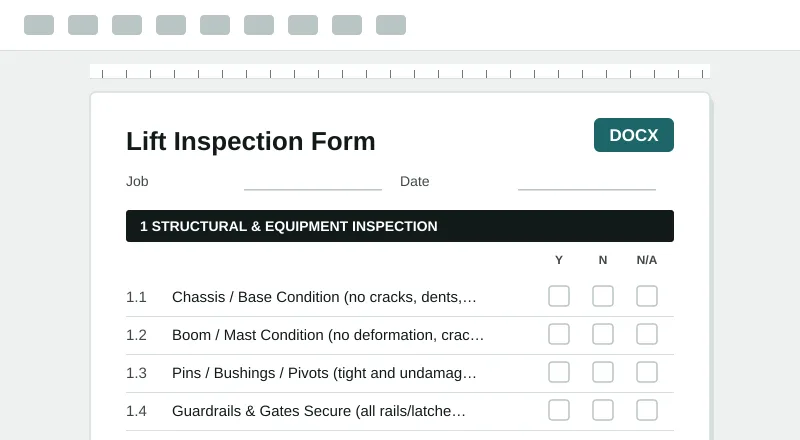
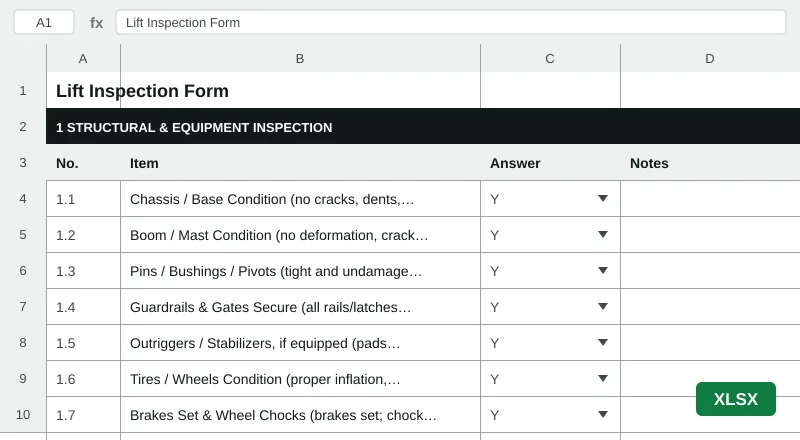
In Workyard, the form opens on the operator's phone before the shift, with photos and a signature taken on screen. A failed critical item goes straight to the person you name, and every inspection is filed to the job in the office with PDF or CSV export. See the construction inspection app or more site inspection templates. The form is free to download as a PDF, Word or Excel file.


