



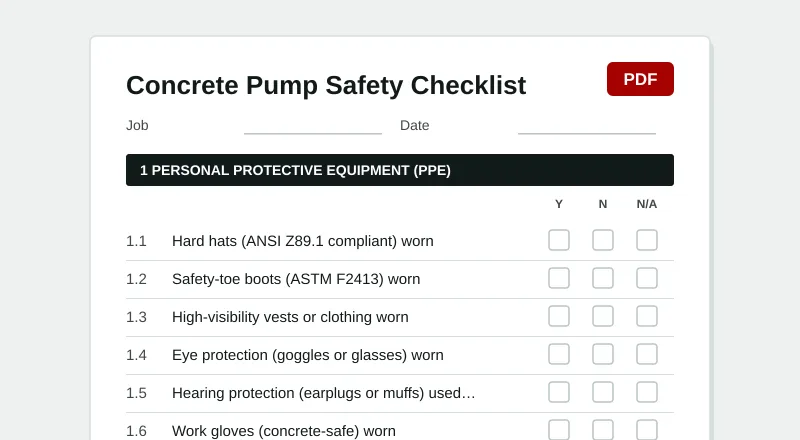
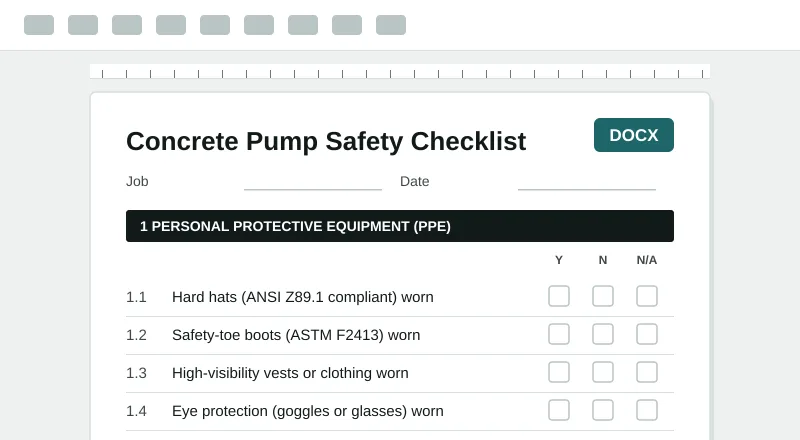
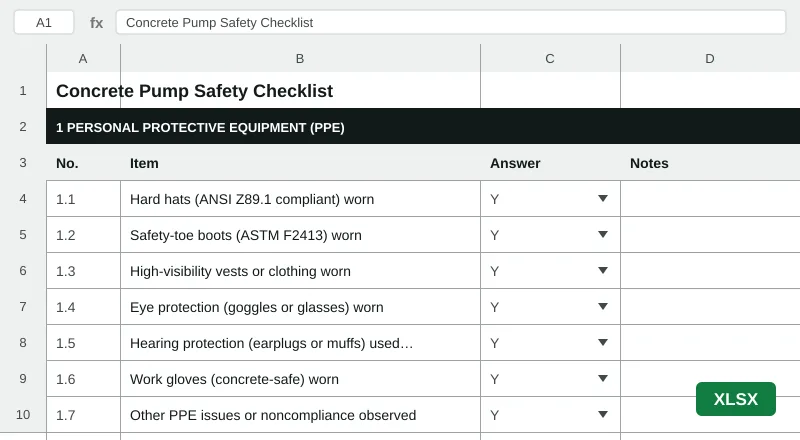
A concrete pump safety checklist is the pre-start inspection a pump operator and hose crew run on a boom truck or trailer pump before the first yard goes through the line. It covers PPE, setup, a walk-around, the pump's safety systems, the pipeline and hoses, the mix and the washout, then a yes or no on whether the pump is cleared to run. Concrete contractors, pumping companies and GCs who want proof the check happened all use it, and the form is meant to be filled in every day before startup.
What the concrete pump safety checklist covers
The form has nine sections, in the order the work happens on site:
| Section | What gets checked |
|---|---|
| Job and equipment | Pump type (truck-mounted boom or trailer), model, ID, operator, job, last annual inspection date |
| PPE | Hard hats, safety-toe boots, hi-vis, eye and hearing protection, gloves |
| Setup and site conditions | Ground, cribbing, outriggers and pads, distance from excavations, level, swing area, power line clearance, traffic control |
| Walk-around | Fluids, tires, outriggers, lights, backup alarm, horn, gauges, labeled e-stops |
| Pump and safety systems | E-stops tested, hopper grate interlock, guards, decals, hydraulics, boom structure, remote control, boom movement |
| Pipeline and hoses | Wear, supported joints, clamps pinned and locked, whip-checks, restrained hanging hose, reducers, clean-out gear, signals |
| Concrete mix | Mix design matches specs, slump, aggregate size for the hose, admixtures, no unapproved water, concrete temperature |
| Clean-up and environmental | Washout area set and contained, rinse water, how washout is handled |
| Findings and sign-off | Defects found, photos, pump approved yes or no, inspector, date and time, signature |
If PPE is missing, the form tells the inspector to stop until it is fixed.
Setup: ground, outriggers and power lines
Most pump incidents start with setup, which is why the form checks it before the engine work. The form ties this section to OSHA 1926.702(e) and ASME B30.27. Check that the ground is firm and level, cribbing is under soft spots, every outrigger is fully out and locked on pads, and none sit near the edge of an excavation. Barricade or watch the boom swing area, and set up traffic control if the pump is near a road.
Power lines get their own row. The form's minimum is 20 feet of clearance for lines up to 350 kV, with more for higher voltages. If the boom could get closer than that at any point in its swing, move the pump before you start.
Concrete pump inspection checklist for hoses and lines
The hose and line rows of the concrete pump inspection checklist are where blowouts and whipping hoses get caught. Look for worn or damaged pipe and hose, confirm every clamp has its pin and gasket and is locked, and check that hoses carry whip-checks or safety cables. The operator and hose crew agree on hand signals or radio before startup, and nobody stands at the hose end during start-up or line clearing.
Run the concrete pump truck safety checklist on a phone
In Workyard, the concrete pump truck safety checklist runs as a digital form on the operator's phone at clock-in or on the job, with photos of defects, a signature on screen, a No on pump approval flagged to a named person, and every submission filed to the job for PDF or CSV export. Pair it with the concrete pre-pour checklist and the concrete pour log. Or download it free as a PDF, Word or Excel file, no sign-up needed.


