



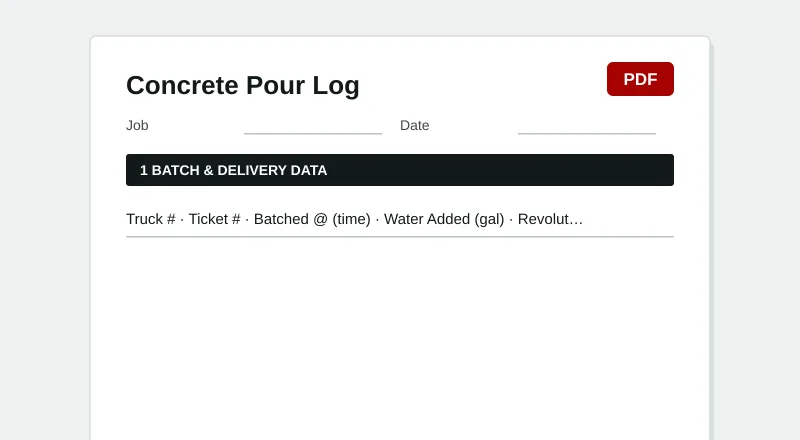
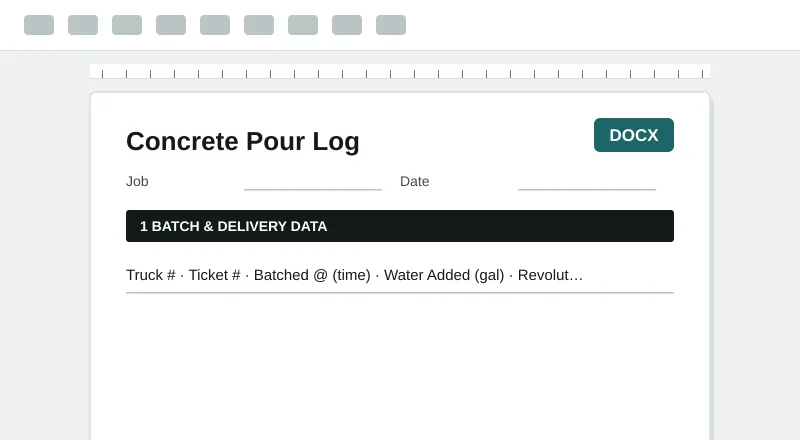
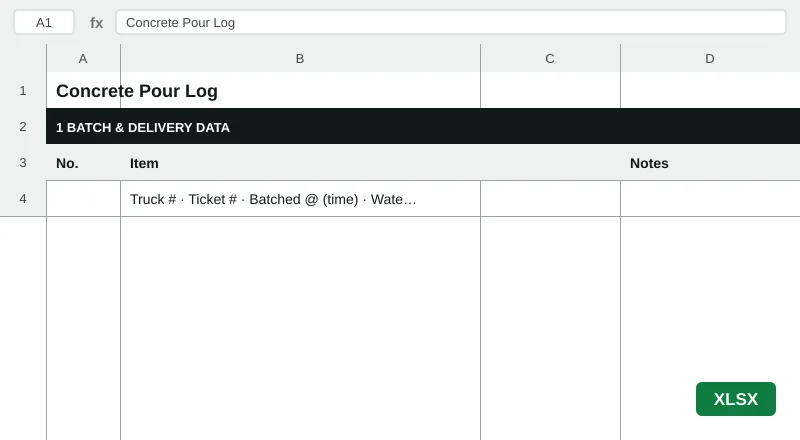
A concrete pour log is the live record a concrete foreman, QC tech or special inspector keeps at the point of discharge while the pour is happening: every truck and ticket, water added, slump, air, temperature, placement and consolidation, cylinders cast, safety checks, and anything that went wrong. Concrete contractors, GCs and testing agencies use it on slabs, footings, walls and decks, from residential foundations to commercial structures. It is filled in during the pour, truck by truck, not afterward from the tickets.
Concrete pour log vs pour card
A concrete pour card template is the pre-pour sign-off: each trade confirms forms, rebar, embeds and inspections are ready before the trucks are called. The pour log starts when the first truck arrives and records what actually happened. You need both. The card shows the pour was cleared, and the log shows the concrete placed met spec.
Sections of the concrete pour record sheet
| Section | What gets recorded |
|---|---|
| Project details | Project, pour location or element, weather, air temperature, wind, date, start and estimated end time |
| Batch and delivery data | A row per truck: truck and ticket number, batch time, water added in gallons, drum revolutions at discharge, arrival time, notes |
| Fresh concrete tests | Spec target and tolerance, actual reading and pass or fail for slump (ASTM C143), air content (ASTM C231 or C173), concrete temperature (ASTM C1064) and unit weight (ASTM C138) |
| Placement and consolidation | Vibration per ACI 309, lift thickness within the spec (ACI 309 guidance is 20 inches at most), no cold joints, consolidation notes |
| Tolerances and formwork | Elevation and flatness against ACI 117 or project tolerances, form removal per ACI 347 and the engineer |
| Cylinders and curing | Sample ID, time cast, curing method, cure box temperature, pickup date |
| Safety (OSHA Subpart Q) | Rebar caps, barricaded perimeter, hose routing, PPE and lockout on mixers and pumps, pump outriggers and pipeline, nobody under the bucket |
| Deficiency log | Each issue with action, owner, due date and status |
| Sign-off | Inspector, concrete lead or supervisor, and safety officer |
The form draws on ACI 301 and ASTM C94 for what to record at discharge. The project specs set the targets, so fill in the spec column before the first truck arrives.
How to document concrete pour progress
- Before the pour, fill in project details and copy the spec targets and tolerances from the mix design.
- As each truck arrives, log its ticket, batch time, arrival time and drum revolutions. Write down any water added on site, and who approved it.
- Run the fresh concrete tests on the trucks the spec calls for and record the actual values. A reading outside tolerance gets a No and a line in the deficiency log.
- Note lift thickness, vibration and any delay long enough to risk a cold joint, with the time.
- Log every set of cylinders with its sample ID and cure box temperature.
- Check the safety rows at the start and again if the setup changes.
- Get all three signatures before the crew leaves.
Run it at the pour or download it free
In Workyard the log runs as a digital daily form on the QC tech's phone, with ticket and test photos, signatures on screen, any failed test flagged to a named person, and every log filed to the job for PDF or CSV export. Clear the pour first with the concrete pre-pour checklist and record breaks on the concrete strength test record. You can also download it free as a PDF, Word or Excel file, no sign-up needed.


