

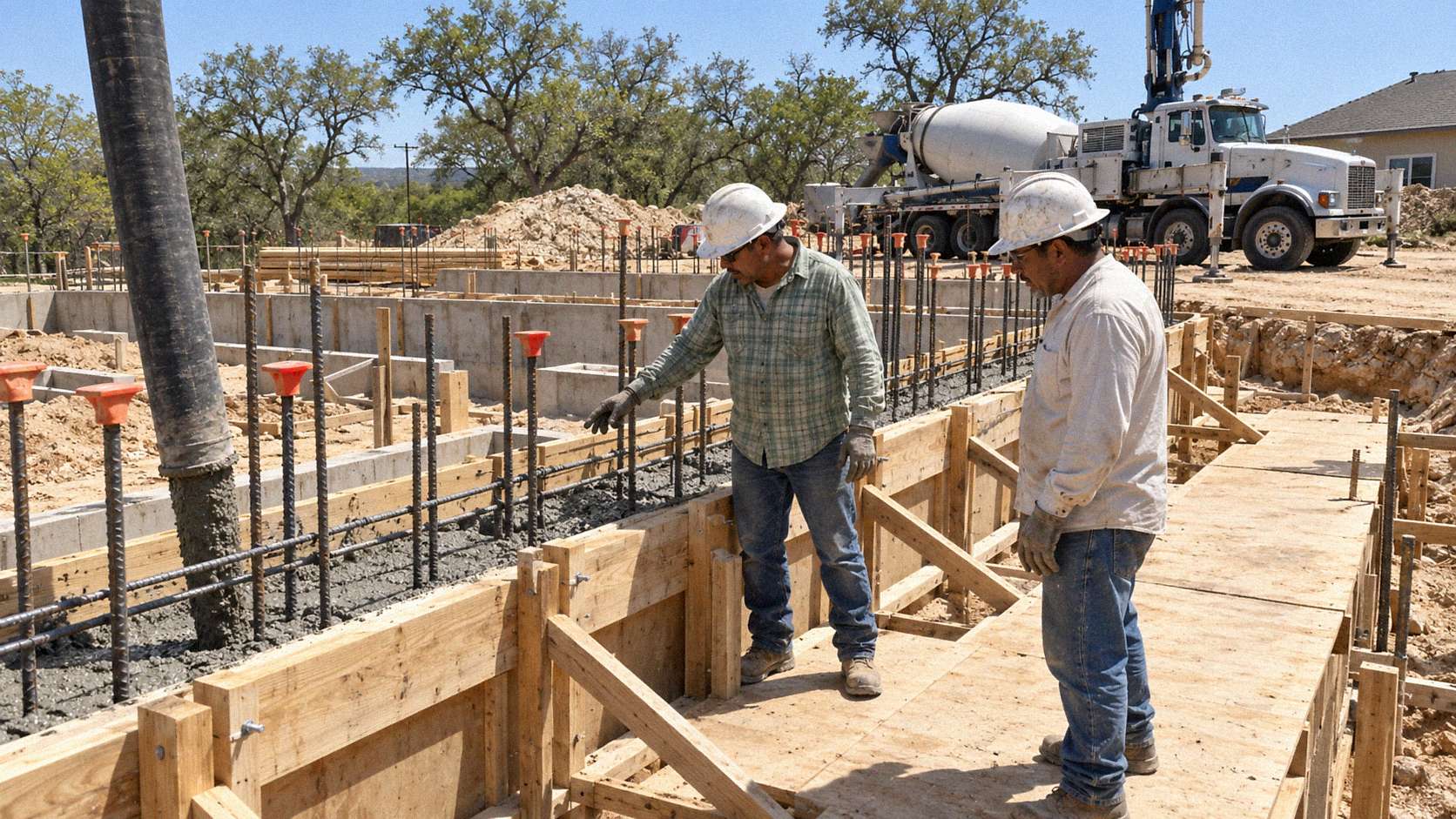

A concrete pre pour checklist is the last check before the trucks arrive: forms, steel, embeds, the mix and the site itself, each marked Yes or No against the plans, then signed as the authorization to pour. Concrete contractors, superintendents and QC inspectors use it on slabs, footings, walls and suspended decks, because once concrete is placed, every miss is a core drill, a saw cut or a tear-out.
What's on the concrete pre pour checklist
The checklist opens with the pour itself: job name, pour location or element, planned date and time, the weather forecast and the concrete supplier. Then five sections, each with Yes, No and notes columns and a place for photos.
| Section | What gets checked |
|---|---|
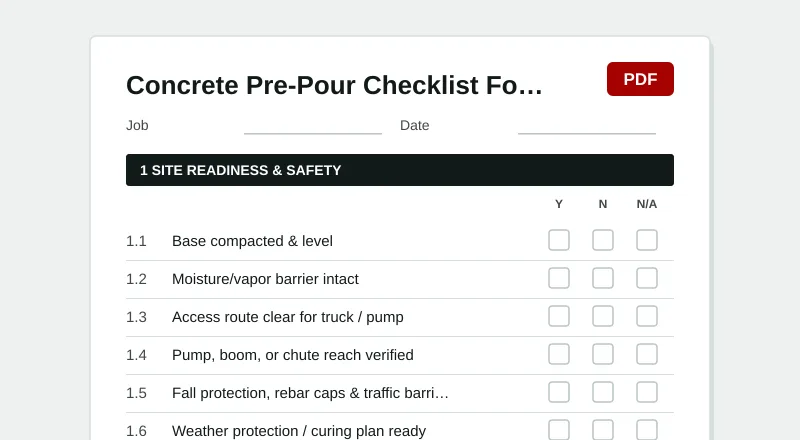
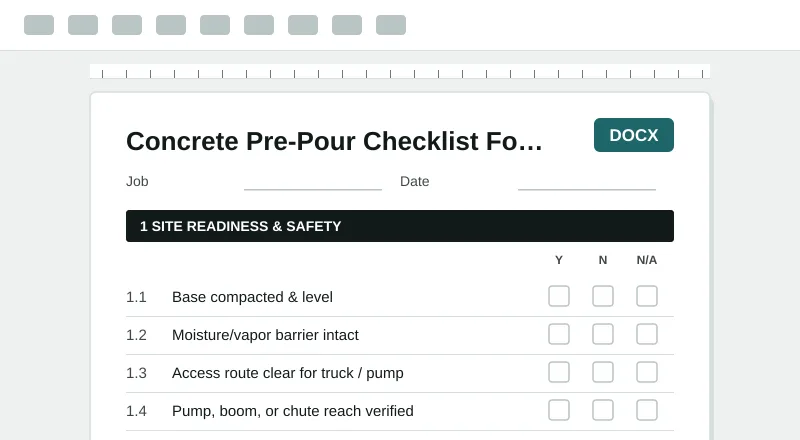
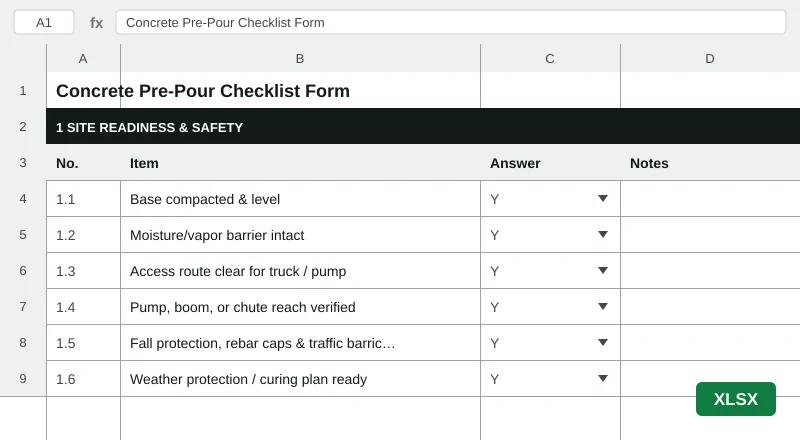
| Site readiness and safety | Base compacted and level, vapor barrier intact, truck and pump access clear, pump or chute reach verified, fall protection, rebar caps and barricades, weather protection and curing plan |
| Formwork | Alignment and dimensions, release agent, tight joints, bracing and shoring secure and plumb, cleanouts done |
| Embedded items | Anchors and bolts at the right location and height, sleeves and block-outs fixed, conduits capped and tied, inserts marked for locating after the pour |
| Reinforcement | Bar size and grade, spacing and pattern, laps and development length, chairs giving the specified cover, steel clean, tie wire ends bent away from the forms |
| Concrete mix review | Mix design approved, strength and water-cement ratio per spec, slump or flow target, admixtures listed, quantity ordered matching the pour volume plus 10%, required inspections passed, testing agency scheduled |
The formwork and reinforcement sections are based on ACI 301-20 and ACI 318-19, and the inspection items point to IBC 110.3 and 1705.3. The form's references list ACI 301 and 318 and IBC 2021 Chapter 19. Your specs and local code decide which editions apply on a given job.
For a deeper look at the steel, run the rebar inspection checklist first and attach it.
Who signs the authorization to pour
The last section works like a pour card. Three people can sign: the supervisor, the QC inspector, and the building official or engineer of record where the job requires one. Nobody should sign with a No still open on the sheet. Fix it, recheck it, note what was done, then sign.
Get the signatures the day before when you can. A morning pour with an unsigned card and a truck waiting is when people sign things they haven't looked at.
How to document concrete pour progress
The pre-pour checklist covers the moment before placement. Two more records finish the story of a pour:
- the concrete pour log for the pour itself: each truck and ticket, batch and arrival times, water added, slump and other fresh-concrete tests, and the weather
- the concrete strength test record for cylinder results as they come back from the lab
Use the same pour location or ID on all three and you can pull up any element later and see what was checked, what went in, and how strong it came out. On a job with dozens of pours, that ID is what keeps the paperwork from turning into a pile.
Get the free concrete pre pour checklist
Download the checklist as a PDF, Word or Excel file, free and with no sign-up. Print it for the pour, or use the Excel version to set up a checklist for each element on the job. In Workyard's construction inspection app, the same form runs on your crew's phones at the pour: photos of the forms and steel, each signer signs on screen, any No goes to the person named to fix it, and the signed checklist is filed to the job in the office and exports as a PDF.


