


An elevator inspection checklist records a walk through one elevator, from the car and its doors to the emergency phone, the car top, the machine room and the pit, and ends with a yes or no on whether it's fit for use. Building engineers, property managers and the elevator contractors who service their equipment use it for routine checks and to keep a running record between the official inspections your jurisdiction requires.
What's on the elevator inspection checklist
The checklist has seven sections. Most items are Pass, Fail or N/A, with details required for every Fail.
| Section | What you record |
|---|---|
| Outstanding issues from last inspection | Anything unresolved from the last visit, whether it was fixed, and repairs still pending |
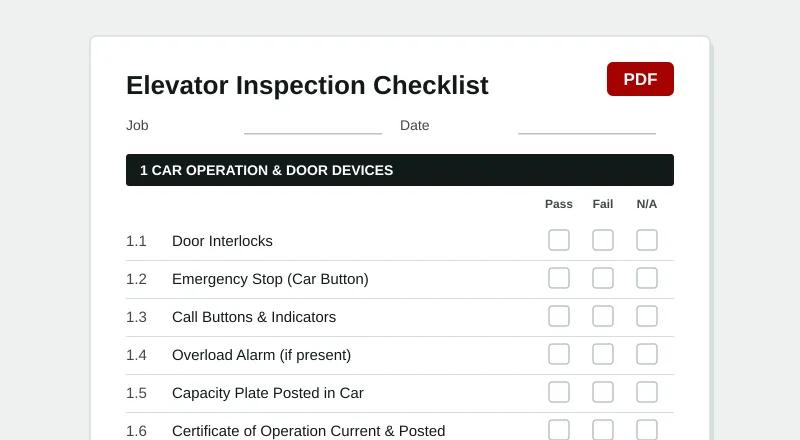
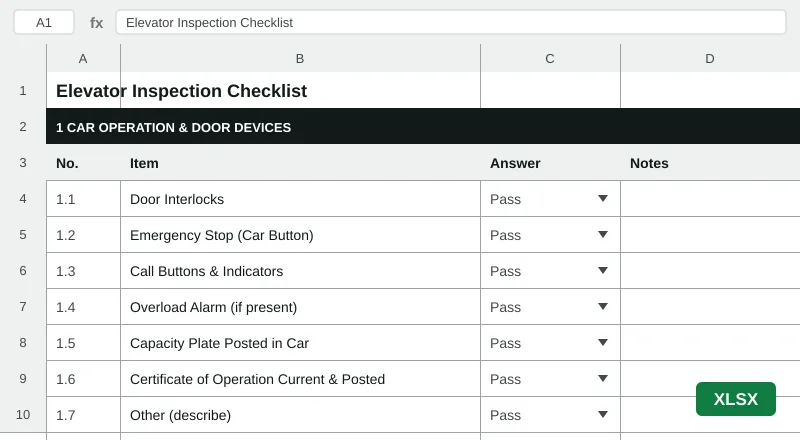
| Car operation and door devices | Door interlocks, car emergency stop, call buttons and indicators, overload alarm, capacity plate, certificate of operation posted and current, a ride test, door reopening device, door zone safety test |
| Emergency phone and alarm | Alarm bell or light, battery backup, location ID display, emergency phone or intercom test |
| Car top, machine room and guards | Ladder, railings, covers, car top stop switch, firefighters' service, machine room main disconnect, machine and brake, governor and hoist ropes, recall smoke detectors, cab emergency lighting |
| Pit and pit equipment | Access door, ladder, lighting, pit stop switch, drain or sump, cleanliness |
| Elevator and inspection info | Elevator ID, building, passenger, freight or service, rated capacity and speed, date, inspector, photo |
| Completion and record | Fit for use, findings and corrective actions, inspector and reviewer signatures |
Using it as a monthly elevator inspection checklist
Many owners run the form as a monthly elevator inspection checklist, with the building's own staff covering what can be checked from the lobby and the car, and the elevator contractor covering the rest on its service visit. A reasonable split:
- Building staff: ride test, door reopening device, call buttons and indicators, the alarm and emergency phone, cab lighting, capacity plate and certificate posted, and anything a tenant has reported.
- Elevator mechanic only: car top, machine room equipment, governor and ropes, pit entry and the stop switches up there. Car tops and pits are dangerous places for anyone not trained for them, and access is usually restricted to elevator personnel.
Mark items you didn't check as N/A with a note saying who covers them, so the monthly elevator inspection form never looks complete when it isn't.
Start with last time's open issues
The form opens with what's still open from the previous inspection, on purpose. A door that was slow to reopen last month and wasn't fixed is now a known problem, and the record should show whether it was repaired or is still pending. Copy the open items across before you start the walk, then close them or carry them forward.
Fit for use and the standards the form names
The form's notes cite ASME A17.1, the safety code for elevators, and the local authority having jurisdiction, which require every control and safety device to work before an elevator is used. If a safety device fails, take the car out of service, mark Fit for use as No, and write the corrective action. The notes also point to ASME A17.1 and ADA requirements for the emergency phone, an NEC sign on a main disconnect with more than one power source, and ASME A17.1 2.2.6 for a pit stop switch reachable from the pit door. Check the code editions your jurisdiction has adopted. Other building system checks are under system tests and property management templates.
Run it in Workyard or download it free
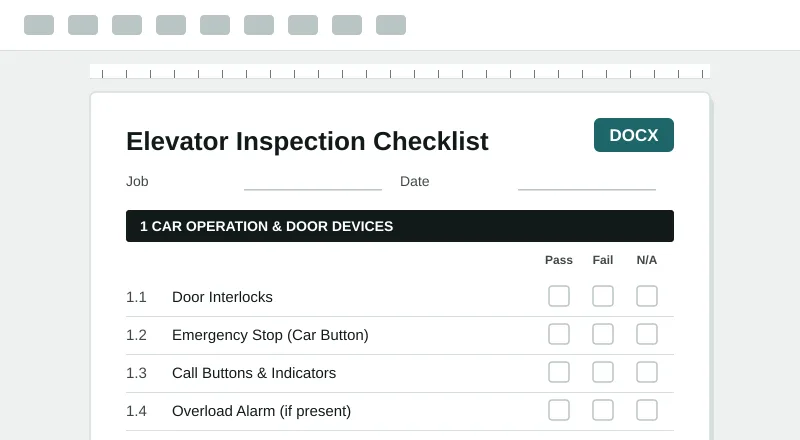
In Workyard, the elevator checklist is a digital form filled in on a phone at the elevator, with photos and signatures on screen. A failed safety device can go straight to a named person, and every inspection is filed in the office, ready to export as PDF or CSV. See inspection forms in Workyard. Or download the free template as a PDF, Word or Excel file.


