



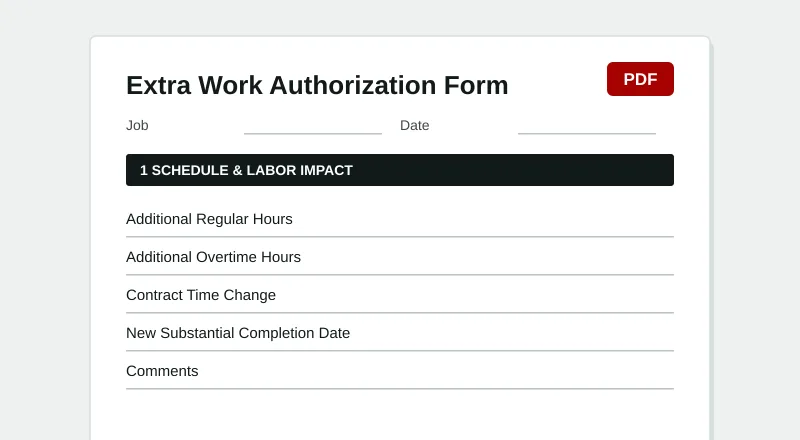
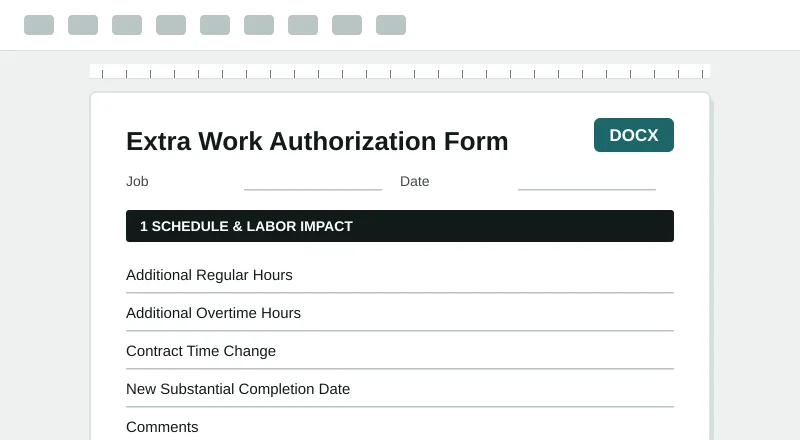
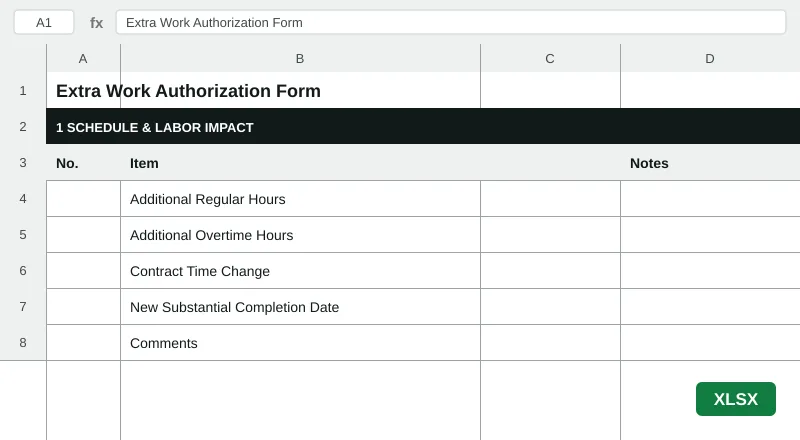
An extra work authorization form is the signed agreement a contractor and owner use to approve work that falls outside the original contract before anyone starts it. It records what the extra work is, why it came up, what it does to the schedule and labor hours, what it costs, and which permits it needs, then gets signed by both sides. General contractors, remodelers, concrete, drywall and paving subs, and landscapers use it any time the field finds work nobody priced.
What is a work authorization form?
A work authorization form is written approval to do a specific piece of work at an agreed price or pricing method. On a construction job, the extra work version covers additions to the contract: a client request on site, a scope change, or a condition nobody could see at bid time, like rotten framing behind drywall or rock in a trench. Getting the signature first is the point. Extra work done on a handshake is the hardest money to collect.
What goes on the extra work authorization form
The form has six sections:
| Section | What goes in it |
|---|---|
| Extra work details | Request date, description, reason (scope change, client request, unforeseen conditions), location, supporting plans or photos, hazards tied to the work, extra safety steps |
| Schedule and labor impact | Added regular and overtime hours, contract time change, new substantial completion date |
| Cost and budget impact | Pricing basis, labor cost and its cost code, an equipment and material table that totals itself, subs and services, other costs, markup and overhead, total added charge |
| Compliance and permits | Other permits, plus yes/no checks for prevailing wage (Davis-Bacon), lead paint RRP, stormwater or erosion permits, confined space and hot work permits |
| Project and contract information | Project, address, original contract number and date, client, contractor, PM or architect |
| Approvals and signatures | Who prepared it, contractor and owner signatures, owner name, title and approval date, extra approvals, comments |
How to price the extra work
Pick the pricing basis before you fill in numbers, because it changes what the owner is agreeing to:
- Lump sum: one fixed price for the described work. Best when the scope is clear.
- Time and materials: labor, equipment and material billed as used, with your markup.
- Unit price: a set rate per unit, such as per square foot or per cubic yard.
- Not-to-exceed: time and materials with a ceiling the owner approves up front.
Put the extra labor on its own cost code so the hours land against the change, not the base contract. Fill in the time impact even when it is zero. A new completion date agreed in writing now heads off a delay argument at closeout.
Get it signed on site, or download it free
In Workyard, the form runs as a digital form on a foreman's phone: photos attached, the owner signs on screen at the job, and the signed copy is filed to the job in the office for PDF or CSV export. When time and materials is the basis, track the hours on a T&M ticket, and use the change order form to amend the contract. You can also download it free as a PDF, Word or Excel file, no sign-up needed.


