

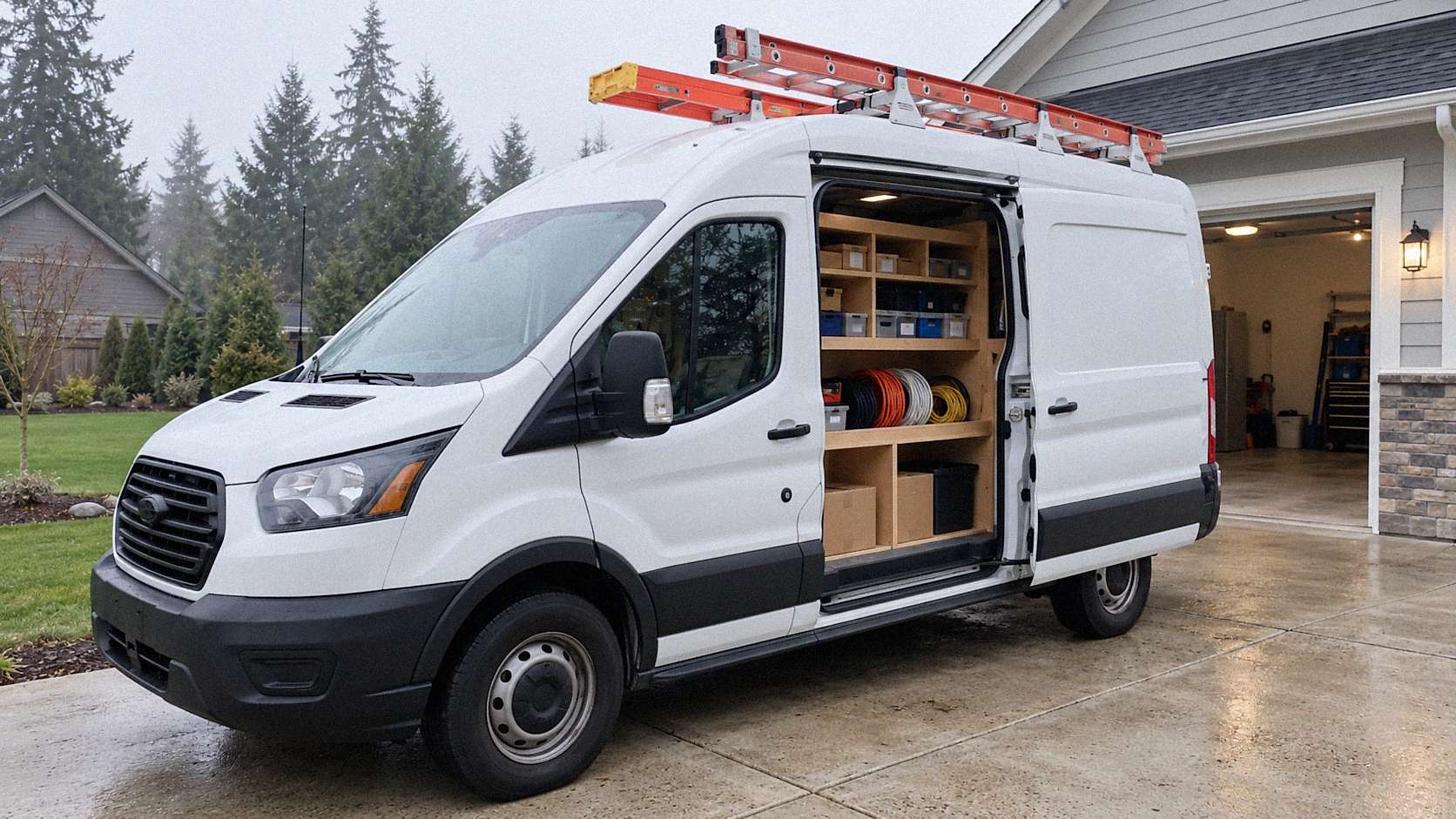

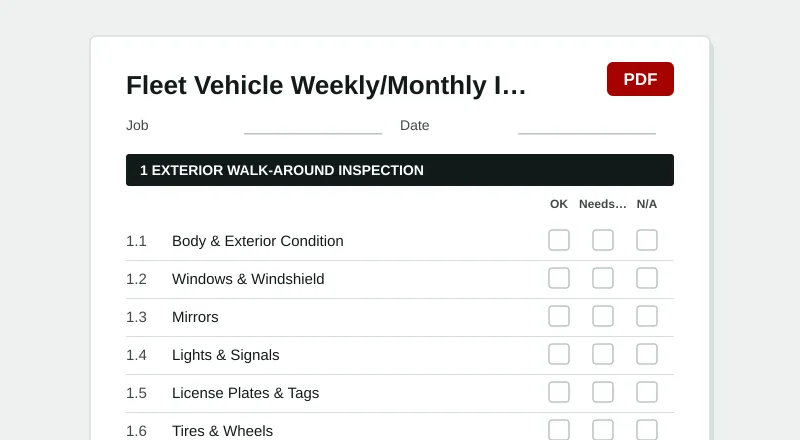
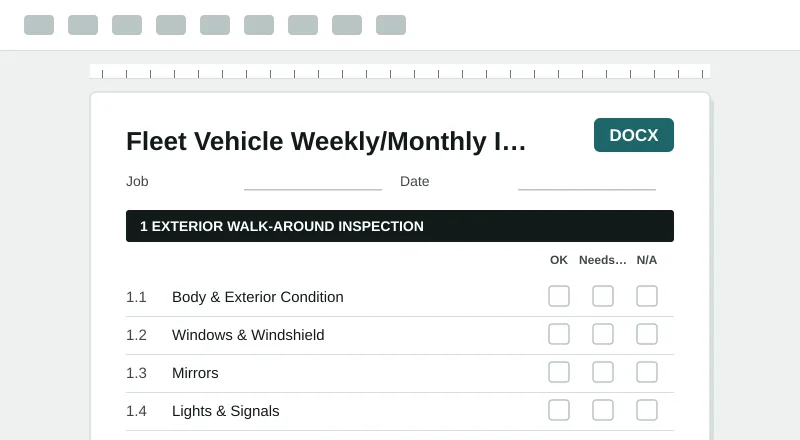
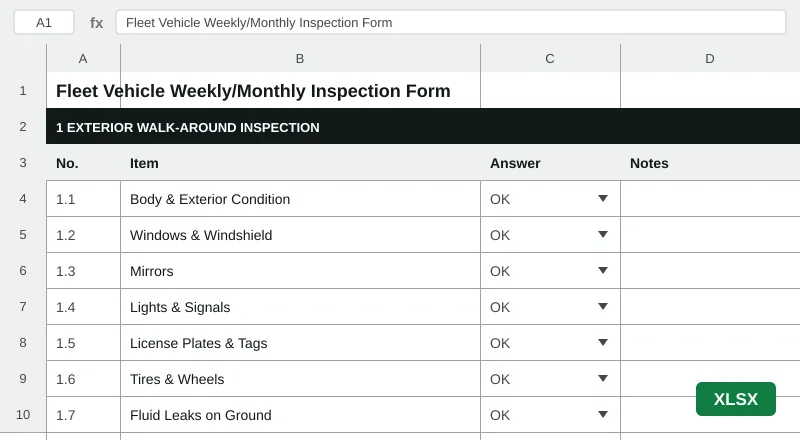
A fleet vehicle inspection form is the scheduled, top-to-bottom check of a company truck or van: body, tires, fluids, cab, brakes and any trailer it pulls. Fleet managers, mechanics and drivers use it weekly or monthly on pickups, service vans and work trucks, on top of the quick check a driver does before each trip.
How often to inspect fleet vehicles
The form is set up for two schedules, and you pick one on the form:
| Check | Who usually does it | What it covers |
|---|---|---|
| Before each trip | The driver | A quick walk-around and cab check, usually on a DVIR |
| Weekly | The driver or a lead | This form, for vehicles that run hard every day or carry crews and trailers |
| Monthly | A mechanic or fleet lead | This form as a monthly vehicle inspection checklist, for lighter-use vehicles, with fluid levels, belts and hoses checked under the hood |
Your insurer, a client contract or the rules for your vehicle class may set the schedule for you, so check them before you settle on one.
What the fleet vehicle inspection form covers
Five inspection sections, each item marked OK, Needs Attention or N/A, with details for anything that needs attention:
- Exterior walk-around: body, glass, mirrors, lights and signals, plates and tags, tires and wheels, leaks on the ground, undercarriage and exhaust, mudflaps. Tire pressure and minimum tread depth are recorded as numbers, with photos.
- Engine compartment (engine off): engine oil, coolant, brake fluid, power steering fluid, washer fluid, belts and hoses, battery, air filter, other leaks or wear.
- Cab interior: seats and belts, horn, wipers, defroster, gauges, mirror adjustment, cleanliness, required documents and emergency supplies.
- Engine-on tests: starting, warning lights, service and parking brakes, steering, transmission, parking safety devices and on-board systems.
- Trailer or towing: connection, lights and wiring, brakes, tires and body. Mark it N/A with no trailer.
Tire checks
Tires get numbers, not just a tick. Recording pressure at each tire and the lowest tread depth (in 32nds of an inch) each time turns the form into a fleet tire inspection record: you can see a slow leak or uneven wear developing across weeks. Check pressure cold, and compare it with the placard on the door jamb, not the number on the sidewall.
After the inspection
The summary records the date, weekly or monthly, the vehicle (unit number, plate or VIN), odometer reading and whether the vehicle is safe to operate. A No needs a reason and the corrective action. Repairs are then signed off: repaired or not needed, by whom and when, and a reviewer signs. A vehicle marked unsafe stays parked until the repair is done and signed.
Run it on phones or download it
In Workyard drivers fill in the form on their phones, with photos and a signature on screen. A Needs Attention or unsafe answer goes to the person you name, and every inspection is filed in the office with PDF or CSV export. See the vehicle inspection app or more DVIR and vehicle inspection templates. The form is also free to download as a PDF, Word or Excel file.


