


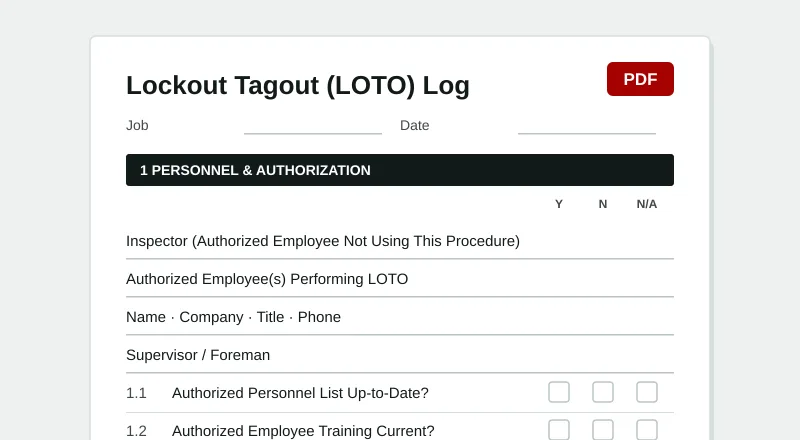
A lockout tagout log records an inspection of how a crew locked out a piece of equipment: who was authorized, whether the written procedure was followed, how zero energy was verified and how the machine was put back in service. Maintenance, electrical, mechanical and restoration contractors use it whenever equipment is de-energized for service, and for the periodic reviews of their energy control procedures.
Lockout tagout log requirements
The form is built around OSHA's hazardous energy rule, 29 CFR 1910.147, and ANSI/ASSP Z244.1, and each section notes the part of the rule it follows: training and authorized employees (1910.147(c)(7)), written energy control procedures (c)(4), verification of isolation (d)(6), release from lockout (e)(3), and periodic inspection (c)(6)(i). The inspector line asks for an authorized employee other than the one using the procedure, which is what the rule requires for the periodic inspection ((c)(6)(i)(A)). Construction work has its own rules too, so check the current OSHA standard that applies to your job.
What each section of the LOTO log sheet records
| Section | What you record |
|---|---|
| Inspector, authorized employees doing the lockout, affected employees present, supervisor, and whether the authorized list, training and review of responsibilities are current |
| Whether a written procedure exists for this equipment, energy sources (electrical, mechanical, hydraulic, pneumatic, chemical, thermal, gravity), and each step from notifying affected employees to applying locks and tags |
| Zero-energy check, area clear, affected employees told on restart, devices removed by the authorized employee |
| Any deficiencies, what will be done, who is responsible and by when |
| Photos of locks, tags, isolation points or problems |
| Equipment type, serial or ID number, location or department |
| Inspector's printed name, date and signature |
The procedure checklist also asks whether devices are standardized, durable and labeled, whether each lock or tag identifies its employee with a warning legend, and whether a lock box was used for group lockout. Any No needs details.
Who should remove a lockout/tagout
Only the authorized employee who applied a lock or tag should remove it. The verification section has a line for exactly that, alongside checks that the area is clear and affected employees were told before the equipment was turned back on.
The hard case is a lock left on by someone who has gone home. Don't cut it because the job is waiting. Follow the removal procedure in your written energy control program, which usually means the supervisor confirms the worker isn't on site, makes contact with them, and tells them before they return. Record what happened in the findings section.
Keeping it as a lockout tagout log sheet
File one completed form per inspection, by equipment ID. Over time the set shows which machines have a written procedure, when each was last inspected, and which deficiencies keep returning, which is what you'll be asked for when someone reviews your program.
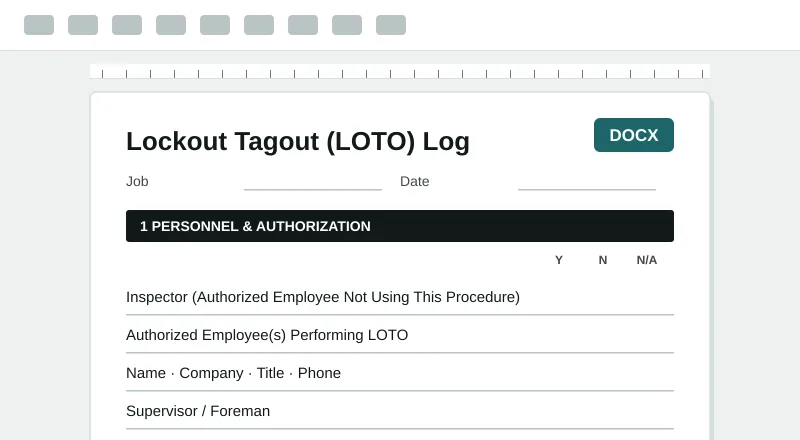
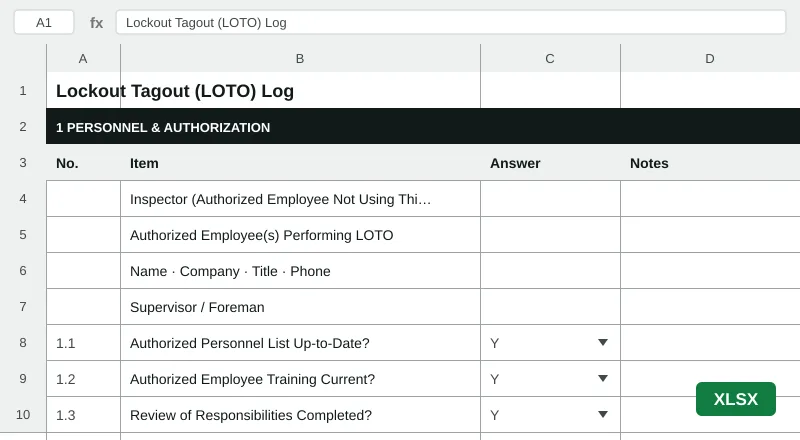
Download the lockout tagout log free as a PDF, Word or Excel file, no sign-up needed. To fill it in on phones, use Workyard's safety tools: the inspector completes it at the equipment, adds photos of the locks and tags and signs on screen, a deficiency goes to the person you name, and each record is filed to the job in the office. For the lockout itself, use the LOTO control form, and brief the crew first with the electrical safety toolbox talk.


