


A confined space entry checklist is the record an entry supervisor and crew fill in before anyone goes into a manhole, vault, tank, pit, crawl space or sewer: who is entering, what the hazards are, what the air reads, what PPE and rescue gear is in place, and when everyone came back out. Utility, sewer, excavation, restoration and mechanical crews use it, and the form follows OSHA's confined spaces in construction rule, 29 CFR 1926 Subpart AA. Each step gets checked off on site, not filled in afterward from memory.
The six steps of the confined space entry checklist
The form works in six steps, and the confined space pre entry checklist is the first four of them:
| Step | What gets recorded |
|---|---|
| Job site, space ID, purpose of entry, permit number, authorized entrants, attendants, entry supervisor |
| Oxygen deficiency or enrichment, flammable or toxic atmosphere, engulfment, entrapment, mechanical or electrical hazards, chemical residue, heat or cold, and the controls in place: isolation, ventilation, ignition control, lighting, communication, rescue plan |
| Test time, meter ID, readings and condition for oxygen, flammable gas, carbon monoxide and hydrogen sulfide, plus a monitoring table for readings during entry |
| Permit authorized, permit still valid, required PPE, PPE inspected, fire extinguisher on hand |
| How entrant and attendant communicate, rescue team and gear, emergency contacts, retrieval system, LOTO, ventilation, lighting, attendant in position, area secured |
| Review, name, signature, date and time, all entrants out and accounted for, time the entry ended and the permit was cancelled |
What form is required for permit-required confined spaces?
A permit-required confined space needs a written entry permit, signed by the entry supervisor, before anyone goes in. OSHA's construction rule sets what the permit has to say and how long to keep it, so read the current text or your company's confined space program for the exact list. This checklist does not replace the permit. It records the permit number and checks that the permit is authorized and still valid, and it captures much of the same information: entrants, attendants, supervisor, hazards, controls, test results, rescue and communication. Keep the two together in the job file.
Atmospheric testing before and during entry
Test the air before entry with a calibrated meter, and record the meter ID so you can show which instrument took the readings. The form's hazard list uses the common alarm points: oxygen below 19.5% or above 23.5%, flammable gas at or above 10% of the lower explosive limit, and toxic gases such as CO and H₂S above their exposure limits. Test in that order: oxygen first, then flammables, then toxics.
Readings change once work starts. Log them in the monitoring table while entrants are inside, continuously where you can and otherwise at set times, with the tester's initials on each line.
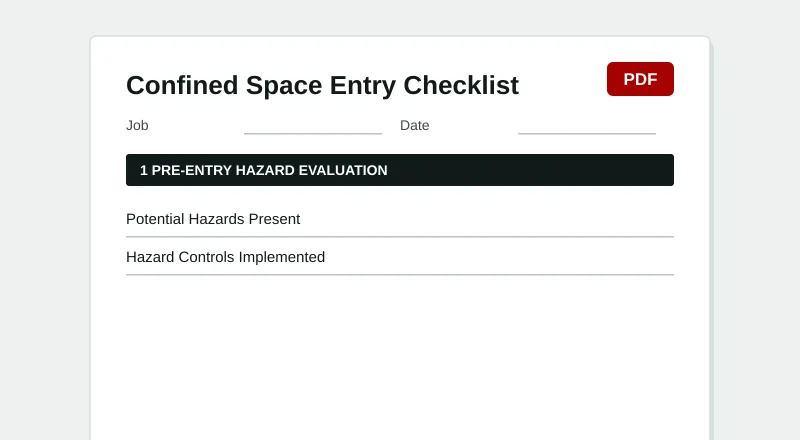
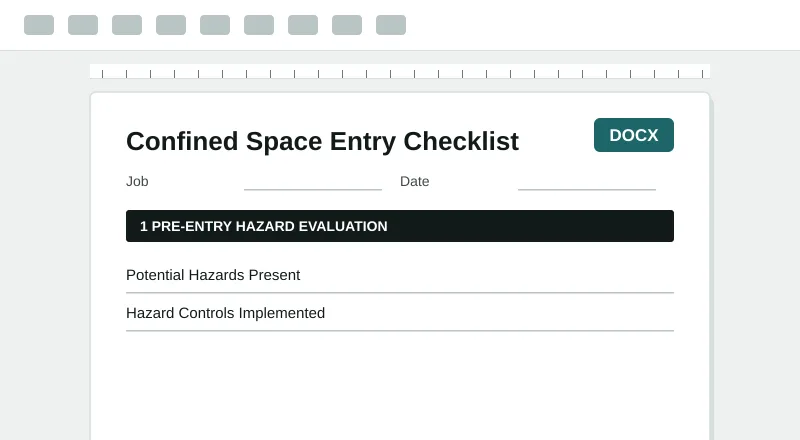
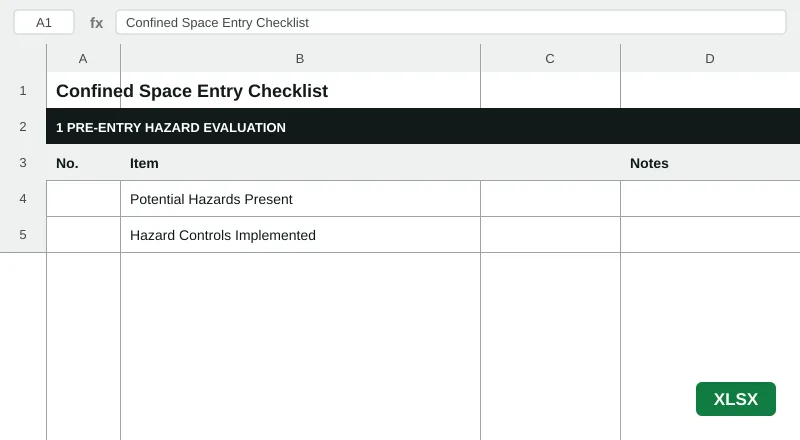
Run it on a phone or download it free
In Workyard the checklist runs as a digital safety form on the supervisor's phone at clock-in or on the job, with photos, a signature on screen, any unsafe answer flagged to a named person, and every entry filed to the job for PDF or CSV export. Plan the task with the confined space entry JHA and isolate energy with the lockout/tagout form. You can also download it free as a PDF, Word or Excel file, no sign-up needed.


