

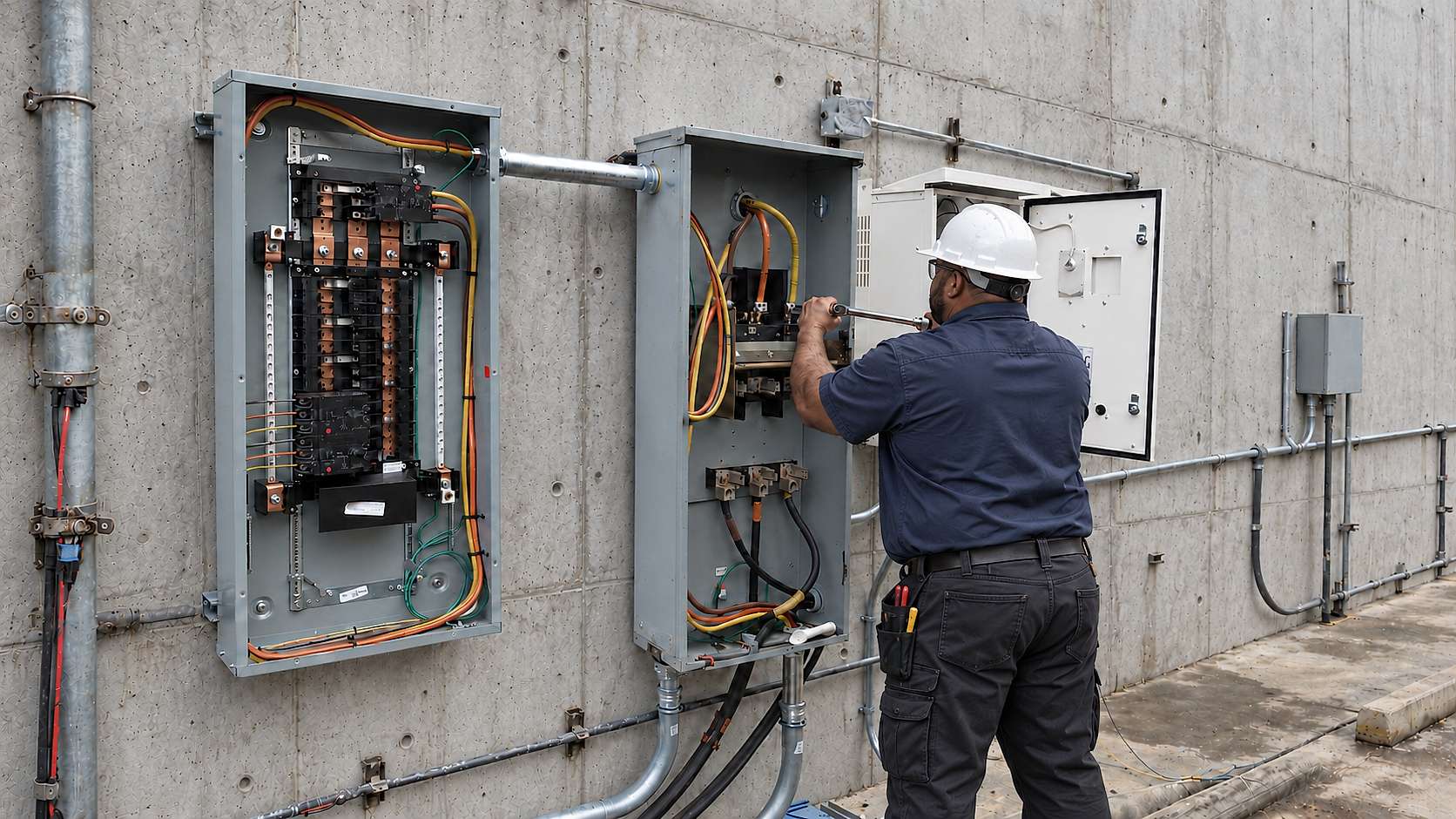

An electrical safety toolbox talk is a short crew meeting on the hazards of working near energized equipment and the steps for locking it out before work starts. Foremen, electricians and safety leads give it on construction sites, in plants and on service jobs, and the template records who attended, what was discussed and each worker's signature.
What the electrical safety toolbox talk covers
The template doubles as a lockout tagout toolbox talk. It sets out the content in the order you'd present it:
- Attendance details: date, project or site, presenter, and the team member's name.
- Why it matters: the objective, with OSHA's hazardous energy rule for general industry (29 CFR 1910.147) and its construction rule for locking out and tagging circuits (29 CFR 1926.417).
- Key definitions: energized, lockout, tagout and qualified person.
- Common electrical hazards: contact with live parts, arc flash, unexpected start-up, stored energy, and damaged cords or missing GFCI in wet conditions.
- The six-step lockout/tagout sequence: prepare, shut down, isolate, lock and tag, verify zero energy, perform the work.
- Safe work practices: clearance in front of panels (the form cites 29 CFR 1910.303(g)(1)), GFCI on 120V cords and tools, daily cord checks, PPE per NFPA 70E, insulated tools and barriers.
- Emergency response: call 911, don't touch the victim until power is confirmed off, CPR or AED if trained, report within 24 hours.
- Crew discussion: prompts for questions and a box for answers and notes.
- References: the OSHA sections, NFPA 70E 2024 Article 120 and ANSI/ASSP Z244.1-2024.
How to run the talk with your crew
Tie the talk to work on this week's schedule. A talk about a circuit the crew will de-energize on Thursday sticks; a talk about electricity in general doesn't.
- Pick the task. A temporary power tie-in, a panel change, a pump or motor that needs servicing. Name the disconnect it will be locked at.
- Walk through the hazards for that task. Where is the stored energy? Who else could switch it back on?
- Show the six steps with real gear. Hold up an actual lock and tag, and show the meter test used to verify zero energy before anyone touches a conductor.
- Use the discussion prompts. Ask where the nearest disconnect for temporary power is and why the zero-voltage test still matters after the lock is on. Write the answers in the notes box.
- Collect signatures. Each worker signs and can add feedback, so you have a record of who heard the talk and what they found unclear.
Keep it to the point. Crews tune out a read-aloud; they pay attention when the presenter asks someone to explain the next step back.
Electrical safety meeting topics to follow up with
One talk rarely covers everything. Good follow-up topics for the next electrical safety meeting include:
- Inspecting cords, plugs and GFCIs on temporary power
- Arc flash boundaries and the PPE your crew owns
- Group lockout on a shared machine, using the lockout tagout log
- Planning energized work step by step with an electrical work JHA
- What to do when a lock is left on and its owner has gone home
Free electrical safety toolbox talk: PDF, Word and Excel
Download the electrical safety toolbox talk free as a PDF, Word or Excel file, no sign-up needed. To run it on crews' phones, use Workyard's toolbox talks: each worker reads the talk and signs on screen at clock-in or on the job, and every signed record is filed to the job in the office, ready to export as a PDF or CSV.


