



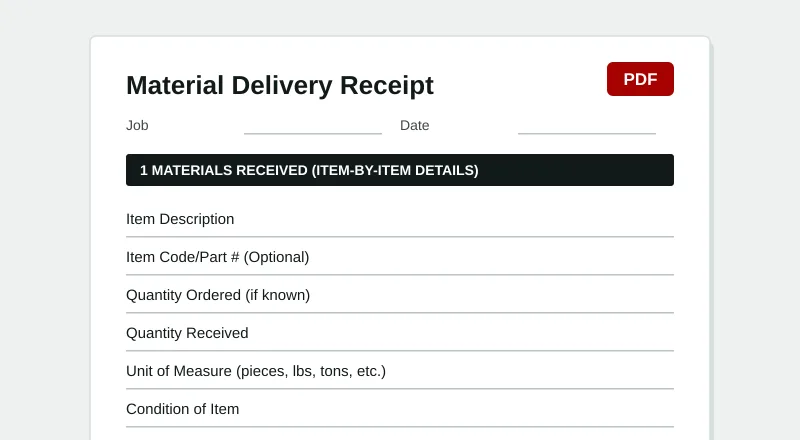
A material delivery receipt template is the form a foreman or site receiver fills in when a truck shows up: what was ordered, what came off the truck, what shape it was in, and who signed for it. General contractors and trades use it on every delivery, from a pallet of drywall to a load of rebar, so the office can match the delivery to the purchase order and the invoice before anyone pays.
What goes on a material delivery receipt template
The receipt has five parts, and the item list repeats so you can add a line for every product on the load.
| Section | What you record |
|---|---|
| Delivery information | Date and time, job name and location, supplier, PO number, packing slip and invoice numbers, carrier, driver, receiver, overall condition, weather, full or partial delivery |
| Materials received | For each item: description, part number, quantity ordered, quantity received, unit of measure, condition, any certification check, remarks and a photo |
| Verification and discrepancies | Whether everything arrived in acceptable condition, what's short or damaged, the action taken, and whether the supplier was told |
| Photos and attachments | Photos of the load and any damage, plus the packing slip or certificates |
| Signatures | Receiver's name, role and signature, the driver's signature acknowledging any damage or shortage, and a final confirmation |
Units matter more than people think. "40" means nothing on its own: 40 sheets, 40 bundles and 40 tons are different deliveries. Write the unit on every line.
How to check a delivery before you sign
Check the load before the driver leaves. Once the driver is gone, a shortage turns into your word against the supplier's.
- Pull up the purchase order before the truck arrives so you know what should be on it.
- Count against the packing slip, not the driver's say-so. Open wrapped pallets enough to see the count.
- Look at condition item by item: crushed corners, wet bags, bent stock, the wrong size or color.
- Check any certifications the job needs, such as mill certs, product data or batch tickets, and note them on the line.
- Photograph the load as it sits on the truck and anything damaged before it's moved.
- Write every shortage or defect on the receipt, then have the driver sign it.
- Mark the delivery full or partial so the office knows to expect the rest.
Delivery receipt form vs material receiving report
The paperwork around a delivery goes by a few names, and they aren't the same thing:
- Packing slip or delivery note: the supplier's list of what they say they shipped. It comes with the truck.
- Delivery receipt form: your record of what actually arrived, in what condition, signed by your receiver and the driver.
- Material receiving report: the term purchasing and accounting teams often use for the internal record they match against the purchase order and the invoice before paying.
The template does the job of both the delivery receipt and the material receiving report: the field fills it in once, and the office uses the same record to check the bill. To track what happens to the material after it's on site, use a daily material usage log, and request the next order with a material request form. More forms are in material tracking.
Download the template or fill it in on a phone
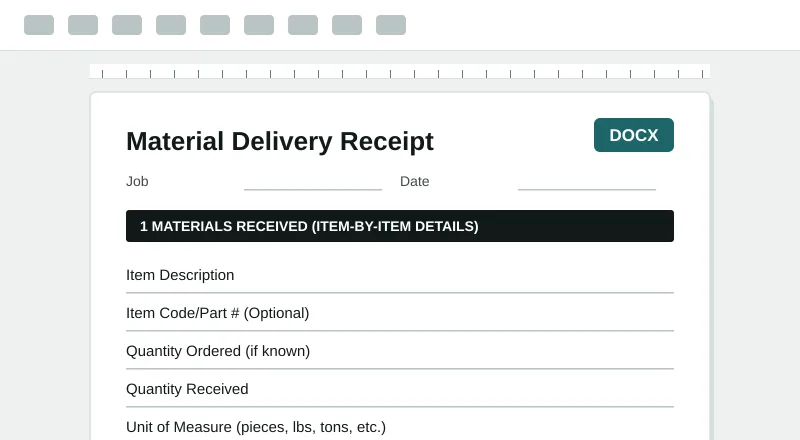
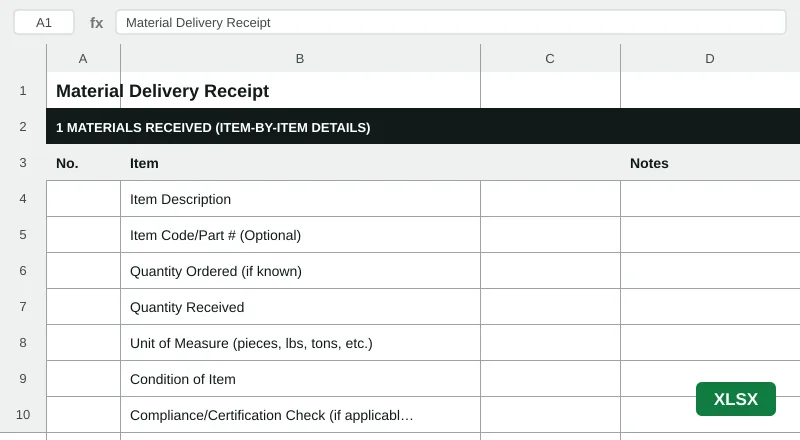
Download the material delivery receipt template free as a PDF, Word or Excel file, no sign-up needed. Or run it as a digital form in Workyard's forms and workflows: the receiver fills it in on a phone at the tailgate, adds photos, gets the driver to sign on screen, and the receipt is filed to the job in the office for whoever checks the invoice.


