

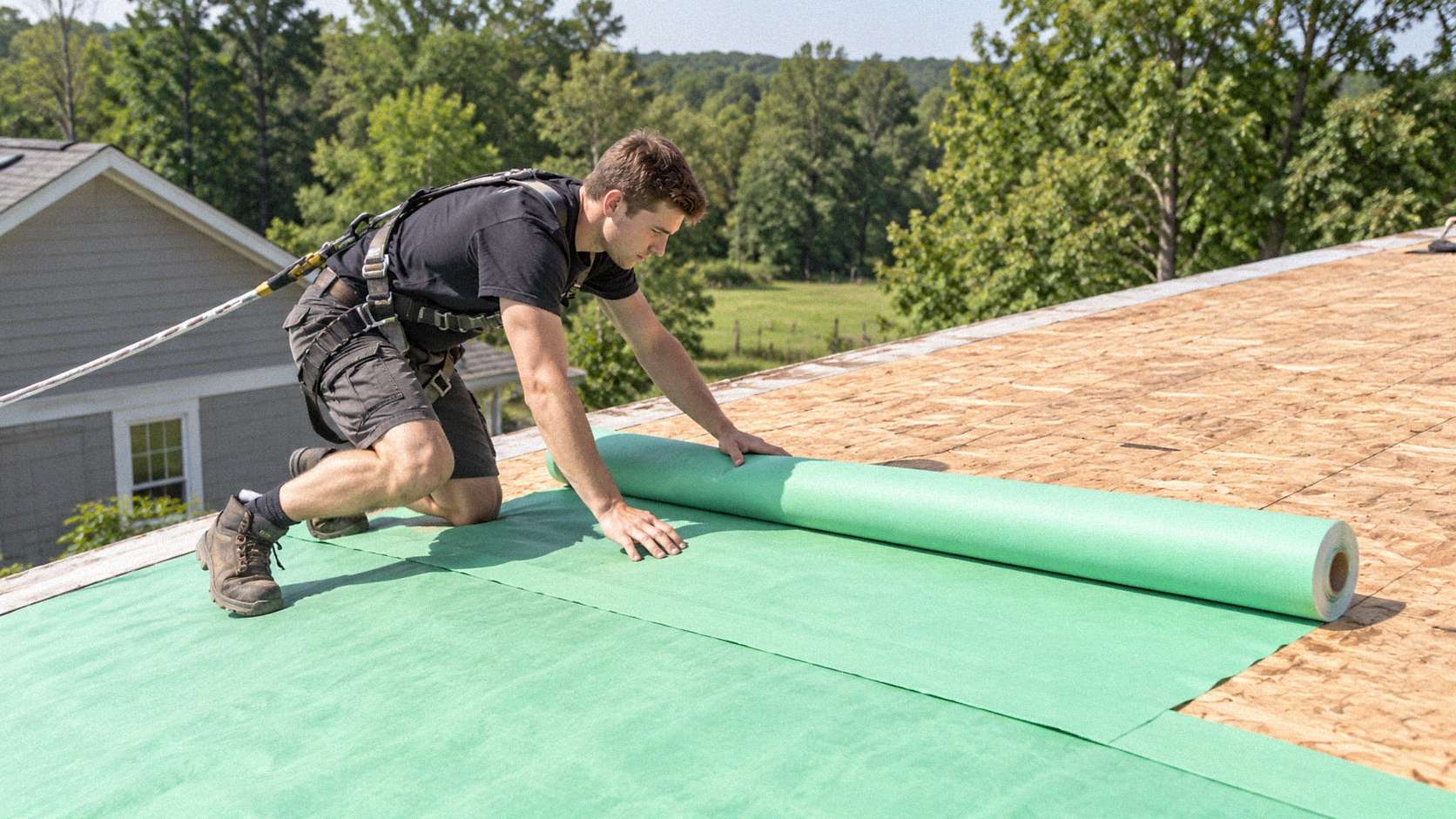

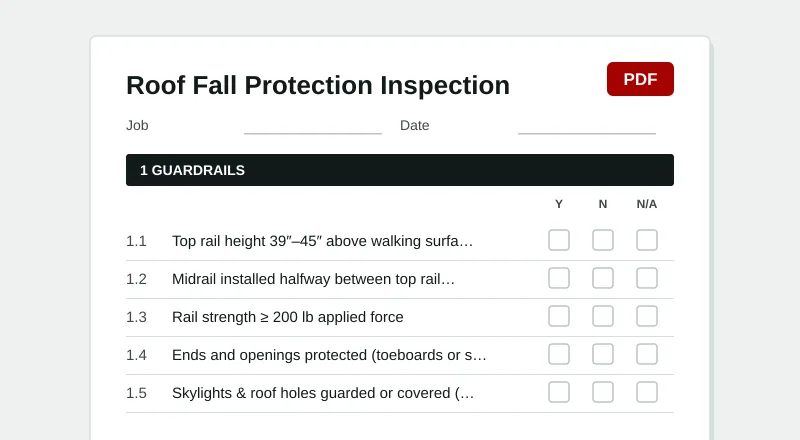
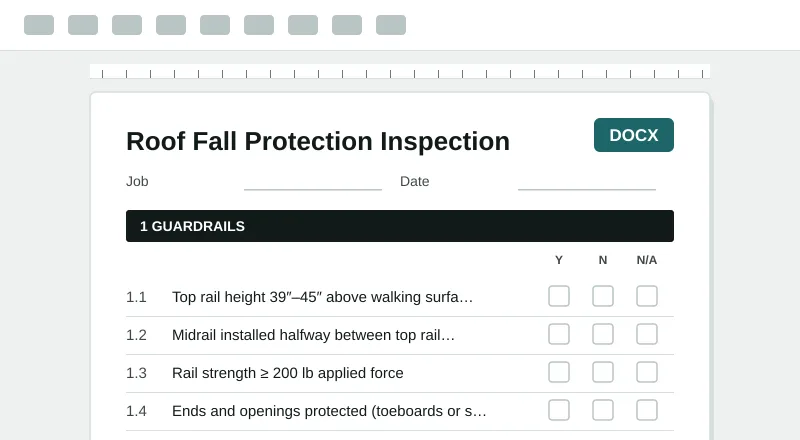
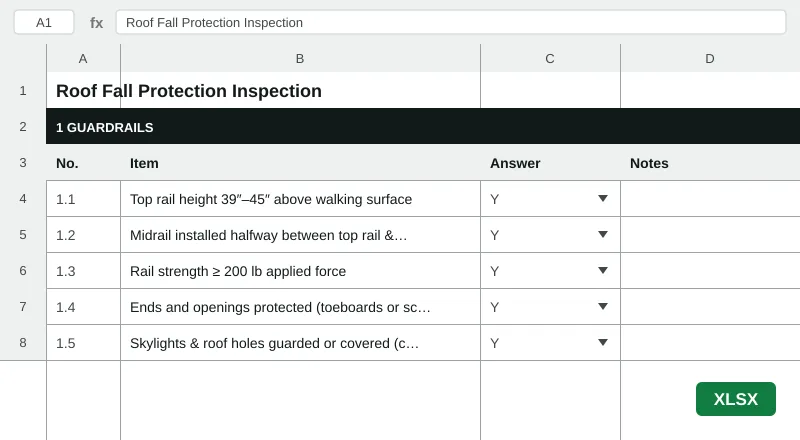
A roof fall protection inspection checks every system that keeps a crew from falling off a roof, before anyone goes up: guardrails, anchors, harnesses and lanyards, warning lines and the rescue plan. Roofing, solar and general contractors use it at the start of rooftop work, and property managers use it before maintenance crews go up.
Assessing roof fall protection before work starts
The inspection starts as a roof fall protection risk assessment. The project details record the roof type and pitch and the weather (clear, windy, rain or snow), because those two facts decide which systems you need and how far you can trust them.
- Low-slope roofs usually rely on guardrails or a warning line system, with personal fall arrest, a safety net or a safety monitor for anyone working between the line and the edge.
- Steep roofs usually rely on personal fall arrest tied to rated anchors.
- Openings and skylights need guards or covers on any roof, at any pitch.
- Wind, rain and snow change footing and can make a warning line or cover unreliable, so note them and decide whether work goes ahead.
Your written roofing fall protection plan should say which systems the crew will use on this roof. The inspection confirms they're actually there and in good shape.
What the inspector checks in each system
Each line is answered Yes, No or N/A, with notes and photos. The values come from the form, which takes its lead from OSHA 29 CFR 1926.501 to 503, ANSI/ASSP A10.32-2023 and ANSI/ASSP Z359.1. Check the current rule for your work.
| System | Key checks on the form |
|---|---|
| Guardrails | Top rail 39 to 45 inches above the walking surface, midrail halfway, rail strength of at least 200 lb, ends and openings protected, skylights and holes guarded or covered and marked |
| Anchorage points | Rated at least 5,000 lb per worker or designed by a qualified person with a safety factor of 2, spaced per plan, installed into structure, pull-test records on file |
| Personal fall arrest | Harness, lanyard and lifeline inspected, shock absorber within service life, free fall of 6 feet or less, enough clearance below to avoid striking a lower level |
| Warning line (low slope) | At least 6 feet from the edge (10 feet perpendicular to mechanical equipment travel), 34 to 39 inches high, flagged every 6 feet or less, continuous around the work area |
| Final verification | Harness fit checked on each user, anchors pull-tested that day, system photographed, every No logged |
The rescue plan
A harness only stops a fall; somebody still has to get the worker down. The rescue section checks that written rescue procedures are on site, the crew is trained in them and in the equipment, backup rescue gear such as a tripod, ladder or self-retracting lifeline with retrieval is on hand, and emergency contacts and the site location are posted near the roof access.
Talk through the rescue before work, not after a fall. Who goes up, with what, and how long will it take?
Deficiency log and sign-off
Every No answer goes in the deficiency log with its section, the issue, the action required, the responsible party, a due date and whether it's closed. Three people sign: the inspector, the safety supervisor or foreman, and the project manager or owner's rep.
Download the roof fall protection inspection free as a PDF, Word or Excel file, no sign-up needed. To run it on phones, use Workyard's safety tools: the inspector fills it in on the roof, adds photos and signs on screen, a No answer goes to the person you name, and each inspection is filed to the job in the office. Plan the task with the roofing work JHA, and check each harness with the fall arrest harness inspection form.


