



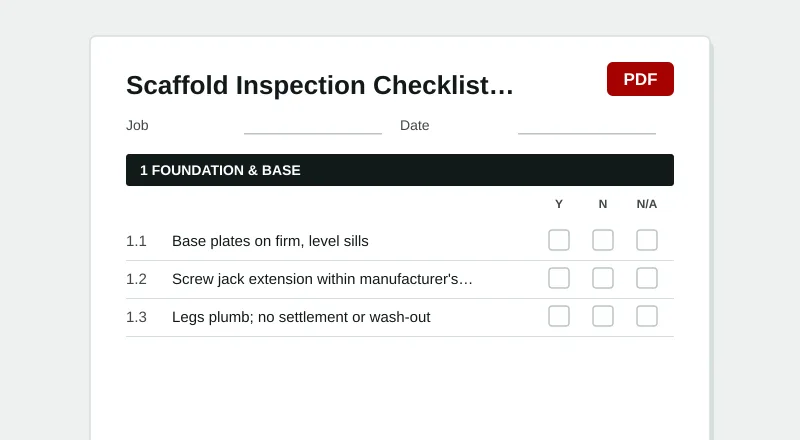
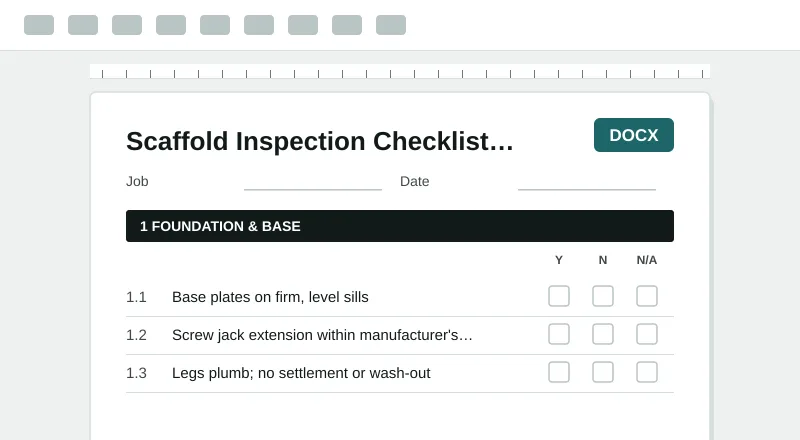
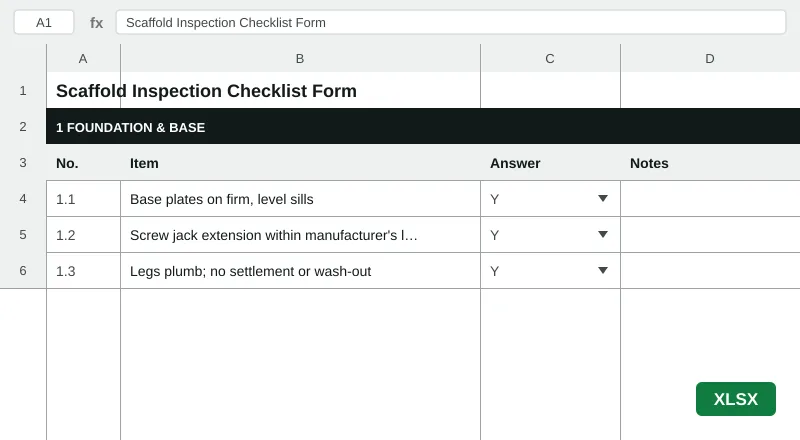
A scaffold inspection checklist is the check made on a scaffold before a crew works on it: the base, the frame and bracing, the planks, the guardrails, the access and the area around it. Masonry, roofing, siding and general contractors use it on frame, system, tube-and-coupler, rolling and suspended scaffolds, and the inspector and competent person sign it before anyone climbs.
What goes on the OSHA scaffold inspection checklist
The form follows OSHA's scaffold rules, 29 CFR 1926 Subpart L, and ANSI/ASSP A10.8. Each line is answered Yes, No or N/A, with notes and a photo upload per section. The figures below come from the form; confirm the current rule and the manufacturer's instructions for your scaffold.
| Section | Key checks |
|---|---|
| Scaffold details | Location or ID, scaffold type, work level in feet, weather |
| Foundation and base | Base plates on firm, level sills, screw jacks within the manufacturer's limit, legs plumb with no settling or washout |
| Structure and bracing | Frames undamaged and locked, cross-braces in, ties where height exceeds four times the base width, couplers tight and pins engaged, casters locked and outriggers set on rolling scaffolds |
| Platforms and planking | Fully decked with no gaps over 1 inch, planks grade-stamped and crack-free, overhang 6 to 12 inches and secured, load within capacity |
| Guardrails and fall protection | Top rail 38 to 45 inches, midrail and toeboard, open ends closed, tie-off on suspended scaffolds, nothing missing or bent |
| Access and egress | Ladder or stair provided and secured, ladder 3 feet above the landing, hatches guarded and self-closing |
| Environment and housekeeping | Platforms clear of debris, distance from overhead power lines, no work in storms or high winds without approval and protection |
Before each shift, and after weather or impact
The form is written to be completed before each shift and again after anything that could have changed the scaffold: a storm, high wind, a hit from equipment or a delivery, or a modification by another trade. A daily scaffold inspection checklist only works if it describes the scaffold as it stands that morning. Yesterday's sign-off doesn't cover last night's rain washing out a sill.
In service or out of service
The disposition is simple: every line Yes or N/A means the scaffold is in service. Any No puts it out of service until it's corrected and re-inspected. Each No goes in the deficiency log with the item, action required, responsible party, target date, whether it's closed and notes.
The form isn't a scaffold inspection tag template, but its disposition maps onto whatever tag system your site uses. Update the tag at the access point to match the form, so the crew at the bottom of the ladder sees the same answer the office does.
How to fill out the form
- Record the scaffold ID, type, working height and weather.
- Start at the ground and work up: base, structure, platforms, guardrails, then access.
- Photograph anything marked No, and anything you want on record, such as ties or the sill under a leg on soft ground.
- Choose the disposition and update the tag.
- Collect signatures from the inspector, the competent person and the site supervisor.
Download the scaffold inspection checklist free as a PDF, Word or Excel file, no sign-up needed. To run it on phones, use Workyard's inspection app: the inspector fills it in at clock-in, adds photos and signs on screen, a No goes to the person you name, and every inspection is filed to the job in the office. Check harnesses for suspended scaffolds with the fall arrest harness inspection form, and find more site checks under site inspections.


