Skip to content
Log InBook a demo
Book a demo
Free template · paper and digital

Septic Tank Inspection Checklist

Records the tank, drainfield and pump condition of a septic system, ending with an assessment and the repairs you recommend.

WordExcel
  • No email
  • No sign-up
  • Edit it, add your logo

45 checks · 7 sections · Updated Nov 2026

See every check

The template

The full Septic Tank Inspection Checklist

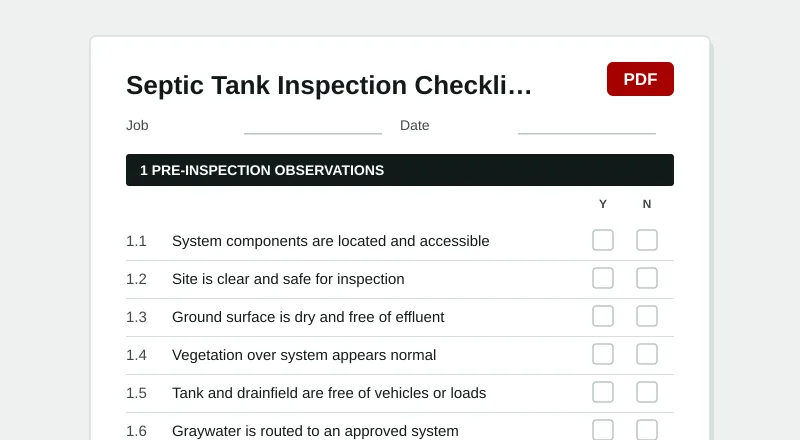
Print it for the clipboard, or put it on your crew’s phones. Same 45 checks either way.

Your logo

Septic Tank Inspection Checklist

A septic tank inspection checklist is a structured form used to evaluate the condition of septic systems during routine service or property inspections. It helps field service teams and property managers document tank levels, baffles, filters, pipe connections, and drain fields to catch early signs of failure, ensure compliance with local codes, and prevent costly backups or repairs.

Job
Date
System TypeConventional Septic (Tank & Drainfield)Aerobic Treatment UnitCesspool/Seepage PitOther
Year Installed (System Age)
Septic Tank Capacity (gallons)
Last Tank Pump-Out Date
Recent Maintenance or Repairs
Operating Permit Present (if required locally)YesNo

1 · Pre-Inspection Observations

1 · Pre-Inspection ObservationsYN
1.1System components are located and accessible
1.2Site is clear and safe for inspection
1.3Ground surface is dry and free of effluent
1.4Vegetation over system appears normal
1.5Tank and drainfield are free of vehicles or loads
1.6Graywater is routed to an approved system
1.7Inspection done from outside the tank (no entry); open lids attended and resecured

2 · Septic Tank Inspection

2 · Septic Tank InspectionYN
2.1Tank location is clearly identified
2.2Tank is accessible for inspection and pumping
2.3Access risers and lids are secure and watertight
2.4Tank appears structurally sound (no signs of cracks or damage)
2.5Liquid level is at normal operating height
2.6Scum layer is within acceptable limits
2.7Sludge level is within acceptable limits
2.8Baffles or tees are present and in good condition
2.9Inlet and outlet pipes are unobstructed and properly connected
2.10Effluent filter (if present) is clean and in place
2.11Tank is free of visible roots or debris
2.12Tank area is free of strong odors or visible backups
2.13Tank area shows no visible signs of leakage
2.14Pump-out performed during this visit
Sludge Depth (in)
Scum Thickness (in)
Liquid Depth (in)
Volume Pumped (gallons)

Photo Documentation - Septic Tank · photo refs

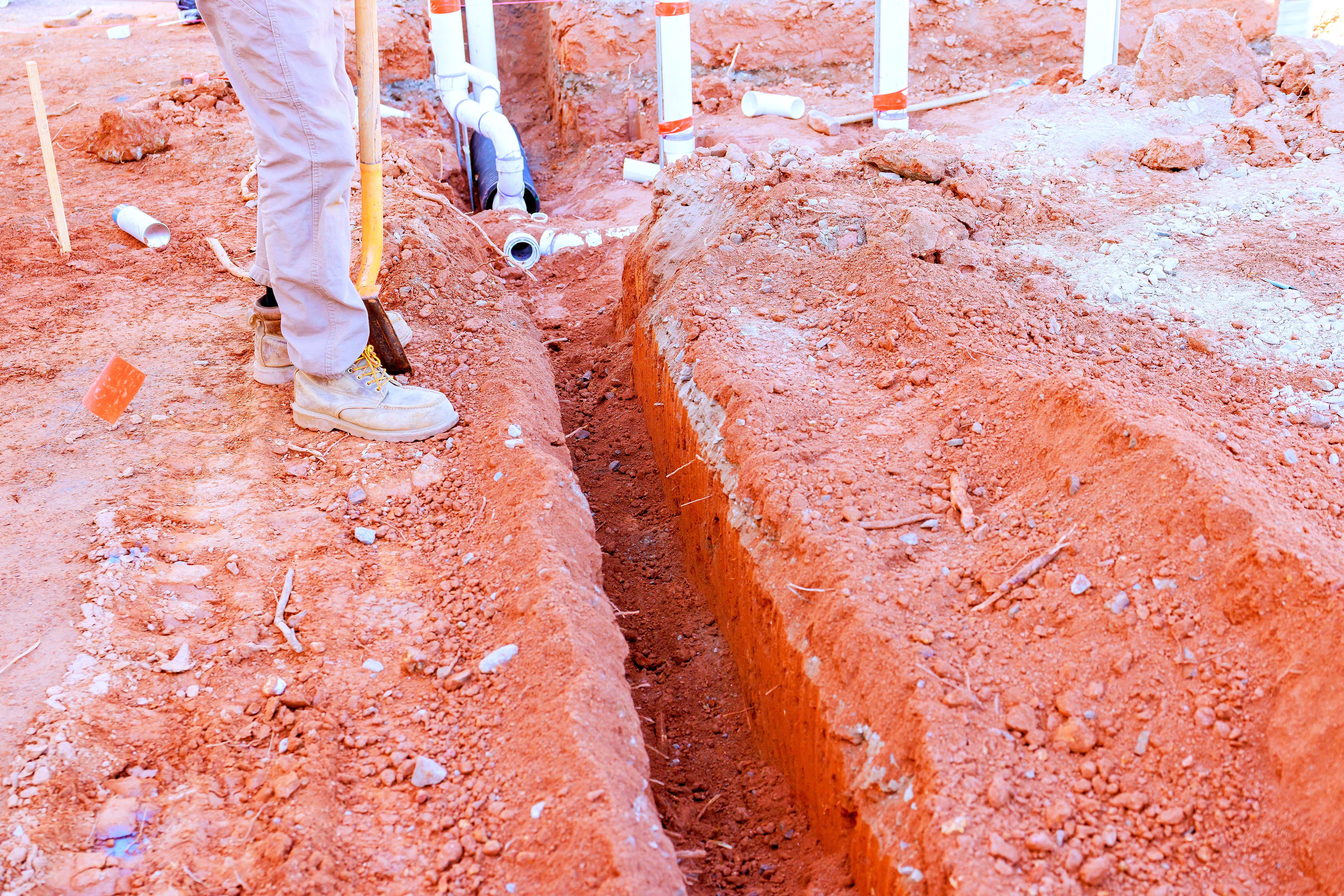
3 · Drainfield Inspection

Drainfield TypeTrench/Leach FieldBedMoundChamberSeepage PitOther

Is the drainfield area functioning properly and free from issues?

Is the drainfield area functioning properly and free from issues?YN
3.1Distribution box is located
3.2Distribution box was opened and inspected
3.3Distribution box is in good condition
3.4Flow from distribution box to drain lines is even
3.5Drainfield area is free from surfacing effluent or ponding
3.6Soil over the drainfield is stable and not overly saturated
3.7Vegetation over drainfield is healthy and appropriate
3.8Drainfield area is free of strong sewage odors
3.9Drainfield is clear of visible roots, shrubs, or tree encroachment
Distance to Nearest Water Well (ft)
Distance to Surface Water / Stream (ft)
Drainfield Overall ConditionGood – no issuesSuspected failing

Photo Documentation - Drainfield · photo refs
4 · Additional System Components

Pump or Lift Station PresentYesNo

If yes, are the following pump system components in working condition?

If yes, are the following pump system components in working condition?YN
4.1Alarm tested and functioning properly
4.2Float switches positioned and operating correctly
4.3Pump activates at appropriate levels
4.4Control panel shows no warning lights or faults
4.5Electrical connections appear secure and protected from moisture
4.6Pump chamber is clean and free of debris
4.7Pump cycle observed during inspection
4.8Backup power source tested or verified (if applicable)
4.9Visible signs of wear, corrosion, or leakage absent

Photo Documentation - Pump or Lift Station · photo refs

Aerobic Treatment Unit (ATU) PresentYesNo

If yes, are the following ATU components operating correctly?

If yes, are the following ATU components operating correctly?YN
4.10Aerator running and noise level normal
4.11Alarm tested and functioning correctly
4.12Timer or control system settings verified
4.13Chlorine or disinfection unit checked
4.14Effluent appears properly treated
4.15Access ports and lids secured and undamaged

Photo Documentation - Aerobic Treatment Unit (ATU) · photo refs

5 · Final Assessment & Recommendations

Overall System ConditionSatisfactoryNeeds MaintenanceFailing
Specific Deficiencies Noted
Recommended Actions
Compliance CheckYesNo
Next Inspection Due
Additional Comments

6 · Job & Site Details

Inspection Date & Time
Inspector Name
Property Address / Location
Property TypeResidentialCommercialIndustrialOther
Occupancy / Usage Level
Weather ConditionsClearRainWet groundSnowOther

7 · Signatures & Timestamp

Name
Signature
Date
Inspector Name (Print)
Date & Time Signed
Name
Signature
Date
Client Name (Print)

Free download

Septic Tank Inspection Checklist template: PDF, Word and Excel

Print the form as it is, or download a template you can edit. Every format is free, with no email and no sign-up.

How to use it

How to run the Septic Tank Inspection Checklist

  1. 01

    Run it before the work is covered

    Walk it before the next trade closes things up or the area is handed over, and again after any fix. Fill in the header first so the record stands on its own.

  2. 02

    Work the sections in order

    Go through the 7 sections in order so nothing gets skipped. Answer every check: a blank isn’t an answer.

  3. 03

    Every miss gets a photo and an owner

    Write down what’s wrong, take a photo and name the trade that owns the fix, with a date.

  4. 04

    Re-check, sign, then release

    Walk the misses again once they’re fixed. Sign it off, and only then let the area close.

Why we built this

An inspection only counts if it’s written down

A miss found before the work is covered up is a quick fix. Found after, it’s a tear-out, a failed inspection and a schedule hit. The written record is how you prove the check happened.

  • Built for the field. Every check is written the way crews talk, with room for notes, photos and a signature.
  • Free, with no catch. No email, no account. Print it and hand it out.
  • On paper or on the phone. The same form runs on the Workyard app, filed to the job when it’s sent.

3,000+contractors run their crews on Workyard

Meet Workyard

Who we are

Workyard is the construction operations platform for specialty contractors and self-performing general contractors determined to grow without sacrificing job control or margins.

Forms like this one are what our customers’ crews fill in on Workyard every day, on the same app they clock in with.

workers on Workyard every day
100,000+
free templates, none of them gated
182

Forms & Workflows

Get every form back from every crew, every day

  • It shows up on its own. Attach it to a task, a job or clock-out, and it’s on the crew’s phone when it’s due.
  • It can’t be skipped. Make it required and the day can’t close until it’s in.
  • You see it the same day. Filed, flagged or missing, every job on one board, before anyone has to call.

$123,000cut from insurance costs at TR3 Group

More site inspections templates

Free templates for the rest of the job

Browse all templates

Questions

Septic Tank Inspection Checklist FAQs

How do inspectors do a septic tank inspection?

Inspectors locate the tank, uncover the lid, and check liquid and sludge levels using a probe or sludge judge. They examine inlet/outlet baffles, assess for cracks or leaks, and inspect the drain field for pooling or odors. Some use dye tests or cameras to trace flow and confirm functionality.

What causes a septic inspection to fail?

Common reasons include high sludge levels, broken baffles, leaks, blocked filters, or drain field failure. Surface pooling, foul odors, or evidence of system overload can also trigger a fail. Poor maintenance—like skipping pumping—often leads to problems that result in failed inspections and costly repairs.

How much does a septic inspection cost?

Most inspections cost between $100 and $600. Basic visual checks fall on the lower end, while detailed inspections involving pumping or advanced tools are pricier. Location and state rules also affect pricing, especially if the inspection is for property sale or required by local health codes.

What does a septic tank inspection cover?

A full inspection checks tank accessibility, lid condition, sludge/scum depth, baffles, filters, and drain field status. Inspectors also look for cracks, corrosion, or wastewater surfacing. Many also include system flow checks and maintenance history. The goal is to assess function, safety, and regulatory alignment.

Do I need a Workyard account to use it?

No. Print the paper form, save it as a PDF, or download the Word or Excel file, free, with no email and no sign-up. You only need an account to put the digital form on your crew’s phones.

Can I edit the template?

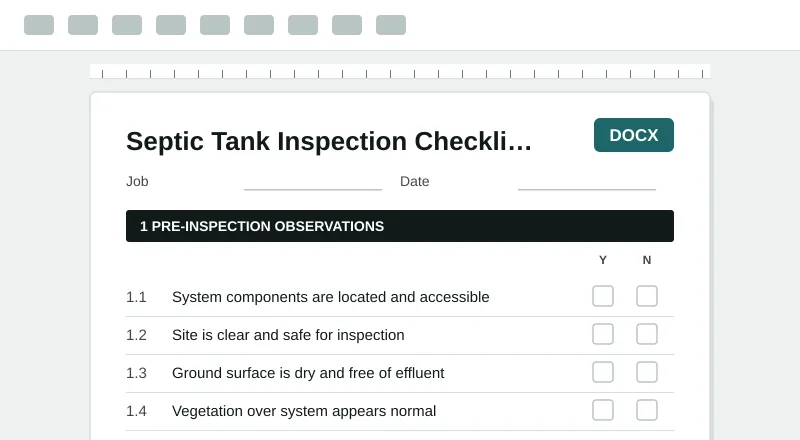
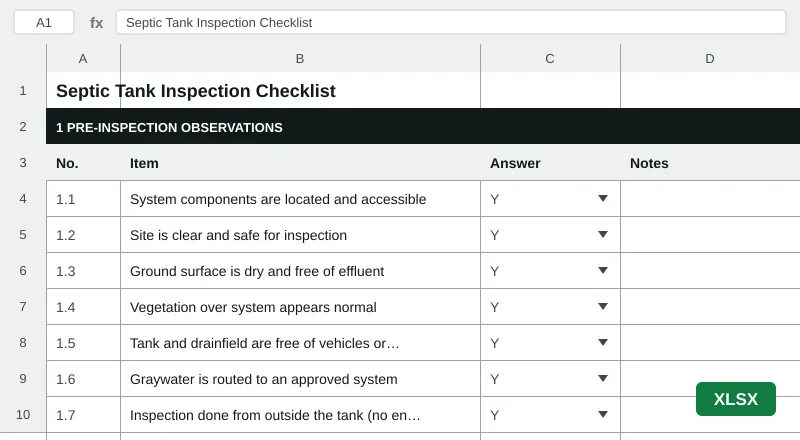
Yes. Download the Word or Excel version to add your logo, add checks from your project spec or remove sections you don’t need. They open in Google Docs and Google Sheets too.

How do I get my crew to fill it in on their phones?

Add the digital form to Workyard and attach it to the job or the task it belongs to. It shows up in the app your crew already clocks in with, and every form comes back signed, with its photos, filed to the job.

Trigger the form at the right moment

A job's Forms tab in Workyard: each form, the clock-in or clock-out that triggers it, and how many have been submitted
A van check filled in on the Workyard app: the damage photo, a description and the tech's signature, ready to submit

Book a demo with a Workyard specialist

Your local Workyard specialist

Works with 50 contractors across the US

Your details

30 min · Video call