


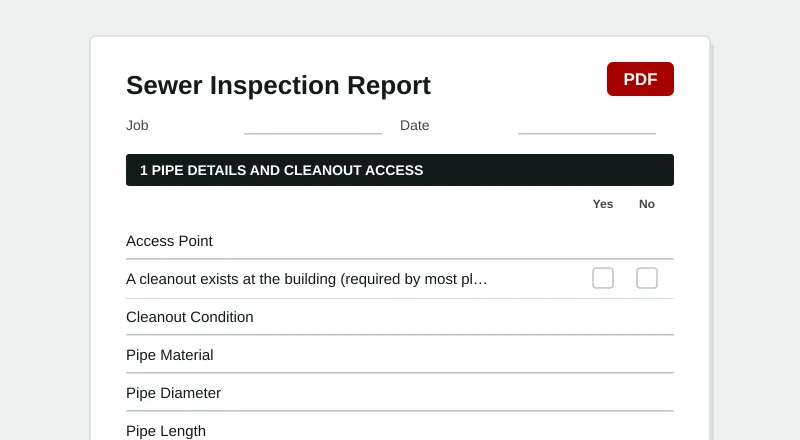
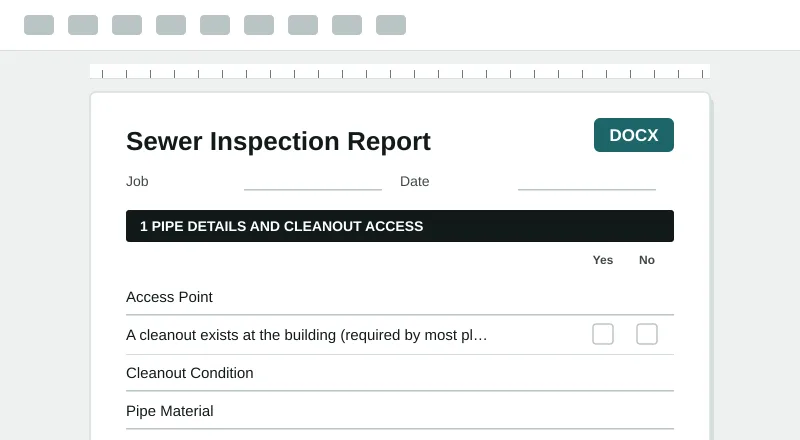
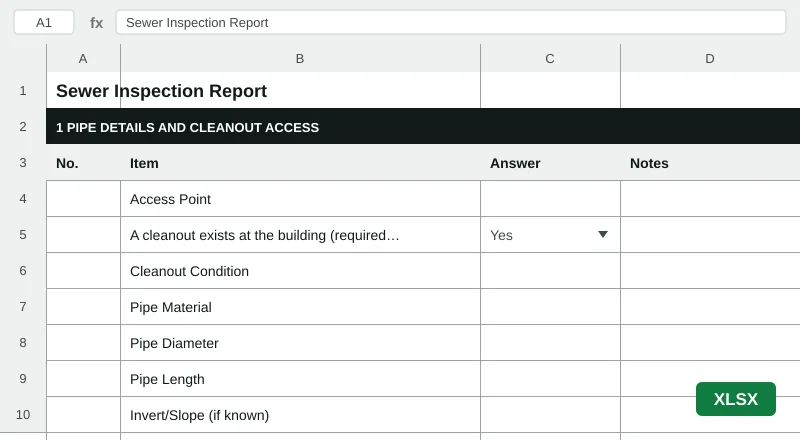
A sewer inspection report template gives a plumber or inspector one place to record a camera run down a sewer lateral: where the camera went in, what the pipe is made of, every defect found and how far along the line it sits, and whether the line passes. Plumbing contractors use it for homebuyer inspections, before and after repairs, and when a property owner calls about slow drains or backups.
What goes in a sewer camera inspection report
A sewer camera inspection report is only as useful as its locations. The person digging next month needs to know what is wrong and exactly where. This template has five sections that build up to that.
| Section | What you record |
|---|---|
| Property and job information | Address, inspector and company, date, entry point and scope, GPS coordinates, others on site, weather and site conditions |
| Pipe details and cleanout access | Access point (building cleanout, yard cleanout, manhole or roof vent), whether a building cleanout exists and is accessible, its condition, pipe material, diameter, length, slope if known, last cleaning date |
| Safety, access and environmental controls | Excavation and its depth and protective systems, confined space permit, atmospheric test result, ventilation, PPE used, traffic control, photos or video |
| Inspection findings (defect log) | One row per defect: timestamp or footage, distance from entry, defect type and severity, with video or photo evidence and a summary |
| Summary, compliance and signature | Pass or fail against plumbing code or local requirements, any violations noted, environmental or health risk, recommendations, inspector signature and date |
Pipe material is a multi-select because many older laterals change partway: clay from the street, cast iron under the slab, a PVC section where someone made a repair. Record each one you see.
Writing up the defect log in a sewer inspection report template
Each row in the defect log should let someone find the problem without watching the whole video. Put the footage reading from the camera counter and the distance from your entry point side by side, then name the defect in plain trade words: root intrusion, offset joint, belly holding water, crack, broken or collapsed section, grease buildup. Give a severity the owner can act on.
- Note the entry point precisely. "Front yard cleanout, 4 ft from the foundation" means more than "cleanout".
- Write down sections you couldn't see and why: standing water, a blockage the camera couldn't pass, a line that turns too sharply.
- Locate major defects from above ground and mark the spot, then add the GPS reading or a measurement from a fixed point.
- Keep the video. Attach the clips that back up each serious finding.
Safety before the camera goes in
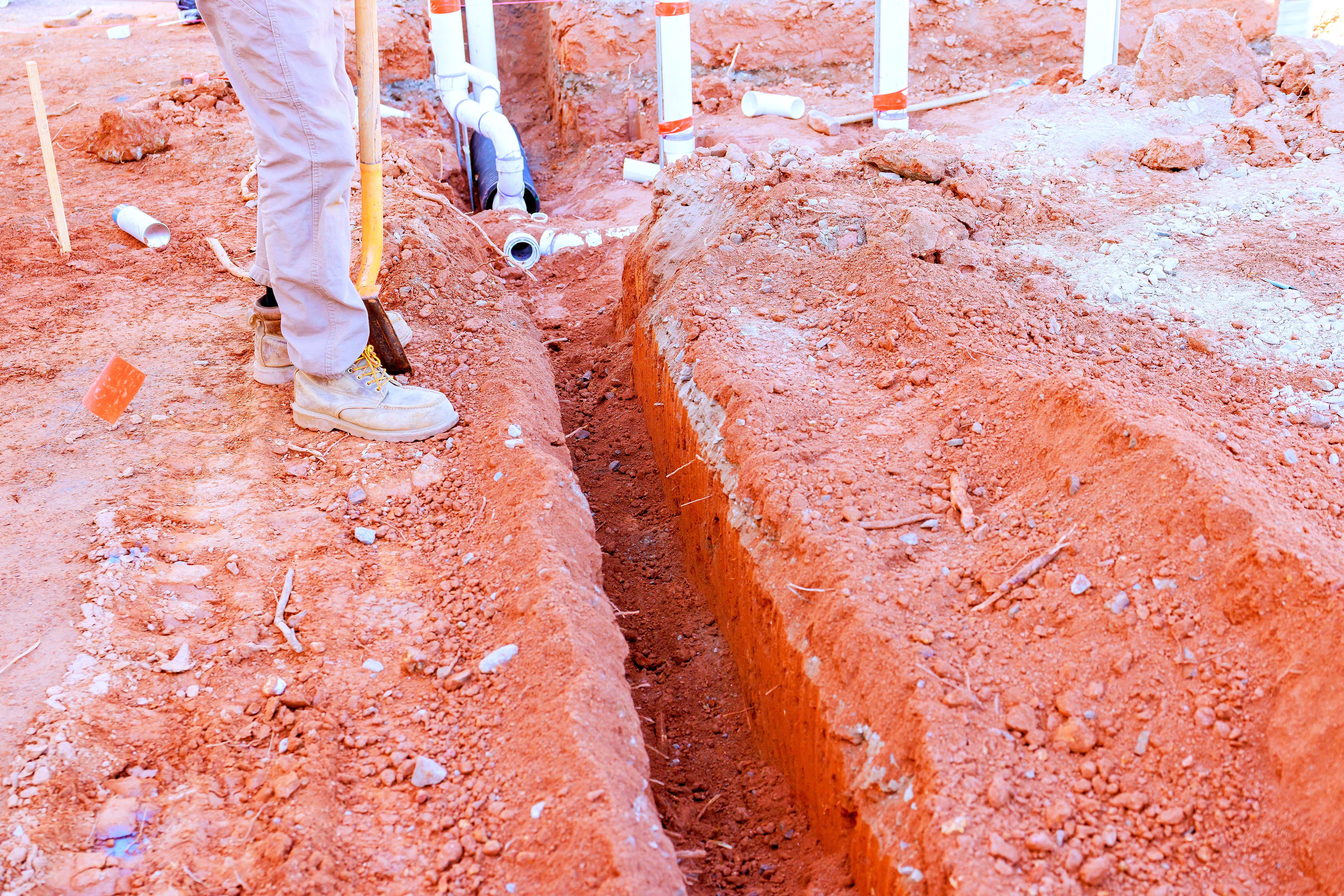
Most lateral inspections run from a cleanout and need nothing special. The safety section is there for the jobs that do: an excavation to reach the line, entry into a manhole or vault, or work in the street. Record the trench depth and protective system, whether a confined space permit was needed, the atmospheric test result and ventilation, and the PPE used. If the job needs a confined space entry, run the confined space entry checklist alongside this report, and follow OSHA's rules and your local code for both.
A sewer line inspection report on a phone
Paper sewer line inspection reports tend to get written up in the truck from memory. Filling it in on a phone at the cleanout keeps footage readings and photos tied to the right defect. In Workyard, the report is a digital form your crew completes on the job, with photos and the inspector's signature on screen. A failed line can be flagged to a named person, and every report is filed to the job in the office, ready to export as PDF. See forms and workflows in Workyard, or how it fits plumbing contractors. Or download the free template as a PDF, Word or Excel file. For other below-ground work, see the underground utilities templates.


