


A trailer inspection checklist is the check a driver runs on a trailer before it leaves the yard: the hitch or coupling, lights, brakes, tires and the gear it carries. Contractors haul equipment and materials on everything from a bumper-pull utility trailer to a lowboy, and the driver hooking up is usually the one who fills in the trailer inspection form.
What a trailer inspection checklist covers
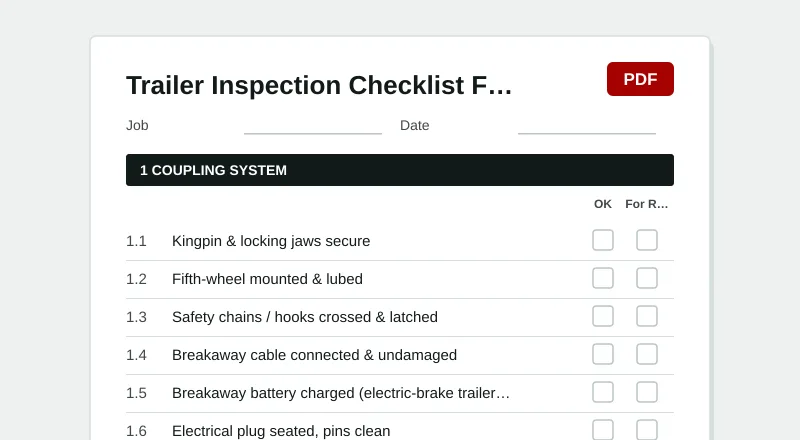
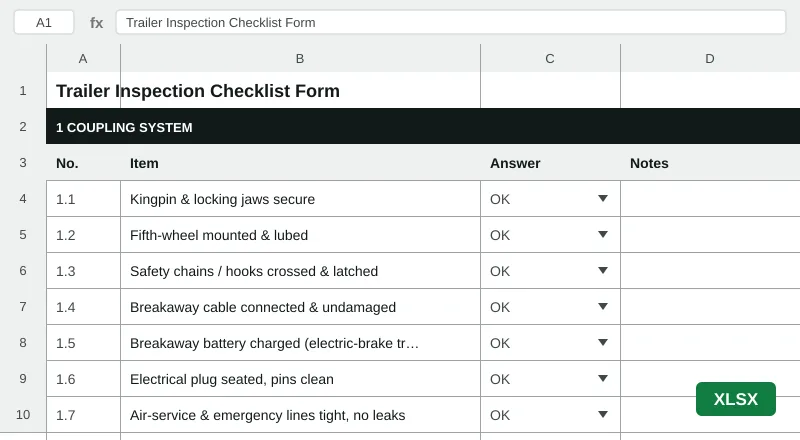
Each line is marked OK or REPAIR with a notes column, and each section has a photo upload.
| Section | What the driver checks |
|---|---|
| Trailer details | Driver, tractor or power unit ID, trailer ID or last six of the VIN, location, odometer or hub miles, weather |
| Coupling system | Kingpin and locking jaws, fifth wheel, safety chains crossed and latched, breakaway cable and battery, electrical plug, air lines, landing gear |
| Lights and electrical | Tail and running lights, brake lamps and flashers, turn signals, clearance and marker lights, plate light and reflectors, ABS lamp |
| Brakes and chassis | Air pressure, service and parking brakes, chambers and hoses, brake adjustment, suspension, frame, annual inspection decal |
| Tires and wheels | Tread depth, inflation, sidewalls, lug nuts, hub seals, spare |
| Emergency and cargo gear | Fire extinguisher, reflective triangles, spare fuses, straps and chains, tarps and locks, hazmat placards |
| Final assessment and sign-off | In service or tagged out, work order number, and signatures from the driver, maintenance tech and safety supervisor |
Trailer inspection requirements
The form's notes point to FMCSA rules: 49 CFR 396.13 for the driver's inspection before driving, 49 CFR 396.11 for driver vehicle inspection reports, and 49 CFR 396.17 for the annual inspection the decal line asks about. Whether those rules apply to a given rig depends on the vehicle's weight, its use and whether it's operating in interstate commerce, and many states have their own rules on top. Check the current federal rule and your state's before deciding a trailer is exempt.
Even where no rule requires it, a written check before each trip is cheap insurance. A missed safety chain or a dead breakaway battery on a loaded equipment trailer is a road problem, not a yard problem.
Using it as a utility trailer inspection checklist
The form covers both semi trailers and smaller bumper-pull or gooseneck trailers. On a utility trailer, mark the semi-only lines N/A (kingpin, fifth wheel, air lines, landing gear) and pay closest attention to:
- Coupler latched and pinned, safety chains crossed under the tongue and hooked
- Breakaway cable attached to the tow vehicle, not the chains, and the breakaway battery charged on electric-brake trailers
- Plug seated and every light working, checked with a second person or a walk-around
- Tire inflation, lug nuts and hub seals
- Straps and chains on the load, and the ramp or gate secured
How often to inspect a trailer, and keeping the log
The form is written to be completed before every shift, and any REPAIR item puts the trailer out of service until it's fixed and re-inspected. The final assessment records the disposition: all OK means in service; any REPAIR means tagged out, with a work order number. The maintenance tech signs the return to service, and the safety supervisor signs off.
Filed by trailer ID, the forms become the trailer's log: who pulled it, how many miles, and which defects keep returning.
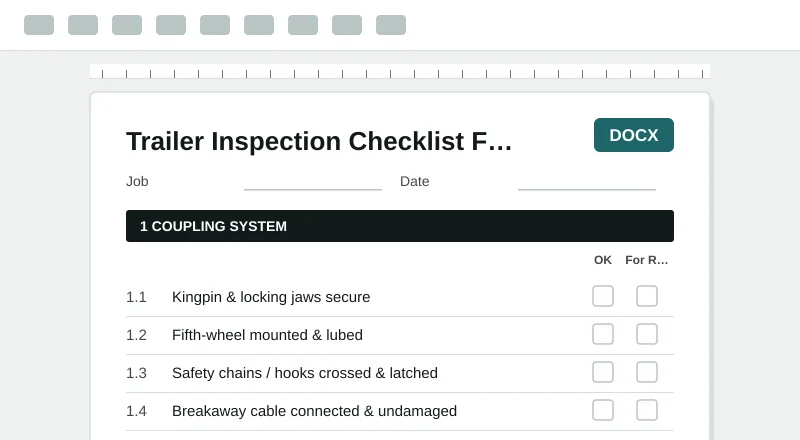
Download the trailer inspection checklist free as a PDF, Word or Excel file, no sign-up needed. To run it on drivers' phones, use Workyard's vehicle inspection app: drivers fill in the form when they clock in, photograph defects and sign on screen, a REPAIR answer goes to the person you name, and every inspection is filed back in the office. For the truck itself, use the driver vehicle inspection report, and see all DVIR and vehicle inspection forms.


