


A boiler inspection checklist walks a technician through the safety devices, burner, water side and boiler room of a steam or hot water boiler, and records what was tested, what passed and what needs work. HVAC and mechanical contractors, building engineers and property maintenance teams use it on routine service visits and to get a boiler ready for its certificate inspection.
What the boiler inspection form covers
The boiler inspection form opens with the basics: site, boiler ID or serial number, steam or hot water, fuel (natural gas, fuel oil or electric), operating or shut down, current pressure and temperature, whether the inspection certificate is valid, the last internal inspection date and when the next one is due. Then come four sections.
| Section | What you check |
|---|---|
| Safety devices and controls | Safety relief valve, low water cutoff, operating control setpoint and cycling, high limit cutout, gauges, fuel shutoff valves, emergency shutoff, alarms, interlocks |
| Combustion system | Flame color and stability, soot or smoke, ignition, pilot, igniters and flame sensor, combustion air, flue and stack, gas odor, oil pressure, a recorded combustion analysis, CO alarm in the boiler room |
| Water system and pressure components | Feed pumps and water feeders, float chamber or sensors, water column valves, make-up valve and backflow preventer, water treatment and its readings, blowdown, expansion tank (hot water), condensate receiver (steam), piping and valve leaks, bulges on the shell or heads |
| General condition and housekeeping | 18 in service clearance, nothing flammable nearby, clean floor, ventilation, lighting, supports and vibration, rust or hot spots, insulation, refractory cracks, gauges legible, signs and labels posted |
The form closes with an overall condition (excellent, good, fair or poor), a summary of action needed, photos, and the inspector's name, date and signature.
Testing the safety devices on the boiler inspection checklist
The safety devices are the part of a boiler inspection that matters most, and each one is tested, not just looked at.
- Relief valve: check the capacity stamp and certification, look for weeping at the discharge, confirm the outlet is clear and piped somewhere safe. Lift the test lever only when pressure is high enough for the valve to reseat, as the form notes.
- Low water cutoff: blow it down or simulate low water and confirm the burner shuts off. On steam boilers, the sight glass should be clean with the level visible.
- High limit: raise pressure or temperature to the trip point, or use the test switch, and confirm the burner stops.
- Fuel shutoffs: leak test gas valves with a gas detector or leak-detection fluid, check oil lines by eye, and report any leak at once.
- Emergency shutoff: confirm it cuts fuel and power immediately.
Write the actual setpoint and trip readings in the notes. "Pass" with no number tells the next technician nothing.
Steam vs hot water: what changes
Most of the checklist applies to both. On a steam boiler, pay closest attention to the sight glass, the water column valves, blowdown and the condensate receiver and pump. On a hot water boiler, the low-water sensor or flow switch, the expansion tank pressure and the make-up valve carry more of the load. Mark items that don't apply as N/A rather than leaving them blank, so a reader can tell the item was considered.
Writing up the boiler inspection report
The completed checklist is your boiler inspection report, so make the summary readable on its own: what you found, what you fixed on the visit, what still needs a part or a return trip, and anything the owner should shut down until it's repaired. Attach photos of leaks, corrosion and the combustion analysis printout. The form's intro points to the National Board Inspection Code (NBIC), OSHA and the ASME Boiler and Pressure Vessel Code; certificate inspections are set by your state or local authority, so check its current rules. For the heating side of a building, see also the heating inspection report and the HVAC and mechanical templates.
Run it in Workyard or download it free
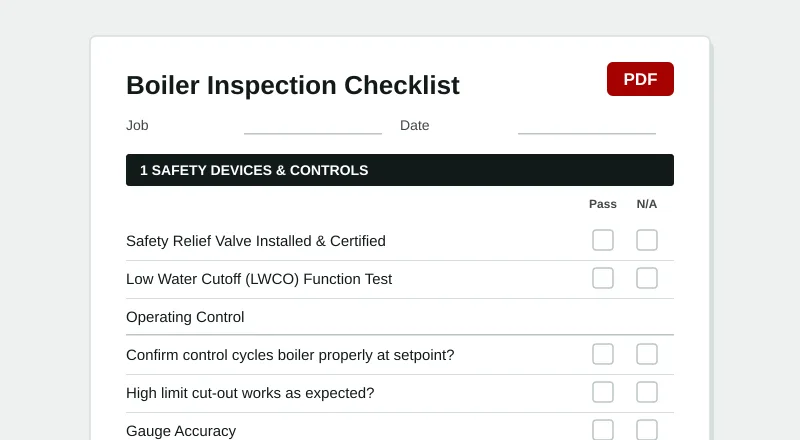
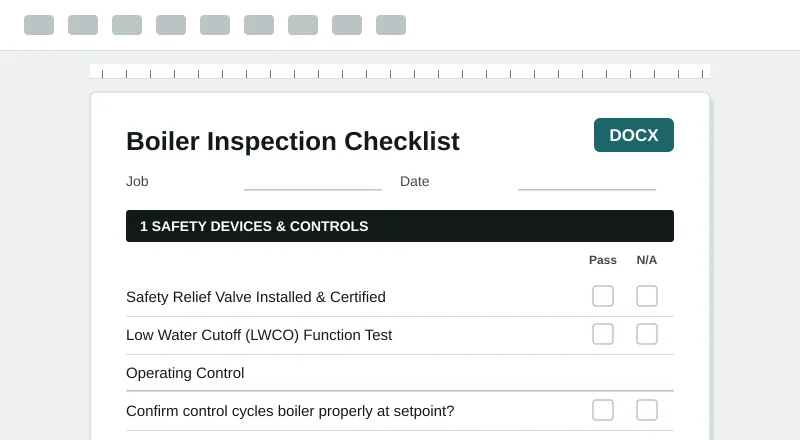
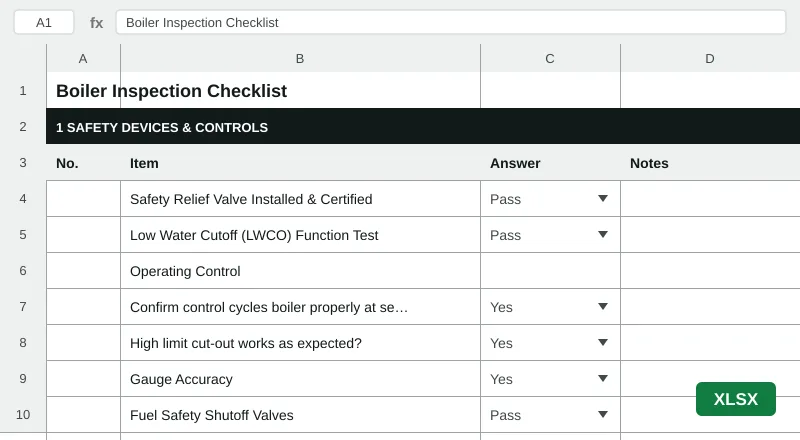
In Workyard, the boiler checklist is a digital form your technician fills in on a phone in the boiler room, with photos and a signature on screen. A failed safety device can be flagged to a named person, and every inspection is filed to the job in the office, ready to export as PDF or CSV. See forms and workflows in Workyard. Or download the free template as a PDF, Word or Excel file.


