

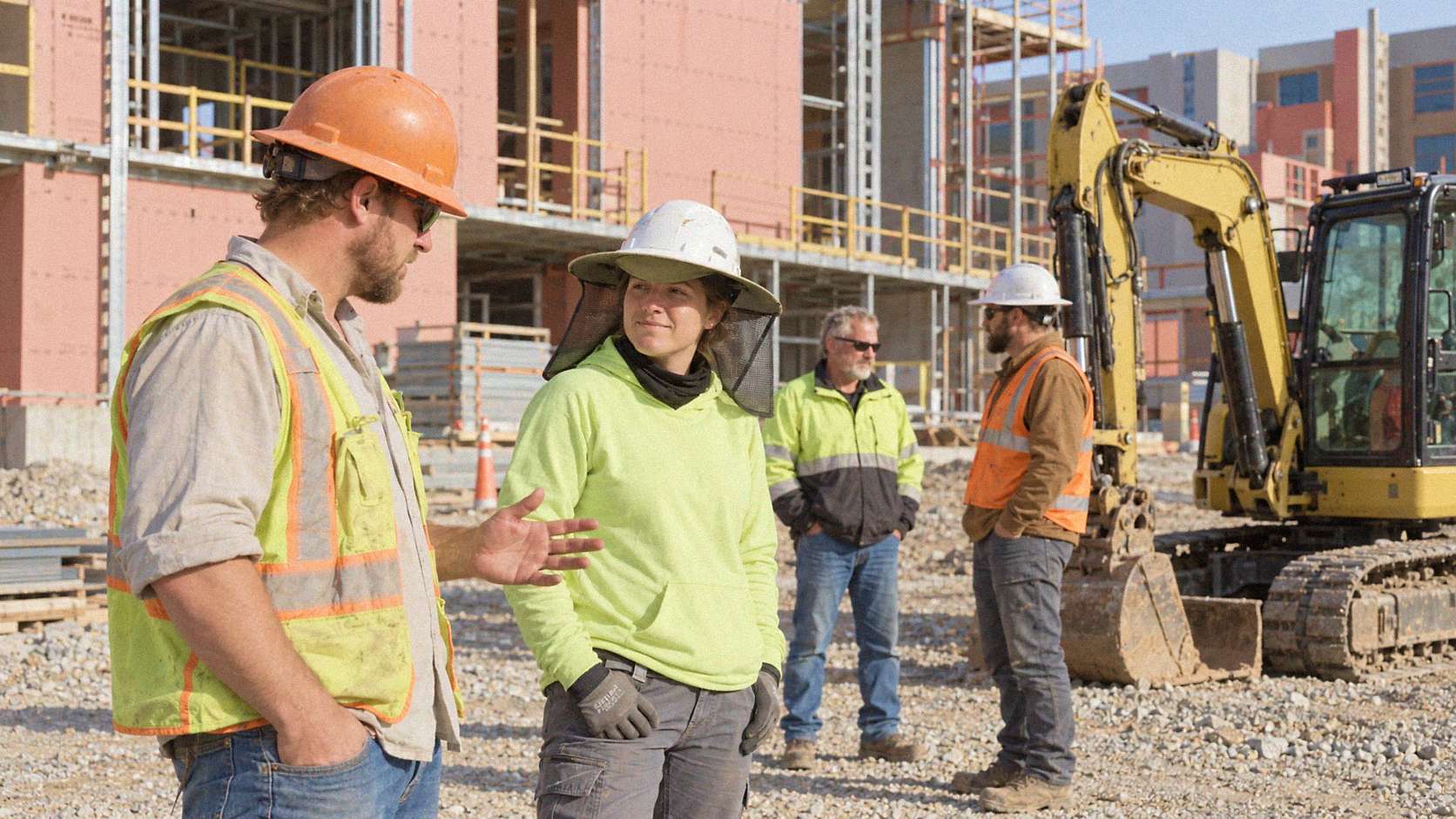

A job hazard analysis form breaks one job into its steps, names what could hurt someone at each step, and records the control that stops it, before the work begins. Foremen, superintendents and safety leads fill in a JHA form with the crew who will do the work, and everyone on the task signs it.
It's a planning document, not a report after the fact. The best time to write one is the day before the job or in the morning huddle, standing where the work will happen.
What is a JHA in construction?
A JHA in construction is a written look at a single task (setting trusses, digging a trench, changing out a rooftop unit) that finds the hazards in each step and settles how the crew will control them. You'll also see it called a job safety analysis, or JSA. The two names mean the same thing.
It isn't the same as a general risk assessment, which looks across a whole site or company, or a safety audit, which checks whether existing rules are being followed. A JHA zooms in on how one job actually gets done: the worker, the task, the tools and the conditions around them.
OSHA's guide to the method, publication 3071, Job Hazard Analysis, is where most JHA templates trace back to. Its sample form is what many people mean by an OSHA job hazard analysis template, though the booklet presents it as an example, not a required format.
Which jobs need a JHA first
You can't analyze every task on day one, so start where the risk is. OSHA's booklet ranks jobs in roughly this order:
- jobs with the highest injury or illness rates on your crews
- jobs that could cause a severe or disabling injury, even if nothing has happened yet
- jobs where one human error could seriously hurt someone
- new jobs, and jobs whose methods, equipment or crew have changed
- jobs complex enough that they need written instructions
For a contractor that usually means trenching, roofing and work at height, crane picks, hot work and electrical work first. If you see an immediate danger while reviewing a job, fix it at once. Don't wait for the paperwork.
How to fill out a job hazard analysis form
The template has three parts, and filling them in follows the four classic steps: pick the job, break it into steps, find the hazards, choose the controls.
1. Task overview
Record the job or task name, the job location, the date, the supervisor or person leading the JHA, and the crew members involved. Be specific about the task. "Roofing" is too broad; "tear off and dry-in, north slope, two-story" is a task you can analyze.
2. Steps, hazards and controls
Each row of the table is one step of the job, with five columns: the step, the potential hazards, a risk level, the control measures and notes. There's room for a photo of the work area.
- Steps. Watch the work or walk through it with the crew, and list each step in order. Aim for the level of detail a new hand would need: not every hand movement, not one line for the whole day.
- Hazards. For each step ask what can go wrong, what would happen, how it could come about, what else makes it worse, and how likely it is. A good hazard entry names the condition, the exposure, the trigger and the result: "loose gravel at roof edge, worker carrying bundles, slips, falls two stories."
- Risk level. Rate it so the worst steps get attention first.
- Controls. Work down the order OSHA recommends. Engineering controls that change the work or the equipment come first, then administrative controls that change how people work, then PPE.
3. Sign-off and acknowledgment
The person who prepared the JHA signs and dates it, then a supervisor or safety officer reviews and signs. Last, every crew member on the task adds their name, company, title and cell number. That crew list is the proof that the people doing the work were told.
A job hazard analysis sample: rooftop unit change-out
Here's what a filled-in table looks like for replacing a rooftop HVAC unit. Use it as a pattern, not a finished JHA for your job.
| Job step | Potential hazard | Risk | Control measures |
|---|---|---|---|
| Access the roof | Fall from ladder while carrying tools | High | Ladder secured at the top, tools raised by hand line, three points of contact |
| Lock out the old unit | Contact with live electrical parts | High | Lockout/tagout at the disconnect, test for zero energy before work |
| Remove panels and disconnect lines | Cuts from sheet-metal edges, burns from hot surfaces | Medium | Cut-resistant gloves, let the unit cool before handling |
| Crane pick of old and new unit | Struck by a swinging or dropped load | High | Rigging inspected before the pick, area under the load taped off, one signal person |
| Work near the roof edge | Fall from roof | High | Guardrail or personal fall arrest where the work is near the edge, warning line set |
For electricians, the electrical work JHA starts you off with the hazards that come with that trade, and the JSAs and JHAs category has others for trenching, lifts and hot work.
Mistakes that make a JHA useless
Most JHAs fail in the same ways:
- Steps too broad or too fine. "Install unit" hides the hazards; fifty micro-steps buries them.
- Vague hazards. "Be careful" isn't a control, and "slip" isn't a hazard description.
- Written in the office. The crew that does the work knows where it goes wrong. Leave them out and you miss it.
- Filled once and filed. A JHA for last month's crew on last month's site doesn't cover today.
- No follow-up. A control that needs a guardrail installed needs a name and a date beside it.
Keeping JHAs current
A JHA is a living document. Review it on a regular cycle, and again after any injury or close call, because either one means the analysis missed something or a control didn't hold. Change a JHA when the method, equipment, site or crew changes, and walk the crew through the revision before the next shift. Many states run their own OSHA-approved plans with their own rules, so check what applies where you work.
Running the JHA form on your crews' phones
In Workyard, the JHA form opens on the phone the crew already clocks in on, either at clock-in or when a worker arrives at the job. Each step gets its hazards and controls, photos are a tap, and the crew signs one after another on the foreman's phone. If a clock-in JHA is still open, the day can't close until it's in. Answers that matter, like a No to "811 marks on site?", go straight to the superintendent, and every JHA files to its job with the date, photos and signatures, ready as a PDF when the GC or an inspector asks. See the JHA app.
Get the free JHA form
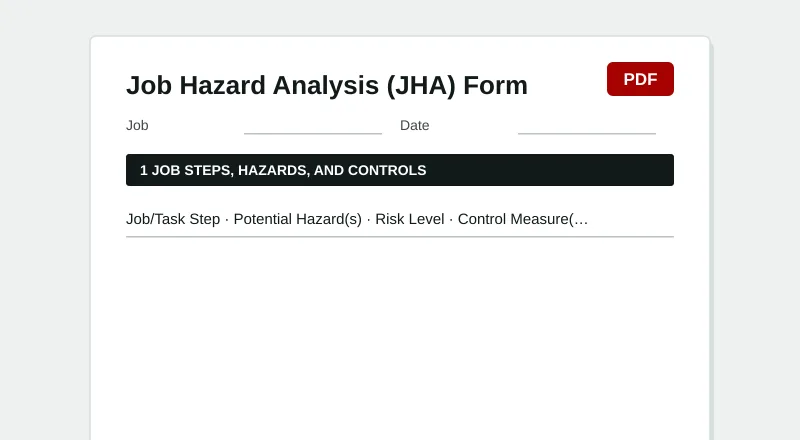
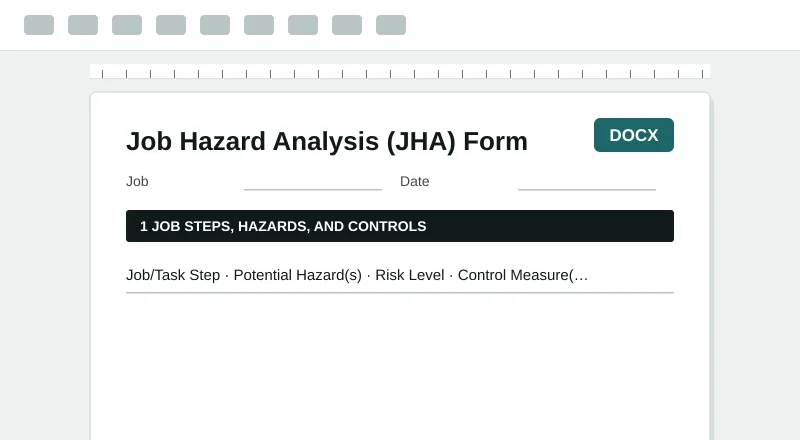
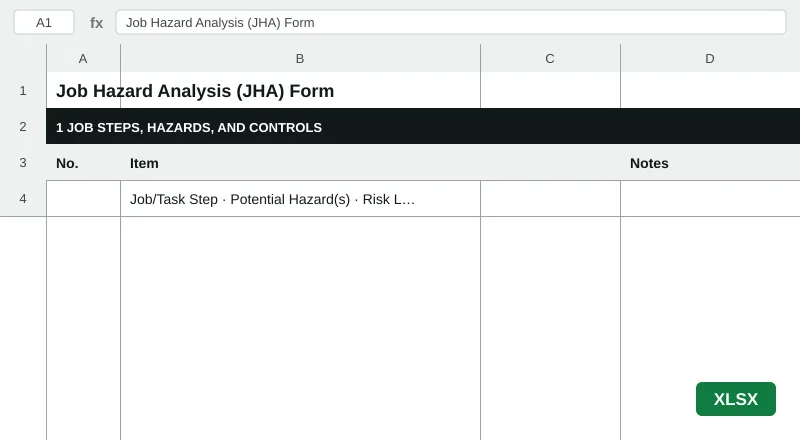
Download the job hazard analysis form as a PDF to print, or as a Word or Excel file to add your own steps and controls. It's free, with no sign-up. Use the JHA form on paper today, and when you'd rather have every signature filed to the job, the same form runs in Workyard.


