



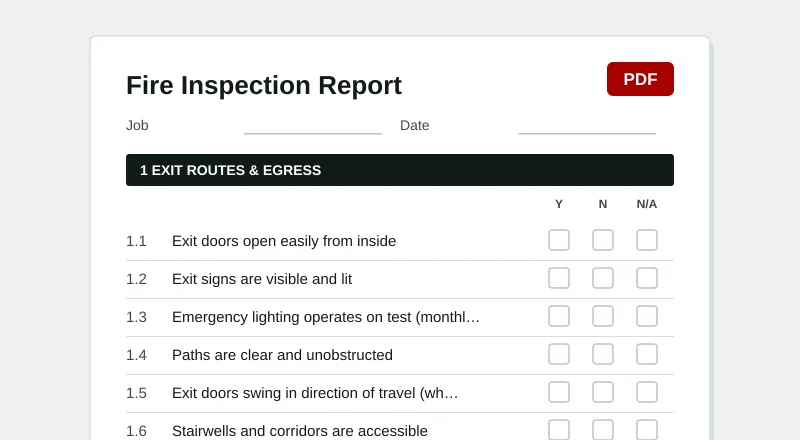
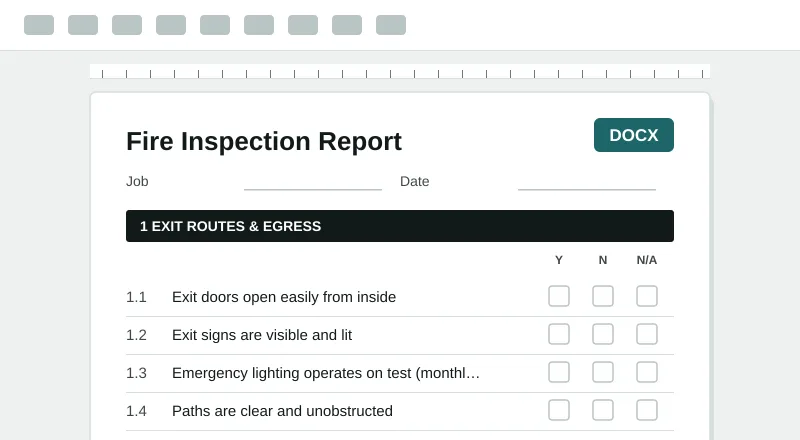
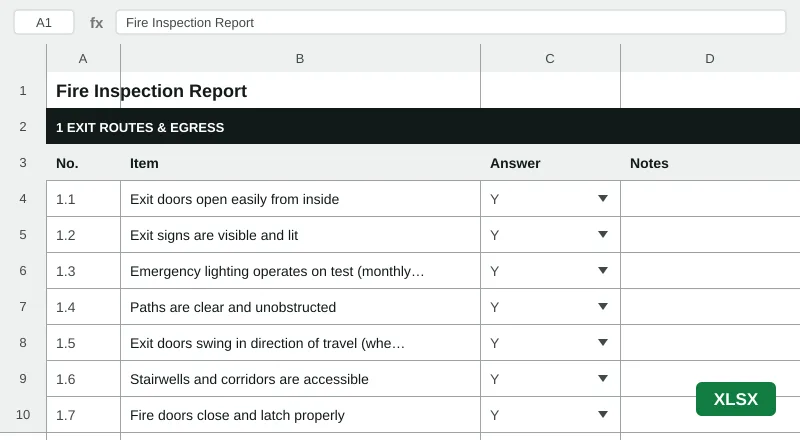
A fire inspection checklist is the walk-through record a facility manager, property manager or fire protection contractor fills in to confirm that a building's exits, alarms, extinguishers and sprinklers are in place and working. Use it on scheduled checks, before a fire marshal visit, at turnover of a finished space, or after work that could have blocked an exit or covered a sprinkler head. Each check gets a yes or no, a comment and photos, and the inspector signs at the end.
The five parts of the fire inspection checklist
The form is split by system, so one person can work through a building floor by floor:
| Section | What it checks |
|---|---|
| Exit routes and egress | Exit doors open easily from inside, exit signs lit, emergency lighting works on test, clear paths, door swing where required, stairwells open, fire doors close and latch |
| Fire alarm system | Panel powered with no trouble alerts, pull stations intact, detectors clear, horns and strobes working, alarm tested, backup power, records and tags current |
| Portable fire extinguishers | How many were checked, mounted where required, visible and reachable, gauge in the green, pin and seal in place, no damage, tag current, monthly check done |
| Sprinkler and standpipe systems | System present, control valves open and sealed, gauges normal, 18 inches of clearance below heads, hose valves present, no leaks or corrosion |
| Inspection details | Property name, address, building type, inspector, date and signature |
Every system section has its own photo upload. Take a picture of each failed item and the tag or gauge that proves a passed one.
Standards behind the fire safety inspection report
Each section of the fire safety inspection report points to the rules it follows. Exit routes follow OSHA 29 CFR 1910.36. The alarm checks follow NFPA 72 and OSHA 1910.165. Extinguishers follow NFPA 10 and OSHA 1910.157. Sprinklers and standpipes follow NFPA 25 and OSHA 1910.158 and 1910.159. Your local fire code and the fire marshal decide which editions apply, so check them before you rely on a single checklist for a building.
A filled-in checklist is a record of what one person saw on one day. It does not replace the testing and maintenance a licensed fire protection company does on alarm and sprinkler systems.
How often to complete a fire inspection report
Match the schedule to what the systems and your local code require. The form already builds in two monthly checks: the 30-second emergency lighting test and the extinguisher monthly inspection. Many property teams run the full checklist on a set schedule, before any fire department inspection, and after construction or tenant work in the building. Alarm and sprinkler systems also have testing intervals set by NFPA and enforced by the local authority, so log those dates in the records rows and confirm them with your fire protection contractor.
Fire inspection report template on a phone or on paper
In Workyard, the fire inspection report template runs as a digital inspection form on a phone: photos per section, a signature on screen, any No answer flagged to a named person, and every report filed to the job in the office for PDF or CSV export. For extinguishers on their own, use the fire extinguisher inspection checklist, and during construction the construction fire safety checklist. Or download this one free as a PDF, Word or Excel file, no sign-up needed.


