


A heat stress toolbox talk is a short crew meeting, run by a foreman or safety lead before work starts on a hot day, that covers how heat builds up in the body, the early signs of heat illness, and what the crew does when someone goes down. Concrete, asphalt, roofing, landscaping and framing crews use it most, along with anyone working in heavy PPE or next to hot equipment. The form gives the presenter the talking points, a place to log who attended, and a signature to prove it happened.
The heat stress toolbox talk, section by section
Cover the hazards, the prevention plan, the symptoms and the emergency response, then let the crew talk. The form walks the presenter through each part in order:
| Section | What it covers |
|---|---|
| Attendance details | Date, job or site, presenter and each crew member present |
| Why this talk matters | Who is at risk and why the employer has to act |
| Heat hazards and risk factors | Air temperature, direct sun, humidity, heavy PPE, hard work, poor acclimatization, heat from vehicles and equipment, dehydration and some medications |
| Prevention: hydration, rest, shade | Drinking water before thirst sets in, shaded or cooled breaks, moving heavy tasks to cooler hours, rotating duties, light breathable clothing |
| Early symptoms and first aid | Heat cramps, heat exhaustion and heat stroke, and what to do for each |
| Work/rest and acclimatization | Building heat tolerance for new and returning workers, the buddy system, extra breaks |
| Emergency response protocol | Who calls 911, keeping ice, water and a charged phone on site, clear access for EMS |
| Crew discussion and Q&A | Five prompts plus space for answers and notes |
| Signature and feedback | Presenter or crew signature and comments |
Spend the most time on symptoms. Heat stroke is the one that kills: confusion, seizures, red skin. The rule the talk drills is simple. Call 911, start cooling the worker fast with ice and water, and stay with them until help arrives.
Heat illness prevention toolbox talk requirements (OSHA and state rules)
The form lists the rules it draws on. Federal OSHA has no single heat standard for construction, but the General Duty Clause (29 U.S.C. 654(a)(1)) requires employers to protect workers from recognized hazards, and 29 CFR 1926.21(b)(2) requires training workers to recognize and avoid unsafe conditions. California goes further with Cal/OSHA Title 8 Section 3395, its heat illness prevention rule, and some other states have rules of their own. These rules change, so check what applies in each state you work in before the season starts.
A signed heat illness prevention toolbox talk is how you show the training happened. Keep it with the job's other safety records.
How often to hold a heat safety talk
Hold a full talk at the start of the hot season and whenever new or returning workers join the crew, since they have not built up heat tolerance yet. On days when a heat wave is forecast, or the work moves into direct sun or heavy PPE, run it again as a short refresher at the morning huddle. Your company's heat plan and any state rule you work under may set specific triggers, so follow those first.
Run it on crews' phones or download it free
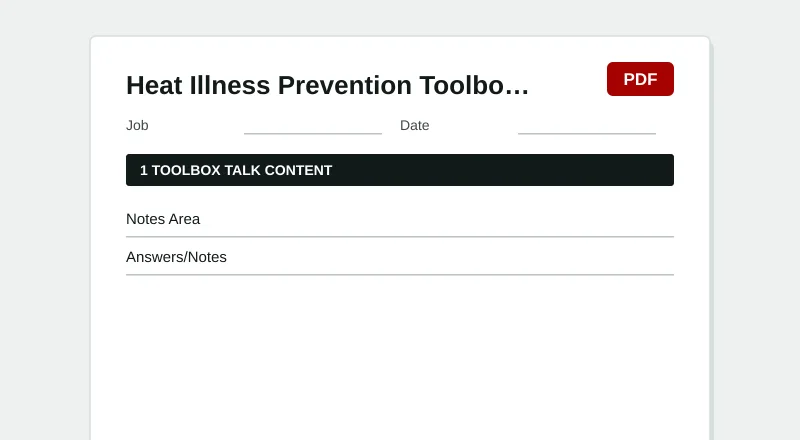
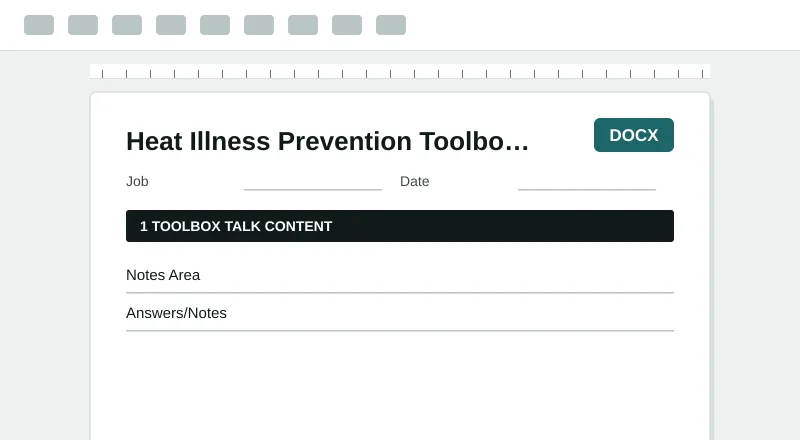
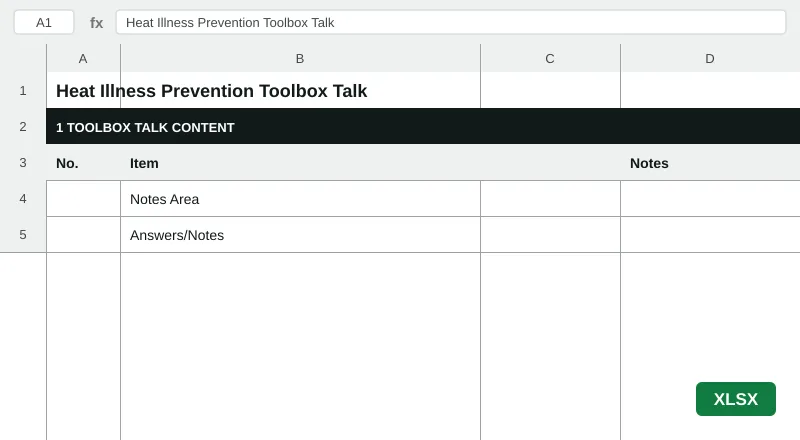
In Workyard, the talk can go out as a digital form on crews' phones at clock-in, each worker signs on screen, and every submission is filed to the job in the office, ready to export as a PDF. See how toolbox talks work in Workyard, log attendance across the week with the daily toolbox talk attendance sheet, or browse more toolbox talks. Prefer paper? Download this one free as a PDF, Word or Excel file, no sign-up needed.


