

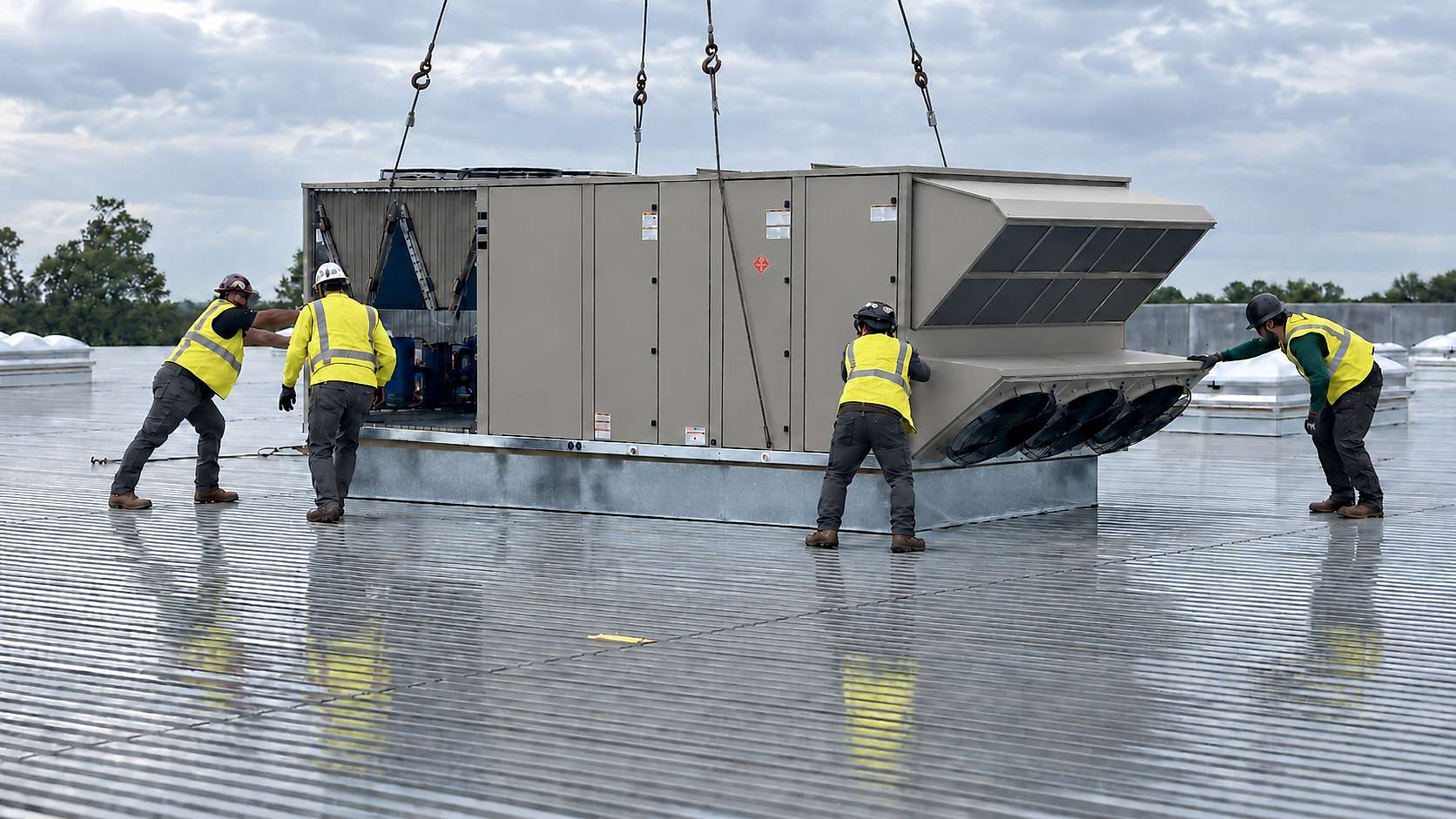

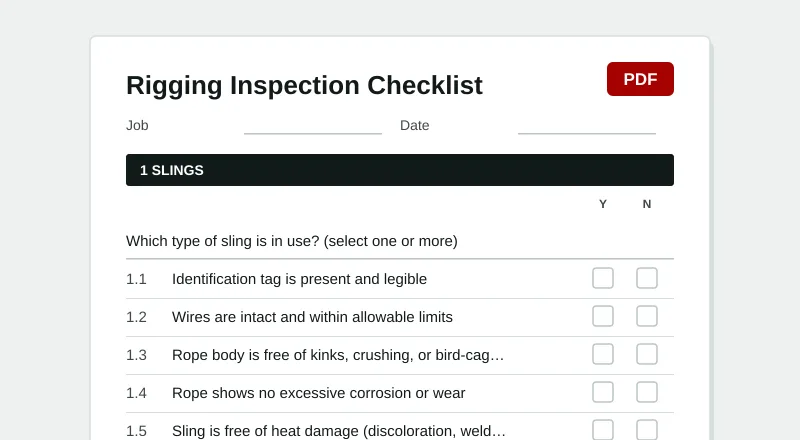
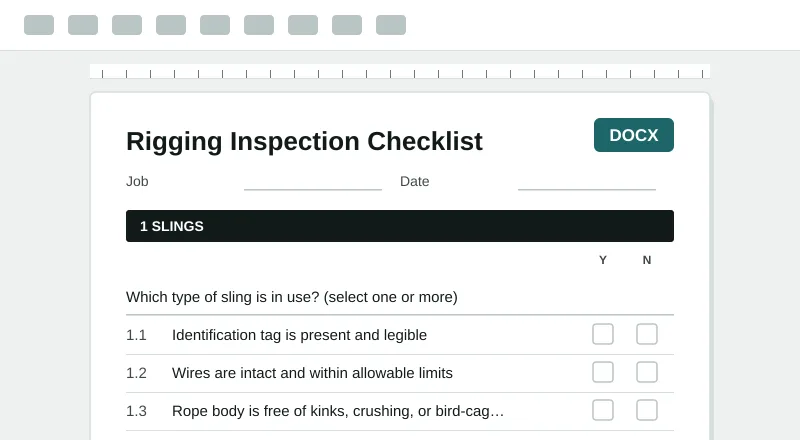
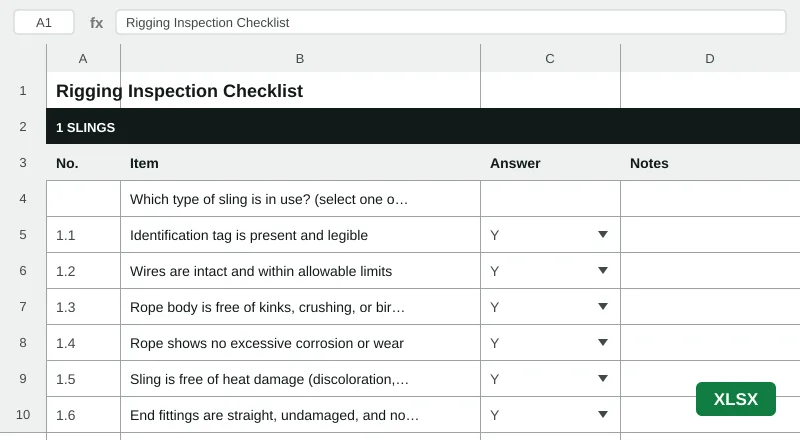
A rigging inspection is the check a rigger, crane crew or foreman makes on slings, shackles, hooks and eyebolts before a lift, to find damaged gear and pull it out of use before it carries a load. This rigging inspection checklist records each piece checked, what was wrong with it and what was removed from service, signed by the inspector. Steel erectors, civil and marine crews and anyone lifting with a crane, hoist or excavator use it.
What a rigging inspection checks on each sling type
Pick the sling types in use and the form shows the checks for each. Every line is Yes or No, with a comment and a photo for any No. The form ties these checks to OSHA 29 CFR 1926.251 and ASME B30.9 for slings; check the current text, which sets removal criteria of its own for chain, wire rope, fiber rope and synthetic web slings, along with the sling maker's criteria.
| Sling | What to look for |
|---|---|
| Wire rope | Tag legible, broken wires within limits, no kinks, crushing or bird-caging, no heavy corrosion, no heat damage or weld spatter, end fittings straight and not worn |
| Alloy chain | Markings legible, no stretched, bent or twisted links, no cracks or gouges, links move freely, hooks and attachments secure, no heat damage |
| Synthetic web | Tag shows rating and material, no cuts, punctures or snags, stitching intact, no fraying, no melting, charring or chemical damage, no knots, fittings sound |
| Synthetic round | Tag legible, cover not cut or worn through, core not showing, no melting or chemical damage, body not twisted or flattened, fittings secure |
A missing or unreadable tag is a failure on its own. If nobody can read the rated load, nobody can say the sling is right for the lift.
Rigging hardware: shackles, hooks and eyebolts
The rigging inspection form gives the hardware its own section, tied to ASME B30.26, because a good sling on a bad shackle still drops the load:
- Shackles: markings legible, body and pin not bent or stretched, no cracks or sharp edges, pin seated and fully engaged, threads not worn, no pitting or heat damage.
- Hooks: markings legible, not bent or twisted, throat opening within limits, no cracks, latch fitted and working where required, swivel turns freely, no heat damage.
- Eyebolts and lifting points: rating legible, shoulder seated flush where it has one, threads clean, not bent or elongated, no cracks or corrosion, swivel hoist rings turn and pivot freely.
There's also room for anything else in the rig, such as spreader beams or turnbuckles, and general comments. For wire rope on the crane or hoist itself, use the wire rope inspection checklist.
Taking damaged gear out of service
Finding damage is half the job; making sure nobody uses that sling tomorrow is the other half. The outcome section of the form asks:
- Was anything removed from service? Yes or No.
- What and why: each item and the reason, specific enough that someone else could find it.
- Is more action needed? No, non-urgent, or urgent.
Tag failed gear "do not use" and get it off the job, or cut it so it can't be picked up by mistake. A damaged sling left in the gang box ends up on the next lift. The signed form is your record of what was removed, when and by whom. Pair it with the crane inspection checklist on crane jobs, and find more pre-use checks in equipment pre-start checks.
Get the rigging inspection checklist free
Download the rigging inspection checklist free as a PDF, Word or Excel file, no sign-up needed. Or run it in Workyard's safety app: riggers fill it in on their phones before the lift, photograph damaged gear, sign on screen, removed items go to a named person, and every inspection is filed to the job in the office, ready to export as a PDF or CSV.


