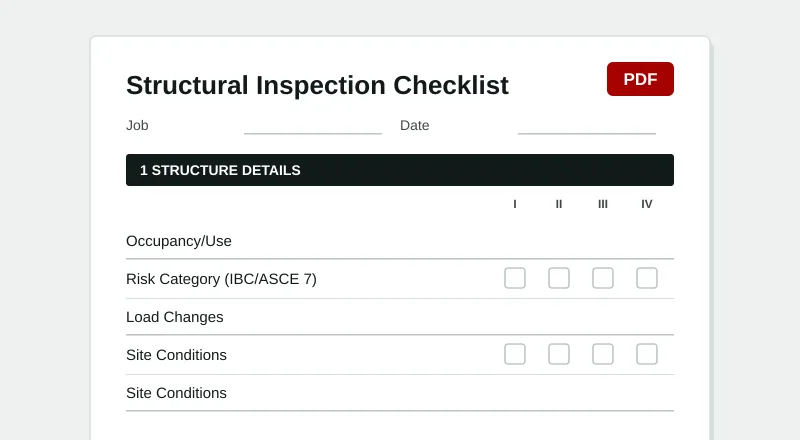
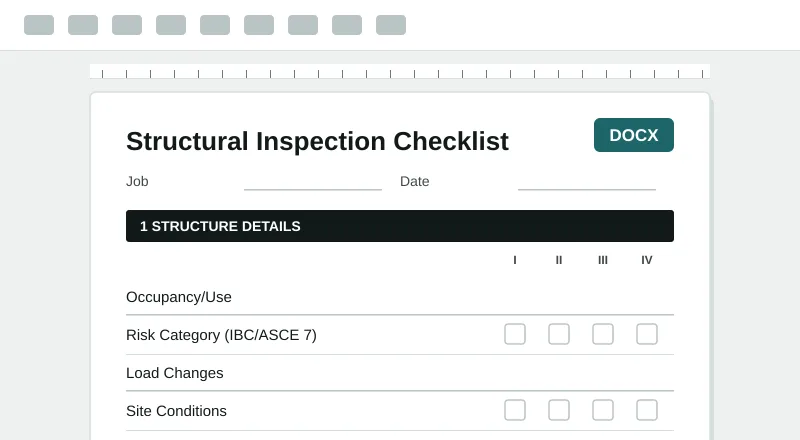
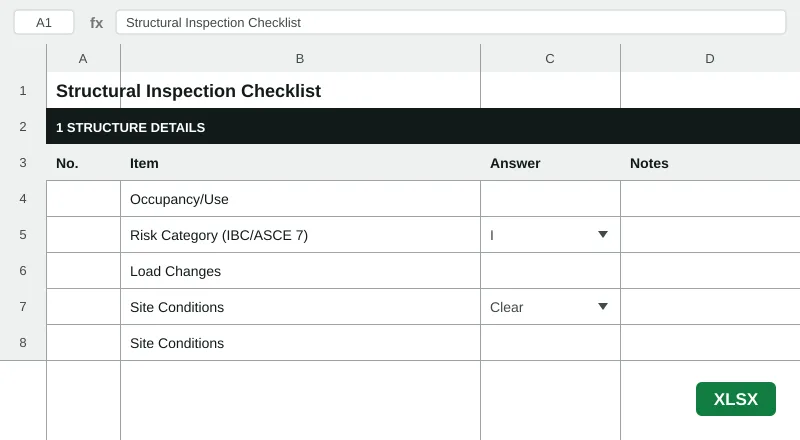
Print it for the clipboard, or put it on your crew’s phones. Same form either way.
Your logo
Structural Inspection Checklist
Ensure buildings are safe, stable, and structurally sound with this Structural Inspection Checklist. Use it to assess walls, columns, beams, foundations, and more to help you find damage, cracks, and code violations before they become costly repairs or safety hazards.
Job
Date
Inspection TypeRoutine/periodicPost-event
Site Address
Structure Identifier
Structure TypeResidentialCommercialIndustrialMixed Use
Stories / Height
Year Built (estimate if unknown)
Foundation TypeBasementSlab on-gradePier/Pier-beamPile/Caisson
Primary Construction MaterialConcreteSteelWoodMasonry
Recent Repairs/AlterationsYesNo
If Yes, describe prior repairs or renovations.
1 · Structure Details
Occupancy/UseOfficeWarehouseMulti-family
Risk Category (IBC/ASCE 7)IIIIIIIV
Load ChangesAdded Heavy EquipmentNew Roof LoadStructural Alteration
Site Conditions: WeatherClearRainSnowWindy
Site Conditions: Soil/GroundDryDampWetFrost/Freeze
2 · Foundation and Floor Condition
Foundation ConditionNo issuesMinor cracksSignificant cracks/settlementSevere damage
Foundation CracksYesNo
If Yes: Crack TypeHorizontalVerticalDiagonal
Crack Severity (1–5): 1 = hairline, 5 = severe
Photo of Crack · photo refs
Settlement/HeaveYesNo
Photo · photo refs
Basement Water IntrusionNoneOccasional dampActive leakage
Workyard is the construction operations platform for specialty contractors and self-performing general contractors determined to grow without sacrificing job control or margins.
Forms like this one are what our customers’ crews fill in on Workyard every day, on the same app they clock in with.
workers on Workyard every day
100,000+
free templates, none of them gated
182
Forms & Workflows
Get every form back from every crew, every day
It shows up on its own. Attach it to a task, a job or clock-out, and it’s on the crew’s phone when it’s due.
It can’t be skipped. Make it required and the day can’t close until it’s in.
You see it the same day. Filed, flagged or missing, every job on one board, before anyone has to call.
7:02 AMToolbox talkMeridian Business ParkRay T. · 12 signaturesFiled to job
9:40 AMSite inspectionFairview Clinic · L2 eastDiego M. · 8 photosFiled to job
11:15 AMSite inspectionFairview Clinic · L2 westFirestop answered No at grid C-4Flagged · to the PM
2:14 PMPre-start checkMeridian Business ParkExcavator 3 · Dana C. · signedFiled to job
4:30 PMDaily logRiverside TowerDue at clock-outMissing
Fairview L2 west: firestop at C-4 answered No. Photo attached, PM notified at 11:15 AM. The ceiling stays open until it’s fixed, not a box ticked on a sheet in the truck.
More quality control templates
Free templates for the rest of the job
Finishes Quality Checklist
Inspection ItemsYNN/A
Finish Type: Select the type of finish: Paint, Drywall, Flooring (tile, wood, etc.), Cabinetry/Trim, Ceiling, Other.
Specific Location
Condition/Status: Report “Acceptable” if the finish meets quality standards; “Needs Rework” if defects are found; “NA” if this check doesn’t apply.
Observed Defects / Irregularities: If not acceptable, describe the issue (e.g. “Peeling paint at corner”, “Tile lippage at joints exceeds tolerance”). Refer to standards (e.g. paint should be free of sags, drywall joints free of lumps).
Photo of Issue: Attach a clear photo for each defect or area inspected.
A structural inspection checklist is generally not legally required for all buildings. However, certain commercial, multi-story residential, and cooperative buildings are subject to mandatory structural inspections under local or state regulations. Even when not required, regular inspections help ensure safety, code compliance, and early detection of deterioration.
How often should structural inspections be done?
Structural inspections are typically recommended every 3 to 10 years depending on age, condition, and environment. Newer buildings may need an initial check within the first year, while older or high-traffic structures often require inspections every 5 to 10 years. Inspections should also follow local codes and be performed after natural disasters or when visible issues arise.
What are some common issues found during inspection?
Common findings include foundation cracks, uneven settling, bowed walls, incomplete load-path connections, concrete spalling, rusted steel, damaged roofing, water intrusion, and pest activity. Detecting these early reduces safety risks and repair costs.
What should I do with the structural inspection report?
Review the report carefully, prioritizing urgent repairs that affect safety or could cause further deterioration. Use the report to guide maintenance, negotiations in property transactions, or insurance discussions. Keep a copy for future reference in planning renovations or claims.
Do I need a Workyard account to use it?
No. Print the paper form, save it as a PDF, or download the Word or Excel file, free, with no email and no sign-up. You only need an account to put the digital form on your crew’s phones.
Can I edit the template?
Yes. Download the Word or Excel version to add your logo, add checks from your project spec or remove sections you don’t need. They open in Google Docs and Google Sheets too.
How do I get my crew to fill it in on their phones?
Add the digital form to Workyard and attach it to the job or the task it belongs to. It shows up in the app your crew already clocks in with, and every form comes back signed, with its photos, filed to the job.