

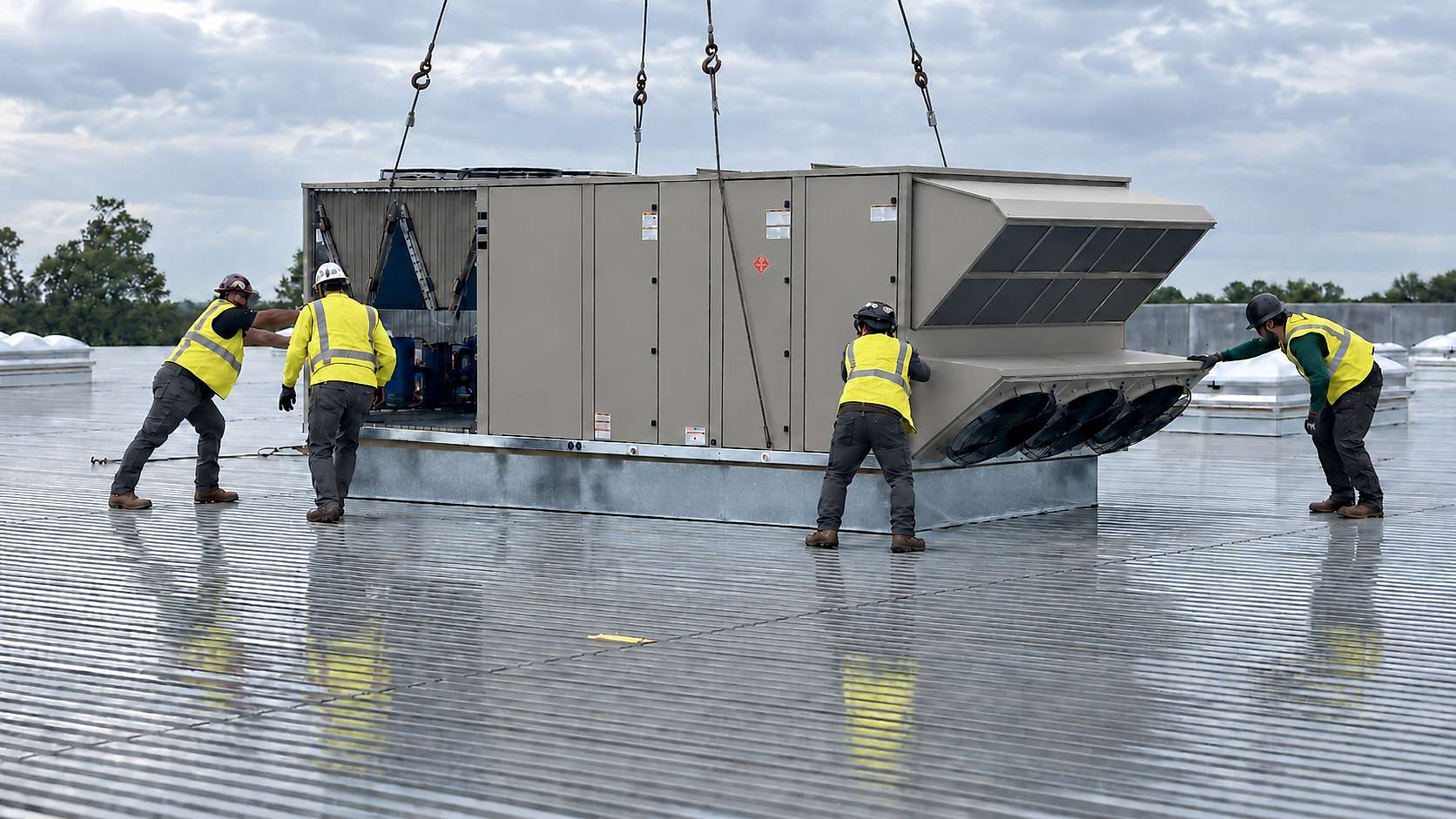

A crane lifting JHA is the job hazard analysis a lift director and crew complete before a crane lift or at a shift change: what is being lifted, what can go wrong at each step, and what controls are in place. Contractors use it on commercial, civil and industrial sites for mobile cranes, tower cranes and rigging work.
What is a JHA?
JHA stands for job hazard analysis. It breaks a task into steps, names the hazard in each step and the control that deals with it, and is signed by the crew doing the work. A JSA (job safety analysis) is the same idea under a different name, so a lifting operations JSA or crane JSA and this form do the same job. Use whichever term your company or GC uses.
How to fill out the crane lifting JHA
- Project and lift details: date, shift, location, a description of the lift, crane type and ID, capacity, whether a lift plan is required and who approved it, the lift director, and the riggers and signal persons.
- Risk factors: tick each that applies, such as overhead power lines, swing radius intrusion, blind lifts, wind above the manufacturer's limit, unstable ground, a load over chart capacity, nearby traffic or a lift over an occupied area.
- Pre-lift checks: confirm each one is done, from the lift plan review and operator, rigger and signal person qualifications to the crane's shift inspection, outriggers and cribbing, power line clearance, wind, rigging tags, exclusion zone, taglines, radios and load weight.
- Task steps: the hazard, risk level and control for each step of the lift.
- PPE, emergency and stop-work: PPE in use, emergency contact, stop-work triggers and the nearest rescue equipment.
- Signatures: every crew member, then the lift director and, where needed, the safety manager.
The pre-lift checks match criteria in the OSHA crane rules the form names: 29 CFR 1926.1412 to 1926.1413 for inspections, 1926.1407 to 1926.1411 for power lines, 1926.1419 to 1926.1422 for signals, 1926.1424 for work area control and 1926.1427 to 1926.1428 for operator and signal person qualification. The form's power line item reads de-energized and grounded, or 20 ft clearance (50 ft over 350 kV) kept with a spotter or warning lines. Check the current rules and the crane's load chart for each lift.
Crane lifting JHA example
The task steps come pre-filled on the form. A filled-in version for setting a steel beam might read:
| Step | Hazard | Risk | Control |
|---|---|---|---|
| Position crane and check ground | Soft ground, outrigger sinking | H | Ground checked, outriggers fully out on cribbing |
| Inspect rigging and attach load | Damaged sling, wrong hitch | M | Rigging inspected and tagged, load weight confirmed |
| Clear area and signal start | Workers in swing radius | H | Exclusion zone marked, one designated signal person |
| Lift and swing to set area | Load swing, contact with structure | H | Taglines in use, radios tested, lift path clear |
| Land load and detach rigging | Pinch points, load shifting | M | Load set and stable before rigging is released |
Rigging gear gets its own check before the lift on the rigging inspection checklist.
Run it on phones or download it
In Workyard the JHA opens on the crew's phones at clock-in or on the job, and every rigger, signal person and operator signs on screen before the lift. A flagged answer goes to the person you name, and every JHA is filed to the job in the office. See the Workyard JHA app or other JSA and JHA templates. The template is free as a PDF, Word or Excel file.


