

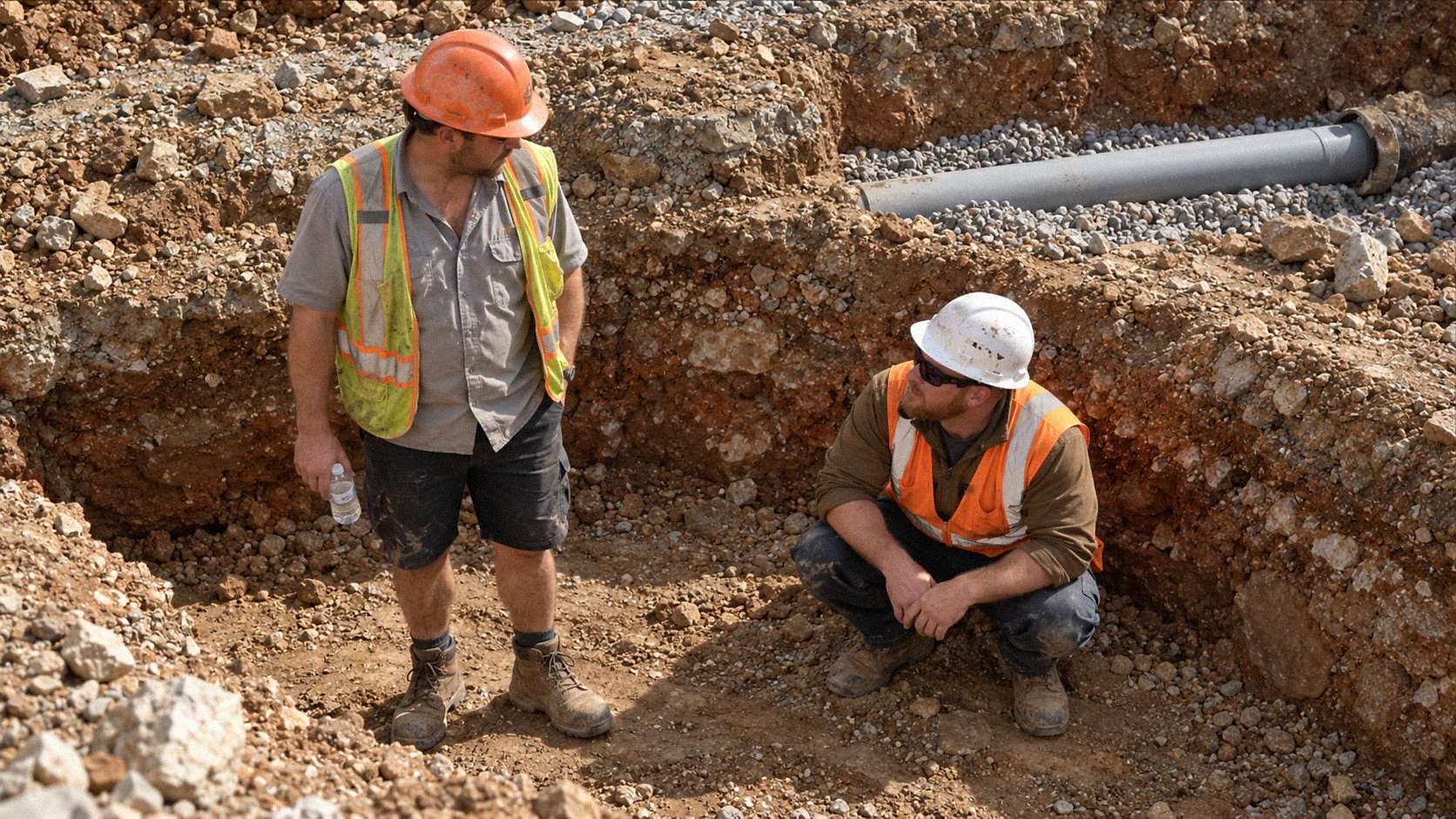

An excavation JHA is the hazard analysis a competent person and crew fill in before digging a trench or pit: the dig's size and soil type, the 811 locate ticket, the hazards on this dig, the protective system and other controls, the step-by-step plan, PPE and the stop-work plan, with everyone's signature at the bottom. Underground utility, earthwork, civil, plumbing and mechanical crews use it for storm drain, sewer and water line work, vaults and footings. The form calls for a fresh one each day, and again whenever conditions, depth or equipment change.
What is a JHA in construction?
JHA stands for job hazard analysis. It breaks one task into steps, names the hazards in each step and sets a control for each one before work starts. A JSA, or job safety analysis, is the same thing under another name, so a trenching JSA and an excavation job hazard analysis are the same form. On a dig, the JHA is where the crew agrees on how the trench is protected and how they get out before anyone climbs in.
What goes on the excavation JHA
| Section | What gets recorded |
|---|---|
| Project and task details | Date, shift, location, scope, excavation type (trench, pit, sloped, shielded, benched), depth and width, soil type from the competent person (stable rock, Type A, B or C), soil test method, competent person and phone, 811 ticket and date verified |
| Hazards | Cave-in, equipment near the edge, spoils too close, falls into the trench, utility strike, bad air, standing water, poor egress |
| Controls and pre-task checks | Daily competent person inspection, locates marked, protective system in place, spoils at least 2 feet back, barricades or covers, a ladder, ramp or stairs in trenches 4 feet or deeper within 25 feet of lateral travel |
| Job steps, hazards and controls | Each step with its hazards, risk level and control |
| PPE | Hard hat, glasses, hi-vis, boots, hearing, gloves, respirator or gas monitor, fall protection |
| Emergency and stop-work plan | Emergency contact, stop-work triggers, nearest rescue gear, first aid and assembly point |
| Signatures | Each crew member, the competent person, and the foreman or safety manager |
The form follows OSHA 29 CFR 1926 Subpart P for excavations, including 1926.651 and 1926.652, and ANSI/ASSP A10.12. Check the current text and your state plan if you work in one.
Excavation JHA example (filled in)
Here is how the job steps might read for a 7-foot sewer lateral trench in Type B soil:
| Step | Hazards | Risk | Control |
|---|---|---|---|
| Mark utilities and call 811 | Unmarked lines, strike | H | Ticket verified, marks checked, hand dig near marked lines |
| Dig with excavator | Cave-in, worker struck by bucket or swing | H | Spotter, no one in the swing radius, spoils 2 feet or more back |
| Install trench box | Wall collapse before the box is set | H | Set box from the top, nobody enters until it is in place |
| Lay pipe | Crush, falling tools, bad air | M | Work inside the box only, ladder within reach, gas monitor running |
| Backfill and compact | Equipment near workers, vibration | M | Crew out of the trench, compactor operator only |
Run it at clock-in or download it free
In Workyard the excavation JHA runs as a digital JHA on crews' phones at clock-in, with photos of the dig, each worker's signature on screen, any unsafe answer flagged to a named person, and every JHA filed to the job for PDF or CSV export. Brief the crew with the trenching and excavation safety toolbox talk, and check the ground before digging with the pre-excavation earthwork QC checklist. You can also download it free as a PDF, Word or Excel file, no sign-up needed.


