

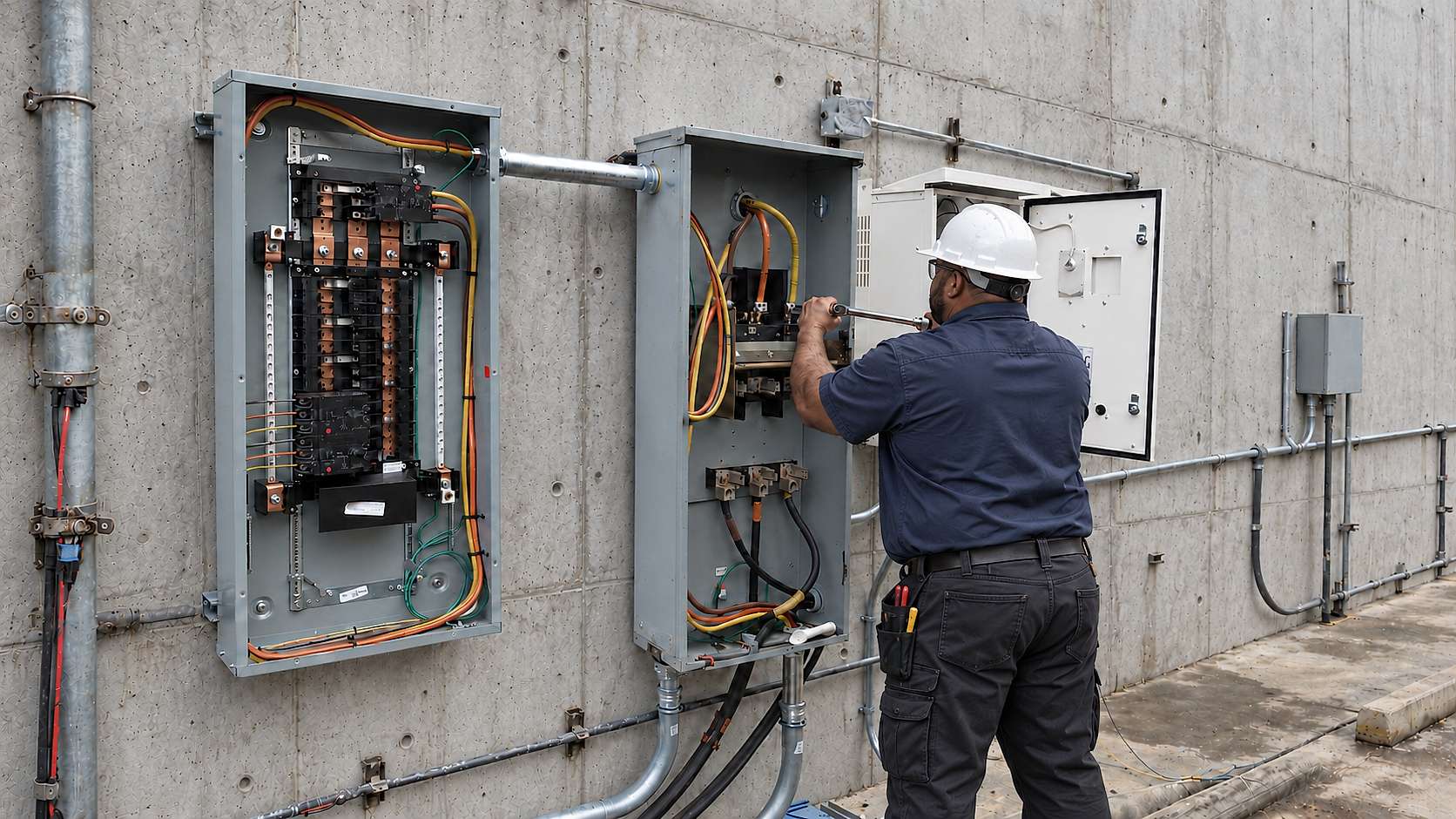

An electrical safety inspection checklist is the form a foreman, safety lead or electrician walks a site with to catch electrical hazards before they hurt someone: open panels, missing GFCI protection, damaged cords and work done without the right PPE. Contractors use it on construction sites and in the commercial and industrial buildings they service.
What the electrical safety inspection checklist covers
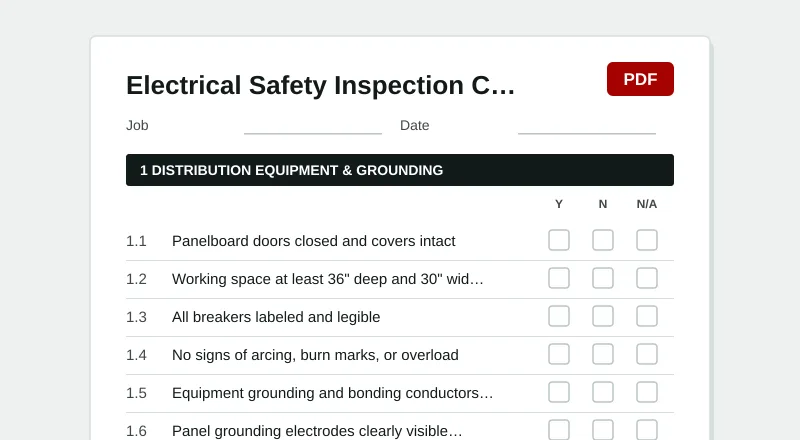
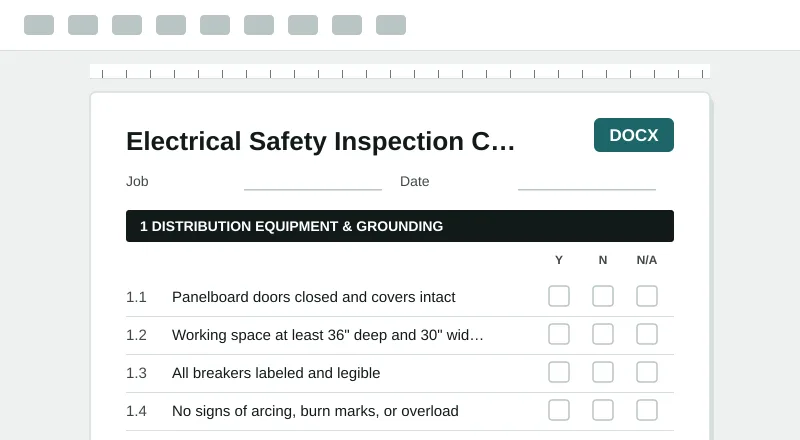
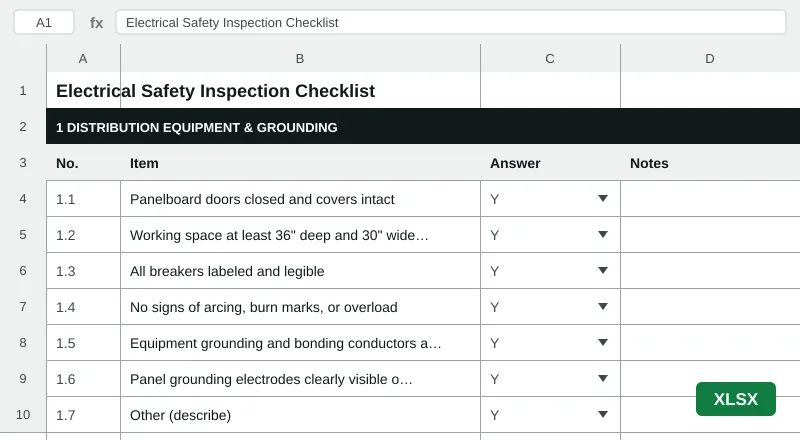
The form runs in eight sections. Most items are Yes, No or N/A, and every No asks for details, so the record shows what was wrong and where.
| Section | What gets checked |
|---|---|
| Distribution equipment and grounding | Panel doors and covers, clear working space in front of panels (at least 36 in deep and 30 in wide on the form), breaker labels, arcing or burn marks, grounding and bonding |
| GFCI protection and outdoor circuits | GFCIs on the outlets that need them, test and reset working, outdoor-rated cords, weatherproof boxes closed |
| Wiring, devices and fixtures | Cord damage, plugs fully seated, temporary wiring off walkways, cover plates, grounded outlets, lighting and exit lighting |
| Pools, spas and hot tubs | Bonding, GFCI protection and fixture clearance, only where present |
| PPE and safe work practices | Arc-rated PPE, insulated tools for live work, lockout/tagout followed, trained electricians |
| Hazards and corrective actions | Hazard description, risk level, action taken, who owns the fix and the due date |
| Site and project information | Job, area or building, site conditions and weather |
| Final sign-off | Overall status, inspector and supervisor signatures |
Requirements the form follows
Each section names the rules it is built on. Panels and grounding follow OSHA 1910.303 and NEC 110.26. Temporary power on construction sites follows OSHA 1926.404(b)(1) and NEC 590.6, with NEC 210.8 for permanent GFCI locations. Wiring and cords follow OSHA 1910.305 and NEC Article 400, pools and spas follow NEC 680, and the PPE and lockout items follow NFPA 70E and OSHA 1910.333 and 1910.335. Codes are updated and adopted on different schedules, so check the edition your jurisdiction enforces.
Commercial vs residential electrical safety checks
The same electrical safety checklist works on both, but the weight shifts. On a commercial or industrial job, most findings come from distribution equipment: blocked working space, unlabeled breakers, signs of overheating, and lockout steps skipped during service work. On a residential job or remodel, the common misses are GFCI protection, temporary wiring run across walkways and damaged extension cords. Mark the pool and spa section N/A unless one is on site.
How to schedule an electrical panel safety check
Put it on a routine your safety program sets, then add checks when something changes. Good times to walk it:
- when temporary power goes in on a new job
- on a regular schedule after that, such as weekly on active sites
- after storms, flooding or water in a panel area
- before energizing new circuits or after major changes
- whenever a crew reports a trip, shock or burning smell
Any High risk item gets a responsible person and a due date in section 6, and the supervisor signs off once it is fixed. For the task itself, pair the walk with an electrical work JHA before crews open panels or work near live parts.
Run it on a phone in Workyard
In Workyard the checklist sits on crews' phones on the job. They tap through it, attach photos of what they found, and sign on screen. A No or a High risk answer goes straight to the person you name, and every submission is filed to the job in the office, with PDF or CSV export when an inspector or GC asks. See how it works on the construction inspection app, or browse more electrical templates. The template is also free to download as a PDF, Word or Excel file, no sign-up.


