


A paint application inspection checklist is the record a painting foreman, QC inspector or GC fills in to show that a coating went on the way the spec and the manufacturer require: the surface was prepped, the right product was used, conditions were in range during application, and the finished coat passed a final look. Painting contractors use it on commercial, multifamily and industrial jobs, and on steel and concrete coatings where a failed coat means stripping it and starting over. Photos and a signature close it out.
What the paint application inspection checklist covers
The form follows a coating job from start to finish:
| Section | What gets recorded |
|---|---|
| Project and general info | Project, substrates being inspected (drywall, concrete, steel, wood, masonry), paint system or spec reference |
| Surface preparation | Clean surface, profile to spec, no loose paint, rust or efflorescence, mildew, dry and cured, masking, moisture tests, cleaning method, temperature and humidity, plus substrate questions and photos |
| Material and equipment verification | Manufacturer and product, batch number, shelf life, storage, clean equipment, mixing method, application method, applicator PPE, photos |
| Application monitoring | Air and surface temperature, relative humidity, dew point, thickness, DFT readings, recoat interval, uniform coverage, number of coats, safety issues, photos |
| Post-application assessment | Appearance to spec, no runs, sags or holidays, edges and corners covered, touch-ups, cleanup, protection removed, client or supervisor review, photos |
| Sign-off | Inspector or painter name, signature, date and time |
For every No in a checklist, the form asks for a comment. Write what was wrong and what was done about it.
Surface prep checks by substrate
Most coating failures start before the first coat, so the prep section asks different questions for each surface:
- Concrete: moisture content and reading, efflorescence, and a pH test and reading.
- Steel: blast profile verified with a reading, the SSPC cleaning level reached (from SP 5 white metal blast to SP 3 power tool cleaning), and whether a stripe coat went on edges and welds.
- Drywall: joints sanded smooth, surface sealed or primed.
- Wood: knots and resinous areas treated, sanding done.
The cleaning method dropdown uses the SSPC surface prep designations, from SP 1 solvent cleaning to SP 10 near-white blast. Match it to what the spec calls for, not what was easiest to do on the day.
Recording conditions during application
Write down air temperature, surface temperature, relative humidity and dew point at the time of painting. The form checks that the surface is at least 5°F above the dew point, which keeps moisture from condensing under the coat. The product data sheet sets the limits for each coating, so check it before you start.
Take dry film thickness readings where the spec calls for them, note the number of coats, and confirm the recoat window was met. Thin film and early recoats are both hard to see once the job is finished.
Run it in Workyard or download it free
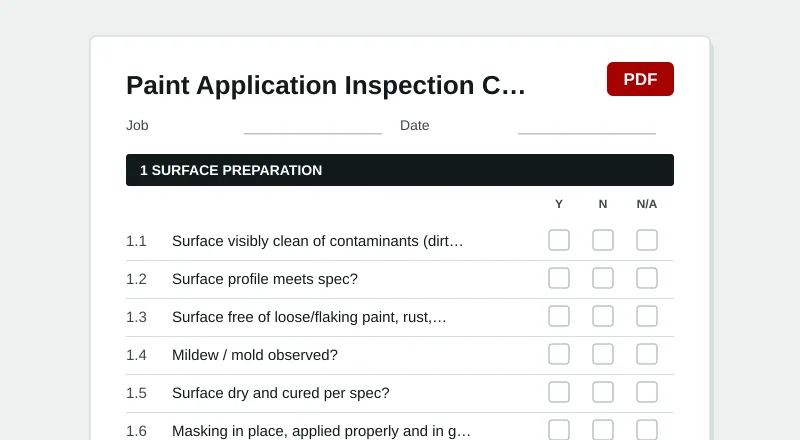
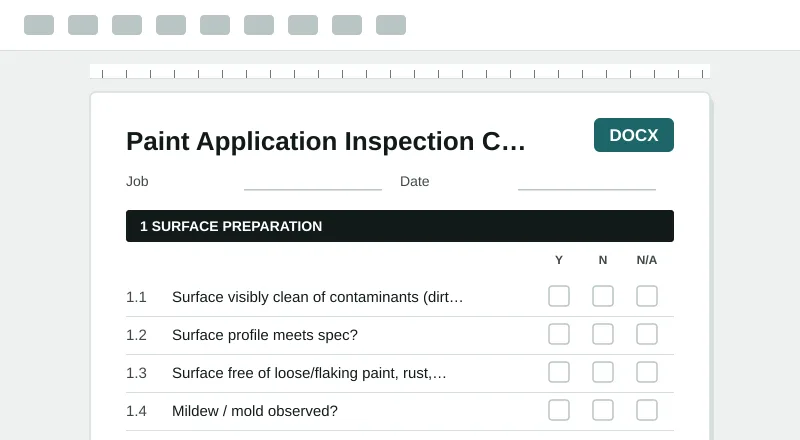
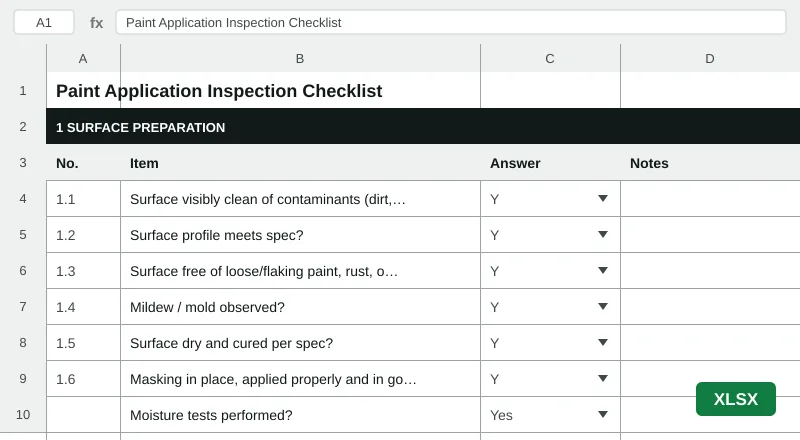
In Workyard the checklist runs as a digital inspection form on a phone, with photos for each stage, a signature on screen, any No flagged to a named person, and every submission filed to the job for PDF or CSV export. Pair it with the finishes quality checklist, or browse more painting forms. You can also download it free as a PDF, Word or Excel file, no sign-up needed.


