



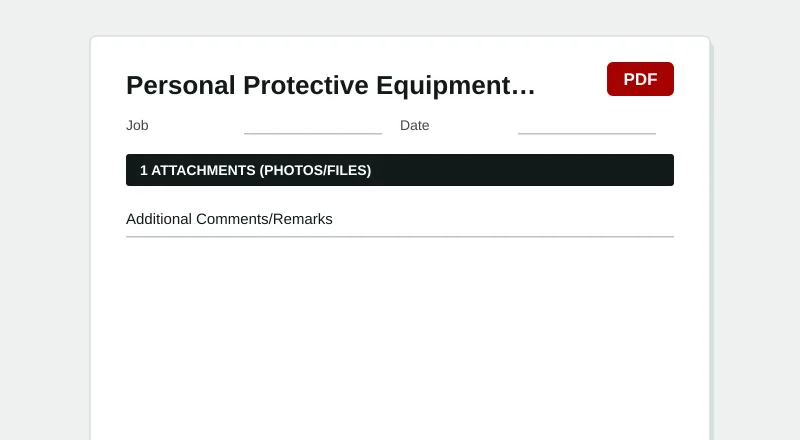
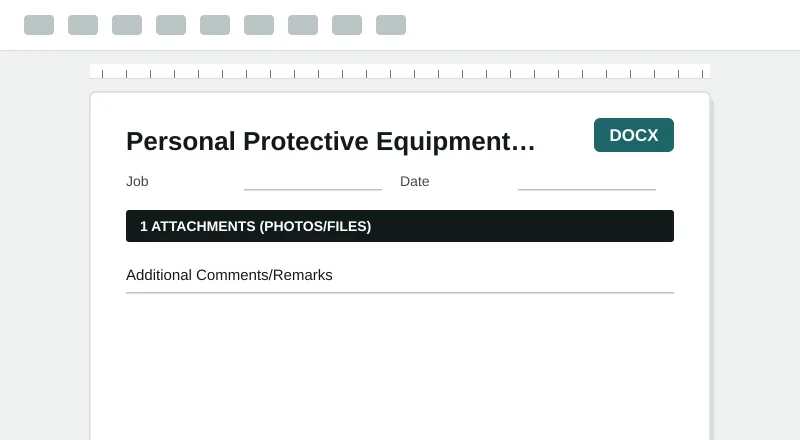
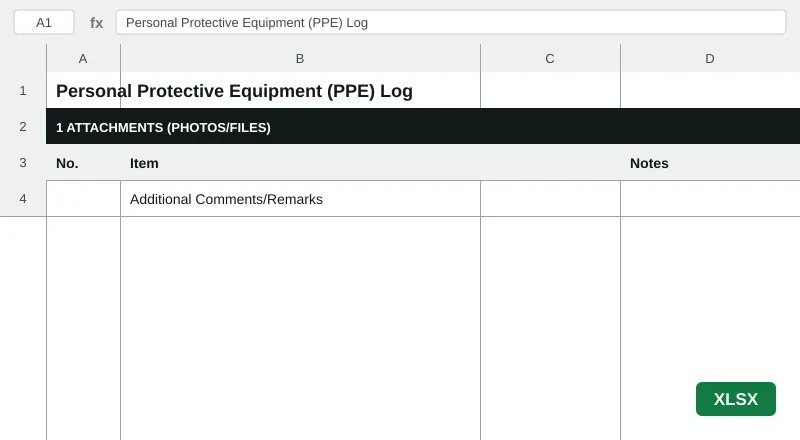
A PPE log is the record of which personal protective equipment was handed to which worker, when, in what condition, and whether they were trained or fit-tested to use it, signed by the person issuing it and the worker receiving it. Safety officers, foremen and tool-room staff fill it in whenever gear goes out: hard hats, glasses, earplugs, respirators, gloves, boots, hi-vis and harnesses.
What goes on a PPE log
The log has one page per worker and a line for each item issued, so a single sheet shows everything that person has been given on the job.
| Field | What to write |
|---|---|
| Worker details | Name, company, position and cell number |
| PPE item | What it is, specific enough to tell apart: "half-face respirator, medium", not "mask" |
| Date issued | The day it was handed over |
| Category | Head, eye and face, hearing, respiratory, hand, foot, body and clothing, fall protection, or other |
| Quantity | How many: two pairs of gloves, one box of earplugs |
| Condition at issue | New or good and serviceable |
| Training or fit test | Whether the item needs training or a fit test, and the date it was done |
| Notes | Size, model, serial number on a harness, anything the next person needs to know |
After the items, there's room for a photo of the worker wearing the gear, comments, the job location and the issuer's name. Both the issuer and the worker sign and date it.
When to fill in a PPE issue form
Fill in a PPE issue form every time gear changes hands, not just on a worker's first day:
- Starting on a job: the basic kit, issued as part of job site orientation.
- A new task: the respirator for cutting, the harness for the roof, the face shield for grinding.
- Replacement: gear that's worn, damaged, lost or expired. Note why in the comments so you can spot patterns.
- A different size or model: a new respirator model usually means a new fit test.
A log only shows what was issued. It doesn't show the gear is still fit to use, so check it on a schedule with the PPE inspection checklist.
Using it as a PPE tracking sheet
Kept together, each worker's logs become a PPE tracking sheet for the whole crew. Some practical ways to use it:
- Sign-out and sign-off. Shared gear, such as a harness from the gang box or a respirator from the trailer, goes on the log when it goes out. For gear that has to come back, an equipment checkout form records the return.
- Fit test dates. Respirators that need fit testing show the test date on the line. Check OSHA's current respiratory protection rule and your own program for how often to retest.
- Training. If an item needs training, the date on the log shows it happened before the gear was used, not after.
- Repeat issues. Three pairs of cut gloves in a week for one worker points to the wrong glove or the wrong task, not a careless worker.
Get the PPE log free or run it on phones
Download the PPE log free as a PDF, Word or Excel file, no sign-up needed. Or run it in Workyard's safety app: the issuer fills it in on a phone on the job, takes the photo, both people sign on screen, and every log is filed to the job in the office, ready to export as a PDF or CSV when an auditor asks who had what.


