

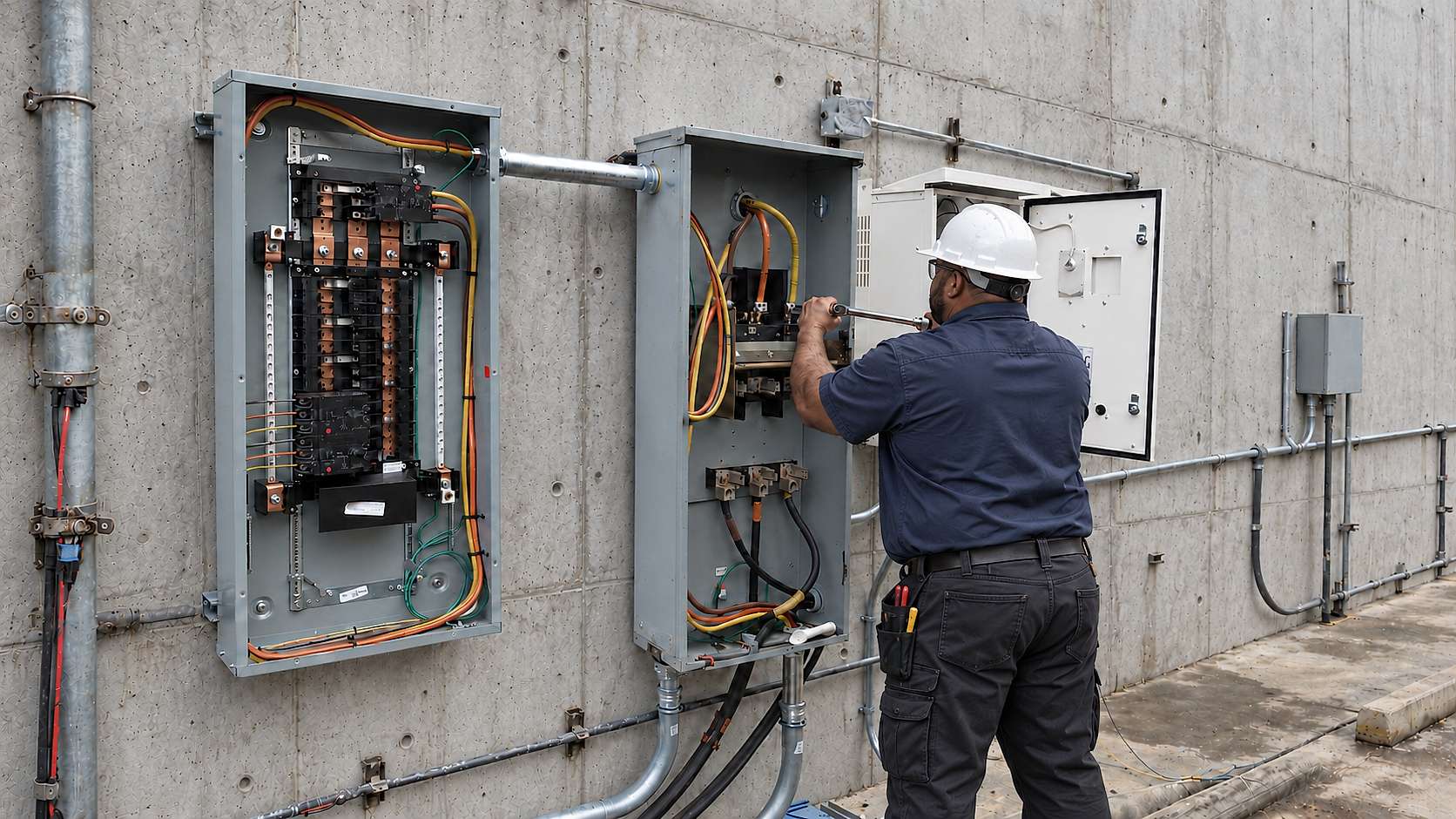

A PSSR checklist is the record of a pre-startup safety review: the last check that new, modified or restarted equipment is built to spec, guarded, isolated, protected and understood by the crew before anyone switches it on. PSSR stands for pre-startup safety review. Mechanical, electrical and HVAC contractors use it at the end of an install or a change, and the plant or building owner's team often reviews it with them.
What does PSSR mean in construction?
In construction, a PSSR is the gate between "installed" and "running". It's different from commissioning, which proves the system performs as designed. The PSSR asks a narrower question: is it safe to put energy into this equipment now? The answer is one of three: approved for startup, hold, or do not start.
What the pre-startup safety review checklist covers
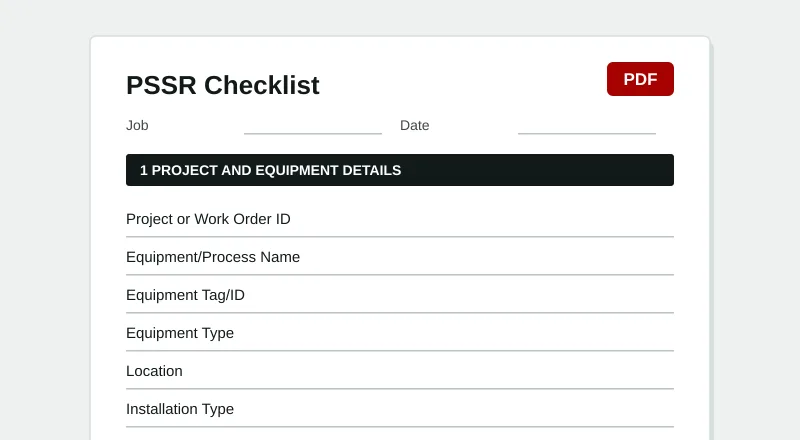
The pre-startup safety review checklist starts with the job and equipment: project or work order ID, equipment or process name, tag, type (mechanical, electrical, HVAC or construction), location, whether it's a new install, a modification or a restart after an outage, a description of any change, and the PSSR team or supervisor. Then come six groups of Yes, No or N/A questions.
| Group | What it asks |
|---|---|
| Mechanical integrity and safety | Piping, valves and flanges to spec and leak-free; pressure vessels certified with legible nameplates; relief devices set, tagged and unblocked; pressure or leak test records signed; moving parts guarded; maintenance points reachable without removing guards; belts aligned; no leaks; emergency stops tested |
| Electrical safety | Installed to code, grounded and bonded, a dedicated lockable disconnect sized and labeled, fuses and breakers rated correctly, panels closed and dry, cords intact and secured |
| Lockout/tagout and energy isolation | A current LOTO procedure reviewed with the crew, every energy source isolated and tested, enough locks and tags, stored energy released, team agreement that it's safe to energize |
| Fire protection and emergency systems | Suppression systems charged and tested, extinguishers in place and tagged, alarms and shutoffs tested, exits clear, spill containment in place |
| Signage and hazard communication | Hazard warnings posted, PPE requirements posted and explained, Safety Data Sheets on site for new chemicals |
| Procedures, training and documentation | Operating procedure on site, a maintenance schedule, operators trained, a hazard analysis such as a HAZOP for new or changed processes, management of change (MOC) approvals, permits signed |
The review ends with photos or files, the launch status, and the reviewer's name, signature and date.
Approve, hold or do not start
Use the three launch statuses as they're written. Approved for startup means every item is Yes or a justified N/A. Hold fits open items that don't make startup dangerous but must close before handover, like a missing maintenance schedule. Do not start is for anything that could hurt someone on first run: an untested relief valve, a missing guard, an energy source nobody has isolated. Note each No with who will close it, then re-review before you change the status.
PSSR checklist requirements
For processes involving highly hazardous chemicals, OSHA's process safety management standard requires a pre-startup safety review before new or significantly modified facilities start up. Outside those processes, a PSSR is usually a contract, owner or company requirement rather than a law. The form's own items point to OSHA 1910.212 for machine guarding, the NEC for electrical installation, and ASME certification for pressure vessels. Check the current rules that apply to your equipment and site, and follow the manufacturer's startup instructions.
Pair the review with the lockout/tagout form for energy isolation and, on HVAC jobs, the HVAC equipment startup checklist for the startup readings.
Run it in Workyard or download it free
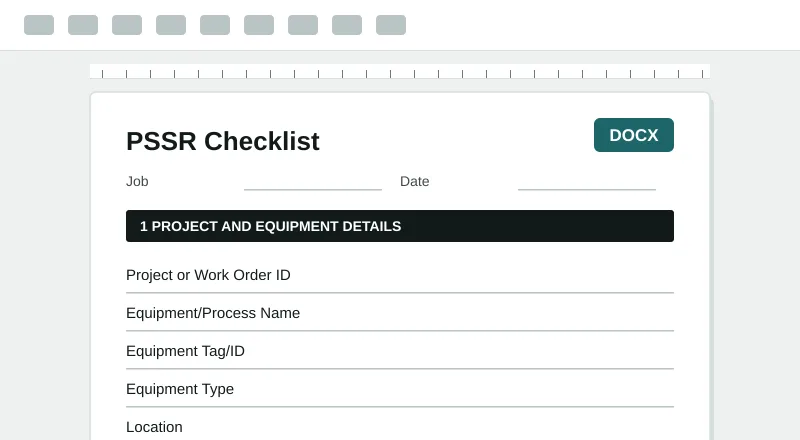
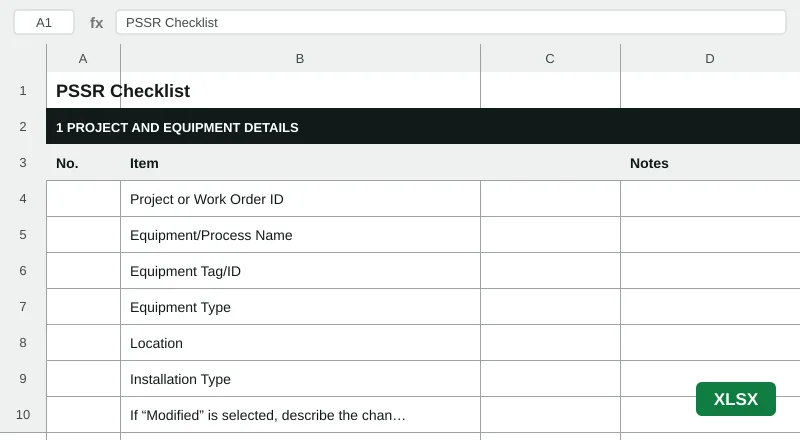
In Workyard, the PSSR form is a digital form your lead fills in on a phone at the equipment, with photos and the reviewer's signature on screen. A Do not start can go straight to a named person, and every review is filed to the job in the office, ready to export as PDF or CSV. See safety forms in Workyard. Or download the free PSSR form as a PDF, Word or Excel file.


