


A tractor inspection checklist is the short pre-use walk-around an operator does before a tractor goes to work: fluids, brakes, steering, tires, lights, alarm, ROPS and seat belt, guards and hitch, then a pass or fail and a signature. Earthwork, site prep and landscaping crews use it at the start of each shift, and the signed forms show the tractor was checked before anyone ran it.
What the tractor inspection checklist template covers
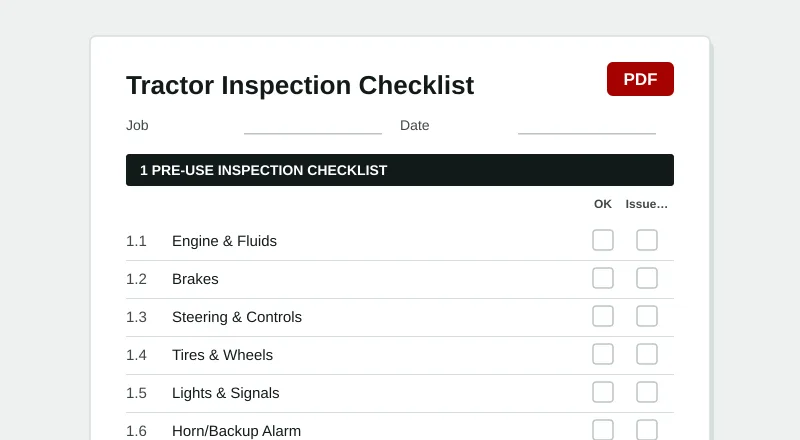
The tractor inspection checklist template has three short sections, so it takes a few minutes, not a coffee break.
- Equipment and inspection details: tractor or unit ID, make, model and year, and the hour meter or odometer reading.
- Pre-use inspection checklist: twelve items, each with a status and a note, an overall result, and photo or video upload.
- Sign-off: inspector name, date and signature.
The twelve items, and what to look for at each:
| Item | What to check |
|---|---|
| Engine and fluids | Oil, coolant, hydraulic and fuel levels; leaks under the machine |
| Brakes | Service and parking brakes hold |
| Steering and controls | Steering responds without excess play; levers and pedals return |
| Tires and wheels | Cuts, bulges, pressure, lug nuts |
| Lights and signals | Work lights, flashers, turn signals |
| Horn and backup alarm | Both sound clearly |
| Mirrors and windows | Clean, uncracked, adjusted |
| Seat belt and ROPS | Belt latches; rollover frame undamaged and pinned |
| Safety equipment | Extinguisher, first aid kit if carried |
| Guards and PTO shields | In place and secure |
| Hitch and attachments | Pins and locks secure; SMV emblem if it travels on the road |
| General condition | Anything loose, cracked or missing |
How to run the tractor inspection
- Do it before the first start of the shift, on level ground with the attachments lowered.
- Write down the hour meter reading. It ties the check to the service schedule and to anything that goes wrong later.
- Walk around first, then climb on and test: brakes, steering, horn, backup alarm, lights.
- Record a status and a note for each item. "Low on hydraulic oil, topped off 2 qt" is more useful than a tick.
- Choose the result: passed with no issues, or passed but maintenance is required. A tractor with a brake, steering, ROPS or seat belt problem should be tagged out until it's fixed, not run.
- Add a photo of anything you noted, and sign.
OSHA rules the checklist refers to
The form lists two sets of OSHA construction rules it is built around: 29 CFR 1926.602, which covers earthmoving and material handling equipment including wheel and crawler tractors, and 29 CFR 1926.1000 to 1926.1001, which cover rollover protective structures. Check the current text of each rule and the manufacturer's operator manual for your machine; the manual's daily checks may add items this list doesn't.
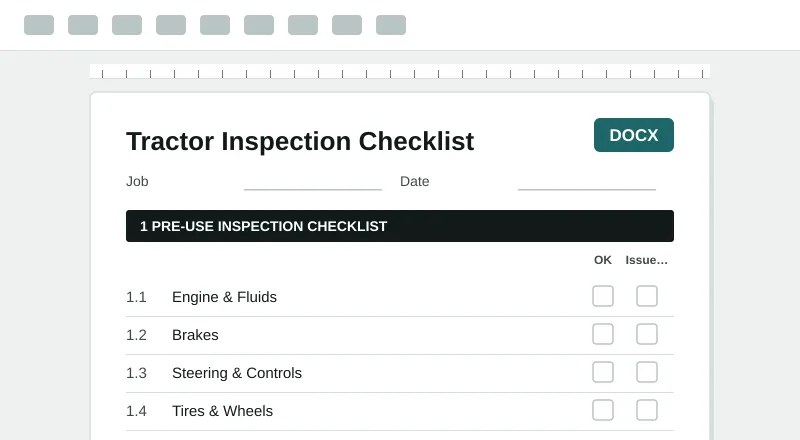
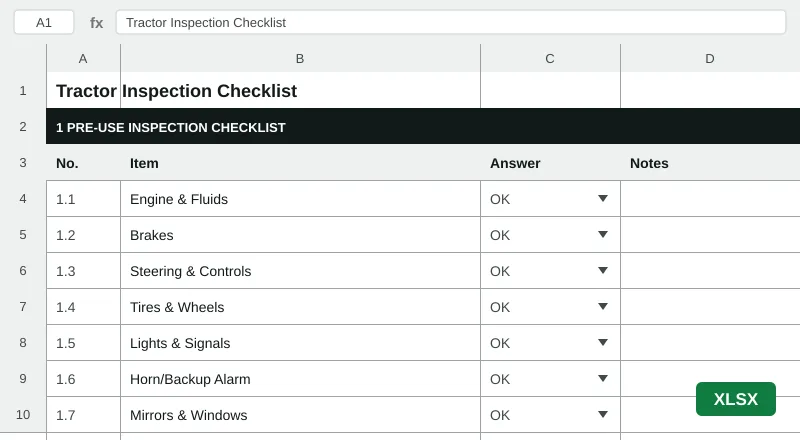
Run it in Workyard or download it free
In Workyard, the tractor inspection is a digital form the operator fills in on a phone at clock-in or before the machine starts, with photos and a signature on screen. A failed item can go straight to the shop lead, and every inspection is filed in the office, ready to export as PDF or CSV. See equipment inspections in Workyard. Or download the free template as a PDF, Word or Excel file. For other machines, see equipment pre-start checks, including the heavy equipment daily inspection.


